Lemony Reptiles

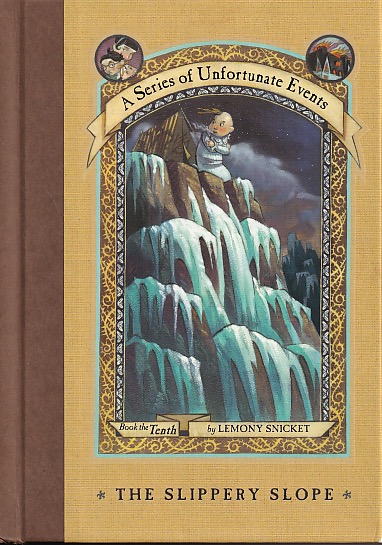
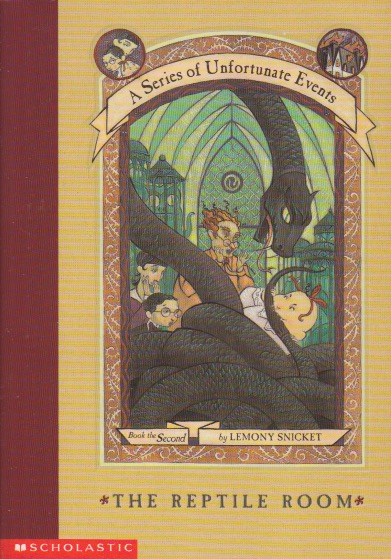
Having embarked on A Series of Unfortunate Events again, and having just finished The Reptile Room again, I might reflect on Lemony Snicket’s contribution to dark academia.  I mentioned to a friend recently that some dark academia aficionados consider the series to fall into that genre.  Having had the books read to her at a young age, she asked “Why?”  That got me thinking again about this wide, wonderful, amorphous category of books.  In my personal calculus, dark academia involves education—and this may be book learning undertaken independently—something going seriously wrong, and, in the best of it, a gothic atmosphere.  While A Series of Unfortunate Events is generally quite funny and fun to read, it clearly has the main elements I seek in classifying dark academia.  The Baudelaire orphans are pursued relentlessly by Count Olaf in a setting which, although difficult to place time wise, has Victorian aesthetics.

Of course, The Reptile Room is the second book utilized by the movie A Series of Unfortunate Events to get it up to feature length.  Reading it again revealed just how distorted my memory of the story had become by the movie.  The resolution of the scam by Stephano in the film is merely a distraction by the children to come to the real reveal in the book.  I’m not one to diss the movie.  It is quite gothic and it has many quotable moments, but it isn’t the same as the books.  I still remember when we first learned about these books from a niece, very young at the time, who enthused about them.  We were just a little cautious about reading scary stories to our daughter because one Roald Dahl book we read really was too gruesome for a child of tender years.  We immediately loved this series, however.

A quarter century or so is plenty of time to forget details.  Rereading these books also reminds me how influential they were on some of my own writing, although I read them as what passes for an adult at the time.  (I was old enough to be, and indeed was, a father.)  It occurs to me, as it likely did back then, just how clueless adults are.  Some of the descriptions of Count Olaf in this book could easily be substituted for a particular denizen of the Oval Office these days.  And, I suspect, children are able to see through those who constantly make up excuses to cover their own incompetence.  I’m looking forward to The Wide Window.


Life Underground

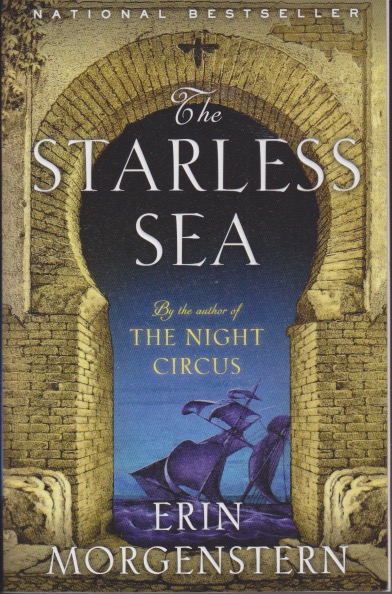
Having really enjoyed Erin Morgenstern’s The Night Circus, I was looking forward to The Starless Sea, despite its nearly 600 pages.  I don’t mind getting lost in a book; in fact it’s one of life’s true and simple joys.  The Starless Sea came to my attention as a dark academia book.  The story is a good one, but in my uninformed opinion, a bit too long.  The fault is my own, I’m sure.  My sensitivity to high fantasy has reached a point where swords tend to put me off.  And some bits, particularly in book V were a bit confusing.  Still, Morgenstern’s writing is beautiful, and at some points sublime.  If it’d been a bit shorter I’d probably be gushing.  Instead I’m reflectively admiring.  As a sometime writer myself, I know that you write what you write and others may not get it.  That’s life.

The story generally follows grad student Zachary Ezra Rawlins as he finds a book from a library of a world that’s beneath the ground.  A world that includes a harbor on the Starless Sea.  That world is inhabited by the surviving members of a decaying society made up of stories.  Most members of this world (and it’s difficult not to see this as an allegory) have left for the world above (this world).  Access between the two worlds is through doors.  Sometimes real doors, other times doors painted on a wall.  Zachary finally goes through one, having not tried one outside his house when he was just a boy.  He’s not sure if he wants to stay in the Starless Sea world or not, but he gets roped into the story.

Many other characters, at varying levels of the story within a story get involved, of course.  He meets his true love, and one of the undergrads he taught gets interested in his fate, and the denizens of the world below are intriguing characters in their own right.  Despite the length of the book, there are still plenty of gaps left for the readers to fill in for themselves.  Again, my own limitations prefer to have not too many gaps because I get confused.  The story tips a hat to several of its influences explicitly, and in many ways reminded me of Susanna Clarke’s Piranesi.  With its grad school protagonist, lots of libraries, and even a secret society, this fantasy is a card-carrying dark academia novel.  The genre encompasses may differing books and styles.  And I’m glad to have read this one as part of my own quest in that genre.  It was a sustained escape from life in the upper world.


Re-Telling Poe

Retelling stories is a very old tradition.  Fiction writers often do it.  Some even argue there are no new stories (I tend to disagree with that).  In any case, T. Kingfisher decided to try retelling my favorite short story, Edgar Allan Poe’s, “The Fall of the House of Usher.”  What Moves the Dead has Roderick and Madeline Usher and their creepy house but the story revolves around the narrator, Easton.  (There’s a helpful author’s note at the end that discusses this.)  As Kingfisher notes, the narrative warps around fully-formed new characters and the question is whether that works or not.  Anyone who’s spent much time on this blog will know that I’m a diehard Poe fan.  It takes a lot to convince me that anyone has done him justice.  What Moves the Dead is a quick read, but perhaps unsurprisingly I had trouble accepting Easton as the interloper to the story.  

One of the most compelling aspects of Poe’s tale is the point of view of his unnamed narrator.  He expresses his horror at what happens but manages to keep himself out of the spotlight.  Easton intrudes a bit too much in the narrative.  And other characters also tend to overshadow the Ushers.  The main thing that is missing, however, is Poe’s unity of effect.  There is a dread running throughout Poe’s “Usher,” and analysts have suggested that every detail of the story is relevant.  There’s a reason it’s my favorite short story—it is just so good!  So good that the few times I’ve ridden on a horse in my life, the first thought that always comes to mind is the opening of Poe’s story.

If you’re looking for a quick horror book to read, which has a bit of humor to it, What Moves the Dead isn’t bad.  Kingfisher is a talented writer and her characters are creative.  It’s just that they muddy the waters, as it were, of Poe’s masterpiece.  Ironically, I think the story would’ve been much more compelling without the Poe tie-in.  The idea of infecting mushrooms (she also discusses this in the author’s note) can be a really compelling tactic.  In fact, it is used quite a lot in horror these days (and I completely understand Kingfisher picking up another book that does what you’re trying to do when you’re in the middle of a project—that has happened to me more than once).  For me, Poe’s story is pretty much perfect and it’s difficult to improve on perfection.


Little Gems

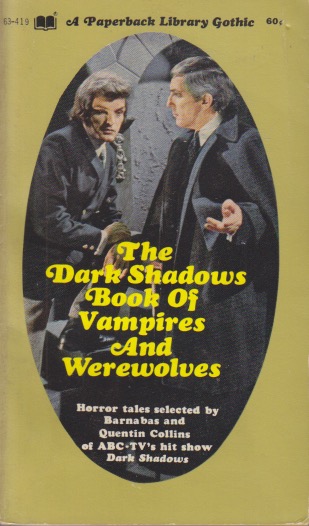
On a recent diversion to a curio shop we like, I found that one of the “Dark Shadows” paperbacks they had was one I hadn’t read.  Dark Shadows had, of course, spurred a pretty amazing franchise for its day.  It’d sunk its fangs into many young people who would not have otherwise been inclined towards soap operas.  I’ve written several times about the spin-off books by Marilyn Ross.  That series encompasses much of my childhood.  This particular book was a knock-off with the same branding titled The Dark Shadows Book of Vampires and Werewolves.  Now, to be fair, the asking price was about the same as a trade paperback price today—a little less, even—and the collection included, I saw at a glance, Polidori’s “The Vampyre.”  So now it sits on my shelf next to the other Dark Shadows books.  Apart from the gimmick of listing the book as edited by Barnabas and Quentin Collins, it is actually a nice period piece.

In addition to Polidori, eight stories I’d never read.  Two of them make the claim of being non-fiction, and a third maybe.  The tales, which favor vampires over werewolves, also include what are some little gems.  One is a story by M. R. James (“Count Magnus”).  Other noteworthy members are “Wolves Don’t Cry” by Bruce Elliott and “The Vampire Nemesis” by “Dolly.”  “For the Blood is the Life,” by F. Marion Crawford, is also good.  In other words, the collection was better than I suspected it would be.  I’d not read any of these before, so they were all new to me.  I was particularly intrigued by “Dolly.”  Apparently the author of The Vampire Nemesis and Other Weird Tales of the China Coast has remained anonymous since its 1905 publication.  The book has been rediscovered in modern times, and I’m now curious about it.

Although I like to think myself immune, I am sometimes susceptible to branding.  For whatever reason, that olive-green oval-cutout cover design, when spotted in the wild, makes me ecstatic.  My childhood wasn’t ideal, and I remember when I started to find these books used.  It was a very challenging phase in my younger years.  I knew even then that these cheap paperbacks would take me away from my troubles for a while.  And they would transport me back to an even more troubling period of my childhood when I would watch the show after school with my brothers.  A visit to the curio shop from time to time may be just what the doctor prescribes.


Talking Tolkien

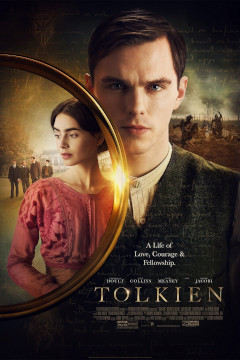
I read The Hobbit and The Lord of the Rings back in college.  Although I enjoyed them a great deal, they weren’t enough to swing me into high fantasy.  I do sometimes think I should go back and re-read them, but with so many books on my to read list, it’s a matter of time.  In any case, I’d read that the movie Tolkien was a good example of dark academia, cinema-style, so I finally got around to seeing it.  Although I learned quite a bit about Tolkien’s life from it, as a movie it really never soars.  The academia part is pretty straightforward as King Edward’s School and Oxford University play a large role in Tolkien’s life, and in the movie.  As does World War I, which is where the darkness comes from.  That, and being an orphan.  And also a guardian priest who prevents you from being with the girl you love.  The movie stays with Tolkien until he begins writing The Hobbit.

The difficulty with biopics of writers is that trying to portray where they get their ideas is a fraught business.  Those of us who write fiction know that inspiration comes in many forms, from dreams, to real life events, to the visit of an unusual shop.  Travel, intriguing people, and ideas out of the blue can all trigger a story or novel.  How do you capture inspiration on film?  A love story is, believe it or not, somewhat easier.  The film portrays Tolkien’s early fascination with Edith Bratt, whom he would eventually marry.  One thing that I’ve learned from psychology and those who teach storytelling is that certain narratives more or less play automatically in people’s minds.  Now, this cannot be asserted universally, but if you introduce a young woman and a young man in a story, many people’s minds naturally begin to bring them together romantically.  Showing how a writer goes about their craft is different.

Many biopics of writers are considered examples of dark academia.  Probably one of the reasons is that no lives are lived without loss and trauma.  People handled traumatic events differently.  Many writers use their art as a coping mechanism.  I can’t know, but I suspect that such things often lead people to become writers.  Poe, for example, keenly felt the loss of his mother at a young age, a trauma that would lead to a lifetime of writing.  I hadn’t known, until watching this movie, that Tolkien had become an orphan.  I knew little of his life; I’d read his books, and even walked by his house in Oxford, but this movie did provide a bit of context.  I’m glad, for that reason, to have seen it.


Blushing Brides

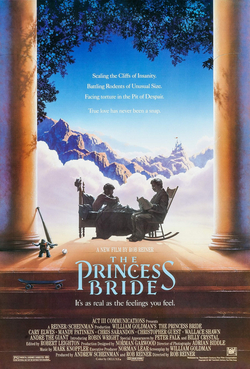
Death does strange things.  But first I have a confession to make: I had never seen The Princess Bride before recently.  Since it is a favorite film of many people and since Rob Reiner had been murdered earlier that week, my wife wanted to see it again (for her).  Given the timing, she must have seen it shortly before I proposed to her, or maybe shortly afterwards.  Perhaps I owe a debt of gratitude to the movie.  I entered into it not knowing anything about the story or even the genre.  Rob Reiner was eclectic in his tastes, directing everything from comedy to horror, Spinal Tap to Misery.  As for Princess Bride, it felt like a light fantasy, generally comedic but with no laugh out loud parts.  It’s a sweet story with intriguing characters.  And a cast of big names.  I have to assume that since I may have been the last person on the planet to see it that the plot is already known.

The fact that it is based on a book makes me want to read it, but I understand it is quite long.  One of the debates that constantly seesaws in discussions of pop culture is whether it’s better to read the book or see the movie first.  Typically I fall on the book side (but you already guessed that).  I think that might’ve enhanced my experience here.  I do try to enter movies fresh, without reading about them in advance or watching trailers.  But then again, I tend to watch horror films as a kind of default.  In The Princess Bride, things turn out alright.  Definitely better than they ended up in Game of Thrones.  Fantasy is a genre that I sometimes read, but the sword and sandal scene isn’t my favorite.  The comedic aspect, however, makes Princess Bride work.

I also wonder if the initial impact had something to do with the cultural moment.  1987 stands out in my mind as a year of cultural significance.  It was a formative year in my life: I went to Israel that summer to work on an archaeological dig.  Pop culture was also in an odd place.  In my mind this mostly tracks with music of that year.  U2’s Joshua Tree came out early, and I recall a number of albums I purchased that were formative to me as a twenty-five-year old.  The one that most spoke to me, as a dark fantasy was Bruce Springsteen’s Tunnel of Love, which I still listen to every October.  I saw a lot of movies that year, but Princess Bride wasn’t one of them.  I feel like I have, in a small measure, temporarily caught up.


Dark Library

Although it’s booming, I’m not a romance reader.  Not in the modern sense, anyway.  I’m a big fan of the Romantic Movement, which gave us the gothic novel, but the distant descendant of the latter is dark academia.  And dark academia is what brought me to Rachel Moore’s The Library of Shadows.  That, and ghosts.  I’d read somewhere that this novel (probably classified as young adult as well) brought dark academia and ghosts together and indeed it does.  I’m finding dark academia to be quite liberating.  I may no longer be a card-carrying member of Club Academe, but that setting is never far from my mind.  Enough about me.  Here’s the story: Este is a student at Radcliffe Prep, reputed to be the third most haunted school in the country.  She doesn’t come from money, however, since her father, a former Radcliffe Prep student, died prematurely and her mother has gone in search of anything that might remind her of him.

Este, unlike her wealthy cohort, isn’t sure how she fits in.  She doesn’t believe in ghosts.  Until she falls in love with one.  (This isn’t really a spoiler since it’s on the back cover copy and you can infer as much from the cover art.)  The story revolves around how to resolve that tension.  I’m sorry to admit that I’m not sure if “fades” are a traditional kind of ghost or if they were invented for this story, but they are behind the somewhat-horror elements to the tale.  Moore lays out the rules for her ghosts: they can’t walk through walls (so they can be locked out of a room), they tend to be not seen in natural light, but artificial light brings them into view, if they want to be seen.  And those that inhabit the library at Radcliffe, have bodies that can affect the physical world, but they can’t connect with anything living.  The fades are much worse: they kill mortals.

Moore’s story is a romance and a fantasy, but it is fun to read.  As a first book it has the freshness that somehow fades when writers become too jaded with the system.  (As someone who has tried repeatedly to get fiction published, believe me, I know.)  I suspect those looking for serious adult fiction might find it on the light side, but romance does have its attractions.  Since this is for younger readers there’s nothing too explicit here.  Just a story that keeps you interested as the pages turn.  And if romance has ghosts, and fits dark academia, I wouldn’t rule out reading more.


Groan

Authors are a peculiar but definite taste.  Some noteworthy voices have vociferated regarding the wonders of Mervyn Peake.  Mine has not been among them, but then, I’m not noteworthy.  Having read somewhere that the famous Gormenghast universe was one of the most gothic in mid-twentieth century literature, I read Titus Groan many years ago.  I understand the linkage between grotesques and the gothic, but this simply didn’t appeal to me.  I never felt interested in moving on to the second book of the trilogy.  At the same time, I held onto it.  Just in case.  Recently, I thought my younger self might’ve been prematurely harsh on the book and so I gave it a second try.  This time through, I appreciated some of Peake’s famous wordplay, but the novel, to me, dragged. The victim, perhaps, of the foreshortening of time, I just couldn’t get into it.

J. R. R. Tolkien once explained that he wrote The Lord of the Rings cycle to see if a really long story could be made interesting.  He succeeded.  I read the trilogy, after The Hobbit, when I was in college.  I really enjoyed it.  Titus Groan isn’t cut from the same fabric.  Peake’s thick description is sometimes a thing of wonder.  It is also very ponderous, to the point of being tedious at times.  The action is interesting enough, what there is of it.  The characters are well drawn, even if overdrawn.  And it’s clear by the end of Titus Groan that to make any sense of any of this you will need to commit yourself to two-plus volumes more.   Peake died before he could finish the fourth volume.  The first three are now solidly referred to as a trilogy, but I fear that if I were to force my way through the other two I’d still be left hanging.  I really do appreciate resolution.

It’s a personal failure, in my opinion.  I mean, Peake was obviously a talented writer.  The question is whether you can stretch a story out for too long.  Part of me wants to know the resolution, but not enough of me to get me through at least two more books like this.  I’m not sure that I’d declare this terribly gothic.  I can see why some would: castle, skulduggery, and one very well drawn villain.  Again, some of the characters are too comical to be effective gothic.  To me it felt like a mismatch between style and vehicle.  I realize that should any of his fans perchance read this, I’ll be declared a Peake imbecile.  I’ll admit that the fault is mine.  It’s a matter of taste.


Hallowed Halls

Every time I read a short story collection I tell myself I should do so more often.  Knowing that you’re only committing yourself for maybe thirty or forty minutes at a time is one way to incorporate more reading into a life that’s incredibly busy.  I read In These Hallowed Halls, edited by Marie O’Regan and Paul Kane, because, as its subtitle declares, it’s A Dark Academia Anthology.  As with nonfiction anthologies, it is a mixed bag.  The stories are all well written and all were enjoyable to read.  They also display some of the breadth of dark academia.  Most of the stories are literary (as a genre), others dip into science fiction and horror.  Dark academia doesn’t specify whether a book (or story) will be speculative or not.  As someone who writes short fiction, it seems that some of my tales might wag that way.

In any case, discussing a collection is tricky because there is such variety.  Some of the stories stayed with me beyond reading the next, which could be quite different.  Others I have to go back to remind myself what happened.  These days it can take several weeks to finish a book and a lot can happen in real life in that time span.  The stories that stay with me the most have obsessive narrators, or characters who are obsessed.  This kind of story, I know from experience, is difficult to get published.  Many of us who write, I suspect, do get obsessed.  An idea latches on and won’t let go.  Of course, most of us also have jobs that force the jaws open and drop us down in the world of the ordinary again.

Another thread that runs through many of these stories is how students struggle for money.  That’s true to life.  Thinking back to both college and seminary, there were times in both settings that I was working two part-time jobs as well as being a full-time student.  And living like, well, a student.  That experience, except for the truly privileged, is fairly common and our writers here recognize, and perhaps remember, that.  The other unavoidable theme when writing about young people in college is, shall we say, hooking up.  For many of us, college is that period in life when, thinking of our futures, and following our hormones, we start looking for love.  (I know, high schoolers do that too, but college has a way of focusing your energies.)  All of that swirling around the darkness that sometimes falls over our tender years makes this dark academia collection worth reading cover to cover.


Brutal Boys

Some time back I posted about Steffanie HolmesPretty Girls Make Graves.  It was a first book in a duology and since I’d been trying to keep up with dark academia, it was a recommended exemplar.  As I mentioned in that post, the book ends with a cliffhanger, so I got to Brutal Boys Cry Blood as quickly as I could.  Holmes is a prolific self-publishing author and I found Pretty Girls much better written than the majority of self-published material I’ve read.  Brutal Boys picks up right where the previous novel left off, freeing George Fisher from her predicament and moving her into new ones.  At Blackfriars University, George is investigating the death of her former roommate.  The Orpheus Society, consisting of old money blue bloods, seems to be involved in more than wanton destruction of property and orgies.

Much of the first half of Brutal Boys sets the scene for a relatively happy period in George’s life.  She establishes a polyamorous relationship with the uberwealthy student William Windsor-Forsyth and Father Sebastian Pearce, a teacher and college chaplain.  The three of them are mutually in love, but even as George is admitted the Orpheus Society, a deeper part of the sect emerges.  This group is even more insidious and has designs on human sacrifice.  But I’ve already said too much.

Reading is, of course, a subjective exercise.  My personal experience of this duology is that the first book is better than the second.  It’s not that I feel Brutal Boys is a bad story—it keeps your interest pretty much the whole way through—it just seems to be far more improbable than the first novel.  It is fiction, of course, and there is nothing speculative here.  There are no ghosts or monsters or divine intervention.  Speaking strictly for me, it might’ve helped with believability if there were a little of this.  I was not one of those swept away by Donna Tartt’s inaugural dark academia novel The Secret History, but she did include just a little of a speculative element that allows for a reader to perhaps convince him or herself that this might just possibly happen.  Some writers and readers prefer not to use that escape hatch.  I’ve read good dark academia both with and without speculative aspects to the story, but to me, such mystery adds a little depth to what might be happening.  And I admire self-publishing authors who write well enough to draw you into a second book, which can be a rare thing.


Discovering Witches

On a number of best of dark academia novel lists, A Discovery of Witches was a book I knew I had to read.  Frightened by the size of the tome, I put it off.  Although it says it on the cover (by which I don’t buy a book) that it’s part of a trilogy, I was hoping it’d be self-contained.  Of course, it ends without resolving what happens to the main characters, more or less coercing the reader into the remaining two volumes.  Now, this is not unique.  Many authors do it.  Publishers especially like books with series potential—assured sales.  My eight novels (none published) are stand-alone.  One is over 200,000 words, but the rest are reasonably svelte.  Big books take a large commitment of time and, well, at my age you have to make some choices.  This one took me nearly a solid month of daily reading, sometimes multiple hours at a stretch, to finish.  I have some decisions to make.

Set initially in Oxford, this world created by Deborah Harkness contains three kinds of humanoid creatures besides humans: witches, vampires, and daemons.  The daemons aren’t really defined, but they don’t seem to be the kind that possess girls like Regan McNeil.  The witches seem pretty traditional and the protagonist/narrator is one.  The vampires are quite different than the Hollywood version, as well as the traditional sort.  Vampires can be out in the sunlight, they aren’t affected by crucifixes, and, indeed, can be quite religious and Christian.  They can eat things other than than blood.  The protagonist, Diana Bishop, is a witch who doesn’t use her powers.  A professor, she’s doing research at Oxford where she meets, and eventually falls in love with Matthew Clairmont, a vampire.  An ancient pact between witches, vampires, and daemons forbids them from consorting closely, and herein lies the tale.

The dark academia aspect comes in a couple of guises.  One is that much of the first part of the novel takes place at Oxford University, and even in the Bodleian Library.  Also, vampires seem to be quite compatible with dark academia as a whole.  The dark aspect comes not only from the creatures, but their situation.  There is ancient animosity and tension that results in murders.  The novel ends with a war starting and Diana and Matthew taking a risky journey.  I may be content to let this state of affairs stand.  From the look of things, the sequel is also a long book and I am content to let my imagination fill in the blanks.  I’m glad to have read it, but I’m going to look for a novel with a little less time-commitment next.


Dangers of Dark Shadows

A friend’s recent gift proved dangerous.  I wrote already about the very kind, unexpected present of the Dark Shadows Almanac and the Barnabas Collins game.  This got me curious and I found out that the original series is now streaming on Amazon Prime.  Dangerous knowledge.  Left alone for a couple hours, I decided to watch “Season 1, Episode 1.”  I immediately knew something was wrong.  Willie Loomis is shown staring at a portrait of Barnabas Collins.  Barnabas was introduced into the series in 1967, not 1966, when it began.  Dark Shadows was a gothic soap opera and the idea of writing a vampire into it only came when daily ratings were dismal, after about ten months of airing.  Barnabas Collins saved the series from cancellation and provided those wonderful chills I knew as a child.  But I wanted to see it from the beginning.

I’ve gone on about digital rights management before, but something that equally disturbs me is the re-writing of history.  Dark Shadows did not begin with Barnabas Collins—it started with Victoria Winters.  There were 1,225 episodes.  Some of us have a compulsion about completeness.  The Dark Shadows novels began five volumes before Barnabas arrived.  Once I began collecting them, I couldn’t stop until, many years later, I’d completed the set.  I read each one, starting with Dark Shadows and Victoria Winters.  Now Amazon is telling me the show began with Barnabas Collins.  Don’t get me wrong; this means that I have ten months of daily programming that I can skip, but I am a fan of completeness.

You can buy the entire collection on DVD but it’s about $400.  I can’t commit the number of years it might take to get through all of it.  I’m still only on season four of The Twilight Zone DVD collection that I bought over a decade (closer to two decades) ago.  I really have very little free time.  Outside of work, my writing claims the lion’s share of it.  Even with ten months shaved off, I’m not sure where I’ll find the time to watch what remains of the series.  The question will always be hanging in my mind, though.  Did they cut anything else out?  Digital manipulation allows for playing all kinds of shenanigans with the past.  Ebooks can be altered without warning.  Scenes can silently be dropped from movies.  You can be told that you’ve watched the complete series, but you will have not.  Vampires aren’t the only dangerous things in Dark Shadows.


Dark Romance

My study of genre leads me to believe that there really may be no such thing.  Or at least many aspects of genre are open to question.  In the case of Steffanie HolmesPretty Girls Make Graves, there’s no doubt that one genre is dark academia.  Indeed, this is book one of a duology titled “Dark Academia.”  Although self-published it is quite well done.  There’s a lot of backstory, and George (Georgina) Fisher, the protagonist and narrator, is a character from a previous series by Holmes.  Another genre that fits here is romance, although this novel is more than that.  Maybe a bit of the story will help.  George is a new student at Blackfriars University in England.  From California, she has trouble fitting in among the blue bloods that are the usual make-up of the student body.  She soon learns about the Orpheus Society, the secretive organization that pulls the strings on campus.  Then her roommate, the girlfriend of a prominent Orpheus Society member, goes missing.  George decides to investigate. 

Consciously aware of dark academia, Holmes aims directly at the heart of it and offers a compelling story that keeps readers interested from cover to cover.  I was never quite sure what was going to happen, and I do have to add a warning—this first book does end on a cliffhanger, so be ready to commit yourself to book two.  George is so well drawn that it’s not hard to care for her and start rooting for her against the secret society types who can buy themselves out of anything, including murder.  (I have to say, that part is a little too close to reality in the current US of A, so it may be a trigger for some.)

My regular readers (if any) know that I’m on a dark academia kick at the moment.  There’s so much to like in the genre.  Holmes makes clear the close ties between dark academia and horror; they share a common ancestor in the form of gothic literature.  The sheer variety in the novels classified this way means that not all of the books will contain every element associated with the genre, but Pretty Girls Make Graves comes close.  Holmes also effectively writes the ostracism of the outsider into the tale.  Anyone who’s had trouble fitting in (or may still have trouble fitting in) will recognize the scenario and its fallout.  Let’s hope, though, that they don’t end up like George at the end of volume one, even when they enjoy reading the book.


Dark Introduction

Since I’ve discovered that I live in dark academia, I’ve grown curious.  Kara Muller has put together The Little Book of Dark Academia as a kind of first step in the discussion.  I have learned that some academic articles on dark academia are starting to appear, but this is pitched more toward those who maybe need some tips on how to get started.  By the way, this is a full-color, heavily illustrated book.  In practical terms, that means it doesn’t take too long to read it.  It’s also self-published, so less expensive than many books, but without editorial shaping.  It begins with history and definitions.  The term came into use in 2015 but the concept had been around much longer than that.  Sometimes a label is necessary to bring together thought on something that’s been floating around for a while.  As Muller points out, it tends to revolve around books.

My imagination isn’t so constrained as to believe that ebooks have no place in dark academia; they have their own special kind of darkness.  Still, the setting for these stories often takes place in real life, in studies and libraries full of books.  This is not a Star Wars paperless universe.  Muller gives a list of acclaimed dark academia titles with a brief paragraph or two about them.  In other words, a reading list.  And also a movie viewing list.  She also includes some television series that fit the aesthetic.  If you’re in the mood for dark academia, you’ll find plenty of places to indulge your hunger here.  The lists aren’t comprehensive, of course.  A bit of searching online indicates that many such lists exist, not all of them in full agreement.

Muller then presents a section on style and design.  Dark academia is, in many ways, like cosplay.  There’s a look and feel to it that can be emulated.  And I can’t help but say it’s backward looking.  A longing for classical education, the way that it used to be.  To me, this seems to be behind much of the current fascination with it.  This lifestyle is rapidly disappearing.  Even professors are now using AI instead of getting their hands dirty in the library.  And publishing online rather than in print form.  Showing up to class in tee-shirts and jeans.  Some of us, and I count myself in their midst, miss the feel of armloads of books and professors that wore tweed and could read arcane languages.  And nobody was trying to cut their funds because, well, the world was smarter then.  And everyone knew education was important.


Club Frankenstein

Reading YA novels once in a while reveals that younger folk have quite a good selection of literature from which to choose.  Goldy Moldavsky’s The Mary Shelley Club is a good pick for horror fans as it takes several cues from horror movies and mixes them with the anxieties of high school.  Rachel Chavez is a new student at Manchester Prep in New York City.  Her mother moved her there after a break-in and attack at their old home on Long Island.  With really only one friend at her new school, she finds out about the secretive Mary Shelley Club which meets to watch horror movies—or so she thinks.  Rachel then learns that the club’s real raison d’être is to play a game called Fear Test in which a targeted student is frightened, sometimes to death.  Rachel settles in the the club, being a horror fan, but grows increasingly uncomfortable with the game.

I won’t say much more than that about the plot, but I will say it is compellingly written and a page turner.  I didn’t quite buy the resolution, but that’s often true of horror movies.  It captures well the anxiety of high school, and of moving to a new location.  And Moldavsky certainly knows her horror movies.  I sometimes ponder what makes a novel YA.  I suppose it’s the focus on high school/college kids and a restrained vocabulary, shall we say.  While there’s no explicit sex scenes, there is some making out with intent here (this isn’t a romance), and there are a few f-bombs dropped.  And there is a body count.  Still, for horror, it doesn’t feel as gristly as “adult novels.”  Young people seem to lack the more developed evil of their elders.

My motive for reading it, apart from the horror aspect, was that The Mary Shelley Club is occasionally cited as an example of dark academia.  It’s easy enough to see why.  An exclusive school, wealthy families, and a dark subtext involving a secret society.  These are often hallmarks of the genre.  Dark academia may blend with horror, as it does here, or other genres.  That’s part of its appeal.  In this case the school, Manchester Prep (the name borrowed, it seems, from Cruel Intentions) may not be the center of the story, but it is what brings the main characters together, even if the horror is extra-curricular.  It was a fairly quick read, despite its size, and it bodes well for other good reading while exploring this particular aesthetic.