Bradbury’s Dream

There’s a Ray Bradbury story—I can’t recall the title, but with the Internet that’s just a lame excuse—where explorers on Venus are being driven insane by the constant tapping of rain on their helmets.  They try to concentrate on discovery, but the distraction becomes too much for them.  Living in Pennsylvania has been a bit like that.  I grew up in the state and I knew it rained a lot.  Here in the eastern end we’ve hardly since the sun since March.  And when you’ve got a leak in your roof that only compounds the problem.  If I were weathering the Psalms, mine would be a lament, I’m afraid.  You see, the ground’s squishy around here.  Mud all over the place.  Rivers have been running so high that they’re thinking about changing their courses.  And still it rains.
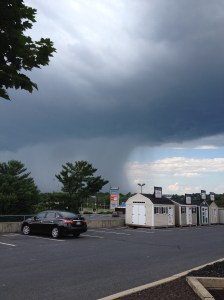
There’s a lesson to be taken away from all this.  The fact that we use water for our own ends sometimes masks the fact that it’s extremely powerful.  Not tame.  The persistence of water to reach the lowest point contributes to erosion of mountains and valleys.  Its ease of transport which defines fluidity means that slowly, over time, all obstacles can be erased.  It’s a lesson in which we could stand to be schooled from time to time.  Rain is an artist, even if it’s making its way through the poorly done roofing job previous occupants put into place.  Would we want to live in a world without valleys and pleasant streams?  And even raging rivers?

There’s no denying that some of us are impacted by too much cloudiness.  When denied the sun it becomes easy to understand why so many ancient people worshipped it.  Around here the temperatures have plummeted with this current nor-easter and the heat kicked back on.  Still, it’s good to be reminded that mother nature’s in control.  Our high officials have decided global warming’s just alright with them, and we’re warned that things will grow much more erratic than this.  As I hear the rain tapping on my roof all day long, for days at a time, I think of Bradbury’s Venus.  Okay, so the story’s appropriately called “The Long Rain” (I looked it up).  Meanwhile tectonic forces beneath our feet are creating new mountains to add to the scene.  Nature is indeed an artist, whether or not our species is here to appreciate it.  If it is, it might help to bring an umbrella this time around.

On Publishing

I fear I may be transitioning.  I may actually be becoming someone who knows something about publishing.  Reading about the merger between Cengage and McGraw Hill actually seemed interesting.  What’s happening to me?  Actually, the largest impact has been the realization that scholars need to become more aware of the world around them.  As a doctoral student I was taught to find an unexplored subject and write obscurely on it.  Then, when it’s time to publish, to say to the editor that general readers will understand and find it compelling.  It took some time, however, even though I frequented Waterstones and Blackwells, to realize that the books they housed were not the kinds of books I’d been taught to write.  Back in America, where the brands were Borders and Barnes and Nobel, the same thing applied.  People want books they can understand.

Two articles that caught my attention recently addressed the plight of the academic monograph.  One was “Worried About the Future of the Monograph? So Are Publishers” from the Chronicle of Higher Education.  The other was “Making Monographs Open” from Inside Higher Ed.  Both share some common themes: scholars write books so obscure that even academic libraries won’t buy them and since it’s “publish or perish” it becomes the publisher’s problem.  Listen, I understand that mentality.  Isolated in the woods of Wisconsin with the wind howling through the trees, writing about weather in the Psalms seemed perfectly natural.  Forgetting that the average reader doesn’t know Hebrew, I assumed everyone would find my disquisition irresistible.  Even back in the early 2000s publishers disagreed.  Life is so interesting!  There are so many minutiae to explore!  If you haven’t had the pleasure of following in the tracks of a thought that won’t let you go, you’ve never been really seduced.  But then, somebody’s got to pay for all this.

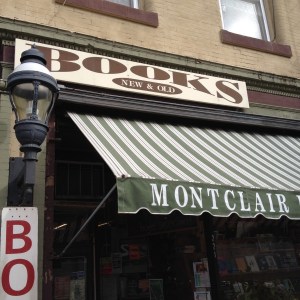
Scholars are reluctant to acknowledge that publishing is a business.  Indeed, higher education is now a business as well.  Everything’s a business.  To stay solvent publishers have to sell enough books to cover the cost of making them.  As these articles point out, that cost isn’t negligible.  The scholar who explores the publishing industry (as rare as that may be) will discover plenty of resources to help rethink academic writing.  Even without reading the industry rags, just paying attention when you’re in your neighborhood bookstore can be an eye-opening experience.  I was looking for a book (hardly even academic) last time I was in Ithaca, New York.  If any town is likely to have such books on the shelf, it’s Ithaca.  I had to ask and leave empty-handed.  There are lots of books out there, colleagues!  And if you want to get yours published, it pays to do a little research.  Your time will not be wasted.  And I fear I’m becoming someone who knows a little about such things.


Thunderers

“Storms are the embodiment of Mother Nature’s flair for the dramatic, and the words that we use to write about them are infused with that drama,”—the words aren’t mine, but they express something I often acknowledge.  The quote comes from a Verbomania post about the word “brontide”—a noun for things that sound like distant thunder.  Weather-related words are indeed part of the religious vocabulary as well.  I wasn’t quite daring enough to suggest it in Weathering the Psalms, but it seems that thunder may be behind most basic religious beliefs.  Well, that and bad luck.  Think about it—most cultures have a very powerful storm-deity.  That power is expressed in thunder.  Even in the twenty-first century a sudden clap can made the sophisticated duck and cover.  

We don’t know as much about ancient Mesopotamian culture as we’d like to, but it’s pretty clear that storm deities commanded major of respect.  Eventually in the city-state of Ugarit, in what is now northern Syria, a god named Hadad (aka “thunderer”) became the patron of the city and was known mainly by his title “lord” (Baal).  There may have been more than one lord, but the one in charge of day-to-day affairs was the one who controlled storms.  We’ve entered another rainy season around here (something you tend to notice when the roof leaks), and my thoughts often turn to how very much the weather controls us.  Interestingly, thunder hasn’t been much in the picture.  We’ve lived in our house coming up on a year and I have been awoken by thunder (something that still scares me as much as when I was a kid) only once.  Thunder is the approach of gods.

There’s drama about the weather.  In fact, fiction writers have long known that one of the most effective ways to suggest the mood of a story is the meteorological method.  Weather sets the scene.  The sound of distant thunder has a naturally ominous, almost predatory quality.  The growling, low and loud bursts from the sky sound so like human expressions of rage that it is only natural that they should be interpreted this way.  Since the sky is (or used to be) out of the reach of humans, the sounds from above were from the realm of the divine.  When gods approach the mood is threatening.  We dare not meet them.  That mythology has long informed our perceptions of meteorological phenomenon, acknowledged or not.  Brontide is an underused word that brings the drama of both nature and the divine together.  It could be a psalm word.


Tempestuous Wind

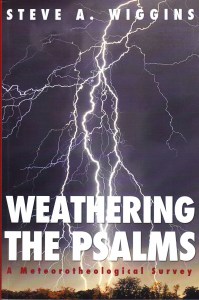
There was quite a windstorm that blew through here yesterday.  It reminded me rather forcefully of Weathering the Psalms.  Firstly, it blew loudly enough to wake me up a few times in the night.  When I finally climbed out of bed, listening to the blustery concussions beating the house, I remembered that the first chapter of Weathering was about the willful wind.  That’s not just a poetic phrase—according to the Psalter, the wind does the will of God.  Like much of the weather, it’s weaponized by the Bible.  Seeing what the wind can do, the reasons for this should be obvious.  Hurricanes are tremendous windstorms (although unknown in the land of the Bible), but they are also known for their tremendous rain.  Tornadoes, however, are pure wind and are among the most destructive forces on the planet.  (Before people came along, anyway.)  Wind commands respect.  We’re a very long way from taming it.

When thinking of meteorology, it’s easy to forget wind.  Rain and snow are pretty obvious.  Even desert heat is impossible to ignore.  The wind, invisible and powerful, is perhaps the most godlike of weather’s many features.  To the ancient way of thought, it was also inexplicable.  We understand the earth’s rotation and temperature differentials between water and land and the uneven heating between the surface of the ground and air aloft.  The ancients understood it more to be a pure act of God.  The wind certainly can seem spiteful.  It’s not difficult to attribute agency to it.  Such things go through my mind when the howling is loud enough to wake me.

Invisibility suggests power.  It wasn’t so much the “monotheism” of Israel that made it distinctive as it was the inability to see its deity.  That lack of visual confirmation not only necessitates a kind of faith, but it also veils a threat.  We humans tend to be visually focused.  We fear the dark.  Foggy, misty settings can give a story an atmosphere of foreboding.  Placing the divine out of site only enhances supernatural powers.  So it is with the wind.  As is to be expected, the windstorm has mostly blown itself out by now—moving on to another location until the temperature differentials even out and its howl becomes more of a whimper.  It will have done its work, however, for even as it passed through it brought to mind the proper respect for that which cannot be seen.  


Internet of Happiness

Are we really happier for instantaneous news?  Has the internet brought us paroxysms of ecstasy with the quality of information?  Wouldn’t you just rather wait?  I don’t think we should go to extremes, or go backward.  Samuel Morse, it is said, developed the telegraph in part because he was away from home and only found out about his wife’s death after her burial, for which he could not return in time.  More rapid communication was necessary and the telegraph provided the means.  No, I’m not suggesting that happiness lies in being uninformed, but perhaps I lingered long enough among the Episcopalians so as to believe in the via media, the middle way.  Some of the happiest times of my life have been spent without a screen glowing in my face.  There is, however, good stuff here.

One example is blogging.  I wish I had more time to read blogs.  Verbomania, for example, showcases writing that sparkles.  The weekly posts set me up for a good weekend.  There are many more that I could name as well—and for me blogging has become a way of life.  Marketers call it “platform building” but I think of it as fun.  And the practice I get writing this blog daily has made my books much more user-friendly.  A family friend with no college education tried to read Weathering the Psalms, with “tried” being the operative word.  There’s no comparison with Holy Horror.  (Weathering the Psalms was written to be my “tenure book,” and it may well be my last technical monograph.)  I have this avocation of blogging to thank for that.

But instantaneous news—does it make us happier?  Sometimes perhaps, but often the opposite.  It’s a phenomenon I call the internet of unhappiness.  (There’s a whole field of study emerging called “the internet of things,” which, no matter how much I ponder I just can’t comprehend.)  News, after all, tends to focus on negatives, as if there’s too much happiness in our lives.  Just yesterday there were early morning helicopters hovering not far from where I live.  Within seconds I could learn of some kind of domestic dispute about which I’d otherwise have been none the wiser.  The next few hours I spent occasionally reloading the page for updates.  They didn’t make me happy.  Add to that the three-ring sideshow that the American government has become and you’ll soon be wanting just three channels from which to select before turning off the TV and going outside for a walk.  And when the 1970s start to look like happy times, you go to your closet and start digging for the semaphore flags.

They must be in here somewhere…


Nature’s Bible

When you’re writing a book, many strands in your mind are weaving their way into what you hope will be whole cloth.  Well, at least if you write books the way that I do.  In writing Weathering the Psalms, for instance, one of the threads was the question of science and religion.  I was teaching at Nashotah House at the time, and I read a lot of science.  As I told colleagues at the time, if science is how we know things, shouldn’t what we know of the natural world apply to the Bible?  I don’t claim to be the first to ask that question—back in the days of exploration there were many people (mostly the genus “white men” of the “clergy” species) who went to what is now and had used to be Israel, to find out what the world of the Bible was actually like.  Their books still make interesting reading.

Quite unexpectedly a colleague, Dalit Rom-Shiloni of Tel Aviv University, told me she’d just ordered my book.  She’s leading up a project called the Dictionary of Nature Imagery of the Bible (DNI).  Over a decade after my teaching career ended, someone had deemed my work relevant.  Dr. Rom-Shiloni recently sent me the link to the project website where there is a video of her interviewing three Israeli scientists about the possibility of lions, leopards, and bears living in Israel.  They’re all mentioned in the Bible and no longer exist in the area.  The video is on this link and won’t take half an hour of your time.  It’s quite interesting.

One of the surprising facts to emerge is that leopards, in small numbers, may still exist in Israel.  This assertion is based on lay observation.  I contrasted this with the United States where, no matter how often a cougar (aka mountain lion, puma) is spotted in a state where it’s “known” to be extinct, it is claimed to be mistaken observation.  A departed friend and mentor of mine once saw a mountain lion in West Virginia.  I’d grown up in neighboring Pennsylvania where they are officially extinct, so I wondered if said beasts knew to observe the Mason-Dixon line.  The fact is, despite all our best efforts to destroy our environment, animals often find a way to survive.  Growing up, one of my cousins in Pennsylvania (now also unfortunately deceased) showed me a puma print in the snow behind his rural house.  Now Pennsylvania is a long way from Israel, and this topic is a long way from the DNI, but remember what I just said about how my books are written.  Tapestries only make sense from a distance.


Mastering the Elements

First time home ownership is best left to younger people.  And perhaps younger houses.  The constant onslaught of things falling apart, or falling off (it has been an extreme weather year) has soured me on the idea.  You get set in your ways, you see.  The move from apartment to house didn’t come with a raise that would cover all the repairs invisible to a home inspector’s eye.  Although our house has stood for over 120 years, the last owners let lots of things go with a lick and a promise and we, the naive middle-aged first-time buyers in a seller’s market, bit.  I thought there would be repairs to make, but not all at once.  The royalties from books like Holy Horror don’t make even a small dent in the contractor’s fees.  We should maybe have bought a house in Jericho instead.  One right on the city wall.

The shake-down voyage of a ship reveals the problems, so the theory goes.  It stands to reason that people have to go through a shake-down year as well.  I’ve got the roofer on speed-dial, and I keep a wary eye on a garage that has more love than actual care poured into it.  All I want to do is read and write (which I could do just fine as a renter, thank you) in a place dry and not too cold.  The weather, however, has been unforgiving.  Rain and more rain.  There’s something primal about all this—an element of having to struggle against nature in order to survive.  In the modern world we’ve taken for granted our ability to keep the beasts and weather at bay.  Storm systems like the one that has just blown through serve to remind our species that there are things that will forever remain beyond our control.

The lament is the most numerous genre of psalm

Something like this was going through my mind as I wrote Weathering the Psalms.  (We didn’t own our house at Nashotah House, though.  Whose house?  Nashotah’s house.)  Living in the Midwest gave me a new appreciation for the weather.  Some of the storms we witnessed were nothing short of theophanic.  Global warming has a way of bringing the weather front and center.  Elements of this element, however, are within our control.  We understand at least the human-driven elements of global warming.  We deny they exist to scrape together a few more pennies at the end of the day.  Meanwhile those who buy houses need to do their homework.  If need a roofer too, I’ve got one on speed-dial.


Shut up or Shut down?

So the government’s shut down over a presidential temper tantrum.  Like most people, I suspect, I haven’t really noticed.  Except for two things.  When I drove up to Ithaca over the holidays, some of the highway rest stops were closed.  It seems our government wants to share the misery of not being able to relieve itself.  Secondly, the NOAA weather forecasts are no longer updated as frequently as they should be.  I’m no expert on the weather—I did write a book on meteorotheology, which took quite a bit of research on weather in ancient times, but I know that doesn’t qualify.  Still, I rely on weather forecasts to get daily business done.  In particular, we were expecting a winter storm around here that had been predicted, by NOAA, to arrive around 11 p.m.

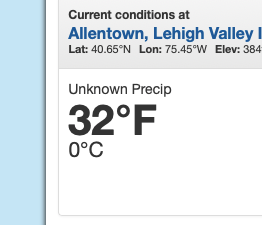
Okay, I thought, people will be off the roads by then, and crews will be out to treat the icy conditions by morning.  Seven hours early, around 4 p.m., I noticed a rain, sleet, snow mix falling.  The ice particles looked quite a lot like salt crystals, but I was pretty sure that the government doesn’t have that kind of pull.  In any case, when weather catches me unawares, I turn to NOAA since our government is apparently God’s own chosen one, figuring that the Almighty might know a thing or two about what goes on upstairs.  The current conditions, NOAA said, were “unknown precipitation.”  Apparently the government isn’t even allowed to look out the window during a shut-down.  Maybe it was salt after all.

So, among those of the “God of the gaps” crowd, the weather is perhaps the last refuge of a dying theology.  Their cheery refrain of “science can’t explain” has grown somewhat foreshortened these last few decades, but when unknown precipitation is falling outside all bets are off.  Come to think of it, Weathering the Psalms could’ve been titled Unknown Precipitation, but it’s a little late for that now.  A creature long of habit, I awoke just after 3 a.m.  Hastily dressing against the chill of the nighttime thermostat setting, I wandered to the window, wondering whether there would be a snow day.  It’s dark this time of night, as I well know, but in the streetlights’ glow it seemed as if no weather event had happened at all.  It’s just like our shut-down government to get such basic things wrong.  As long as I’m up, I might as well get to work on my current book on horror.  It’s only fitting.


Flight Home

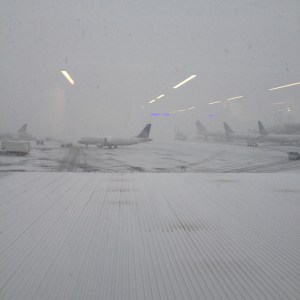
Although I was not looking forward to the long, late flight home scheduled for tonight, I can’t help but think there was something almost prophetic in the weather that prevented my trip.  I awoke in Newark only to confirm with many other stranded passengers that this was not a lot of snow.  I’ve had to commute into New York when much higher amounts were in the forecast.  Many of us, meteorologists included, were asking why this storm was so devastating to travel.  Part of the answer comes down to belief.  Nobody believed we could have this kind of nor’easter in November.  Even now nobody seems to want to discuss the elephant in the igloo.  Global warming, we’ve known for decades, will make erratic weather patterns.  We need to think about weather differently than we have before.

One of the motivations behind writing Weathering the Psalms was that for all of our technology, we still don’t understand, or appreciate, the weather.  Driven by dollars in great collectives, businesses are reluctant to allow employees a “day off,” even when many of them have work laptops at home.  We believe in money, supposing the weather to be only a minor nuisance.  Having bought a house, though, has revealed something to me.  Home and hearth are all about staying safe from the weather.  (Well, and in keeping out wild animals too, but we’ll just drive them extinct.)  A house is a place to keep the water and wind out.  We want to keep dry and to prevent the wind from chasing away our body heat.  Homes are our places to keep the weather outside because we instinctively fear it.  Reverence it.  Weather may well be the origins of at least some religious thought.

Ancient peoples and modern religious fundamentalists believe(d) in gods literally in the sky.  They looked up when wanting to understand matters beyond their control.  Yes, predators attacked, but you could fight back.  Against the sky there’s no recourse.   Weather can kill, and can do so in many ways.  Building shelter helps, but we’ve all seen enough hurricane footage to know that even our structures are subject to the wind.  Computer models were suggesting that this storm might have been pulling back for a real roundhouse punch but our conservative views on the weather (such things don’t happen in November, right, Edmund Fitzgerald?) prevail.  The official stance of our current government is this is all a myth anyway.  It’s only when myths interfere with money that we start to pay attention.


Last Call

The alarm that wakes you in the middle of the night.  There’s something primal, something visceral about that.  We humans, at least since our ancestors climbed down from the trees, have felt vulnerable at night.  If our sleep is constantly interrupted we don’t think clearly.  We build secure houses. Lock our windows and doors at night.  Say our prayers before we go to sleep.  Last night I discovered that the homeowner has even greater concerns than the humble renter.  While 11:30 may not be the middle of the night for some, for early risers it is.  And there’s nothing to strike terror into the heart of a homeowner like a tornado warning.  Especially here—our realtor laconically told us that they never have tornadoes in eastern Pennsylvania.  The weather warning system disagreed with him last night.

Getting up as early as I do, first light is hours away.  Hours before I might check for damage with the light of old Sol.  My wife had to work, no less, at a venue some distance away and we both had to rise early and wonder what the damage might be.  We knew, of course, that the pointless ritual of changing our clocks would occur tonight, but that does alleviate concerns about whether the roof was still on the house or not.  You can’t take anything for granted, not even the continuity of time.  Thus my thoughts returned to Weathering the Psalms.

Severe weather led to that book.  If I were to rewrite it now it would come out quite differently, of course.  No one would write the same book the same way after a decade and a half.  Still, there may have been some things I got right in it.  The weather is a cause of awe and fear.  The sound of the wind roaring last night was impressively terrifying, even in a technological world.  Especially in a technological world that relies on an unwavering power grid and constant connectivity.  In the midst of a wakeful night, alone with thoughts too haunting for the day, the weather has a power with which we’re foolish to trifle.  Global warming is a myth if it gets in the way of profits.  Then darkness falls and we realize just how very small we are.  In the light of dawn, the damage was not too bad.  A frightened car meeping its mewling alert.  And a strange justification that perhaps my book contained some truth after all.


Writers Reading

A lot of misconceptions about books abound out there.  One of those misconceptions that has become clear to me is that authors write books to teach.  (Or to make money.  Ha!)  That may well be part of the motivation, but for me, the larger part has been writing books to learn.  You see, the frontiers of human knowledge cannot be reached without stretching.  Writing a book is a way of learning.  Long gone are the days when a person could read every known published work.  Indeed, there aren’t enough hours on the clock for anyone even to read all published books on the Bible, let alone the far bigger topics these days.  And so writing a book that deals with a biblical topic—let’s say demons—is the ultimate learning exercise.  It’s a very humbling one.

I recently read an article where book pirates (yes, there is such a thing!  I should explain: there are those who believe authors are ripping off society by getting royalties for their books.  These pirates, like those of galleys of yore, take ebooks and make them available for free on the internet.) call authors “elitists” for wanting to earn something from their labors.  These folks, I’d humbly suggest, have never written a book.  Most books (and I’m mainly familiar with non-fiction publishing here, but the same applies to the other kind) take years to write.  Authors read incessantly, and if they have day jobs (which many do) it is their “free time” that goes into reading and writing.  They do it for many reasons, but in my case, I do it to learn.

The doctoral dissertation is accomplished by reading as much as possible beforehand and writing up the results quick, before someone else takes your thesis.  It is the practice I also used for my second book as well, Weathering the Psalms.  The third book, Holy Horror, was a little bit different.  Yes, I read beforehand, but much of the research went on after the body of the book had largely taken form.  I had to test my assumptions, which are on ground most academics, needing and fearing tenure, tremble to tread.  I read books academic and popular, and having been classically trained, often went back and read the books that led to the first books I read.  It is a never-ending journey.  I could easily spend a lifetime writing because I’d be learning.  But like other misconceptions, those who write books don’t lead lives of luxury.  They work for a living, but they live for the chance to learn.  And that’s worth more than royalties.  Besides, the nine-to-five demands constant attention.


Animal Rains

We may have been to the moon—if not personally, collectively—but we still don’t control the weather down here.  It’s probably not news that the eastern part of the country has been getting a lot of rain lately.  One of the factors that led me to write Weathering the Psalms was the overwhelming tendency for humans to attribute weather to the divine.  It used to be that we couldn’t reach the sky, so placing deities there seemed a safe bet.  Now that we’ve shot through the thin membrane of atmosphere that swaddles our planet, we’ve discovered beyond a cold, dark space liberally sprinkled with stars and planets but mostly full of dark matter.  The deity we thought lived beyond the sky somehow wasn’t anywhere our probes flew and recorded.

Still, down here on the surface, we live with the realities of weather and still think of it in terms of punishment and pleasure.  When we don’t get enough rain, God is destroying us with drought.  Too much rain, and the Almighty is washing us away with flood.  The true variable in all of this is, obviously, human perception.  Sure, animals experience the weather too, and they sometimes look to be as disgusted as humans when it snows too early or too late, or when the rain just won’t stop.  I have to wonder if somewhere in their animals brains there’s the seed of an idea that the bird, or squirrel, or woodchuck in the sky is angry at them for some unspecified faunal sin.

While heading to the store yesterday, after weather reports assured us the rain was finally over for the day, the skies told a different story.  The vistas around here are never what they were in the midwest—or what they are in Big Sky country—but the approaching storm was pretty obvious.  An opaque drapery of precipitation was coming our way and although a rainbow would cheekily show up afterward, knowing that we’d been caught away from home with our windows open felt like punishment for something.  Perhaps the hubris of buying a house when all I really require is a corner in which to write.  Somewhere in my reptilian brain I translated a natural event into a supernatural one.  When we got home to discover the storm had gone north of us, it felt like redemption.  I spied the birds sheltering in shadows from the sun’s heat.  Were they thinking it was some kind of divine avian displeasure, and hoping for some rain to cool things off for a bit?  If so, was our religion correct, or was theirs?


Melting Psalmists

With weather like this, I could use a Psalm or two.  Of course, in my mind, weather and Psalms are closely connected.  Here in the mid-Atlantic states, we’ve been experiencing a heat wave.  Unlike many parts of the west, such heat here in the east is accompanied by very moist air, meaning that cooling down is only possible in a large body of water or air conditioned interiors.  We have neither readily available at our place, so we try our best to keep cool and compose psalms, mostly imprecatory, I fear, about the weather.  Although it was thunderstorms that stirred my interest to write Weathering the Psalms, I included a chapter about temperature, for the Psalter sings of hot and cold as well as lightning and thunder.

The world of ancient Israel was quite different from that of North America.  There are mainly two seasons in the Levant—dry and rainy.  The dry season isn’t always as hot as we tend to imagine it, although the day I visited Masada the air temperature was about 120 degrees.  Enough to make a dip in the Dead Sea look inviting.  The Bible often views high heat as a form of divine punishment.  Although we human beings have expanded to fill just about every ecosystem our planet has to offer, we thrive in central California conditions.  Not all of us can live there, however.  And it’s a good thing that global warming’s a myth since it’s awfully hard to function when it is over 90 degrees for days in a row.  WWDD?  What would David draft?  Perhaps, “I’m melting”?

The interesting thing about the global warming myth is how real it feels.  I suppose the solution is to use more fossil fuels to help keep cool.  Fans, arctic air conditioning, lingering languidly at the open freezer door.  I stand here sweating, wondering what the Almighty could possibly find wrong with a country that is now great again.  One that takes children from their mothers yet insists birth control is evil.  One that loudly and punishingly insists guns should be in every home.  One where the elected head of government is involved in over 3,500 lawsuits, yet gets to appoint justices in the Supreme Court.  David got caught, if not in flagrante delicto, at least within a couple months of adultery with Bathsheba.  Instead of paying her off, he had her husband murdered.  But then—and here’s the key difference—he humbled himself and repented.  The sweet Psalmist of Israel might yet have something to teach us yet about weather and the Psalter.  Until the United States becomes the chosen nation again, I think a cold shower will have to do.


Breaking News

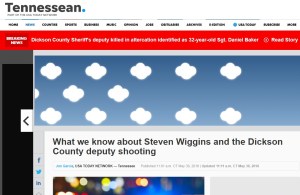
Herostratus, it is said, tried to destroy the Temple of Artemis so that he might become famous. His name is now associated with gaining fame at any cost. In case any of my readers suppose I might be like Herostratus, I would be glad to confirm that I’m not the Steve Wiggins in the headline below. While I do have a beard, I’ve only been to Tennessee once that I know of. When a friend contacted me to ask why I’d shot the deputy (but I did not shoot the sheriff) it reminded me of a post on this blog from many years ago about sharing the name of the gospel singer Steve Wiggins. He’s always at the top for any Google search, which is why I always tell people to use my middle initial when seeking even more than you can find on this blog: “Steve A. Wiggins” usually brings me up. I’m not as desperate as Herostratus yet.

Names can be tricky that way. I’ve written a number of books in my life, and three of them are either published or in production. Holy Horror, which is now available on McFarland’s website (the book itself will be out in August) is listed on Amazon. It isn’t paired with my other two books yet, perhaps because it is so different. My Amazon author page brings up A Reassessment of Asherah and Weathering the Psalms, but it’s a little coy about Holy Horror. This blog isn’t quite like trying to destroy Artemis’ temple, but then, it isn’t exactly a Twitter-follower magnet either.

I have a friend who has a fictional Twitter account. He has more than twice the number of followers I do, and his Twitter persona is made up. I follow people who don’t follow me back. I do hope this isn’t how Herostratus got started. It is tragic that a deputy was shot and killed by an armed Wiggins in the south. I’m no friend of the NRA, and like most of the world I believe we’d be better off with far fewer guns, and Herostratus is pretty much forgotten today. In fact, every time I want to mention him I have to do a Google search to find his name. Destroying property of the gods, apparently, doesn’t always give you lasting fame. Looking at what’s happening in DC these days I see confirmation of that all the time. But then don’t take my word for it—I’m only a blogger with a tiny Twitter following. Just don’t accuse me of having a gun or trying to sing in public.


Good Company

It’s a matter of scale. If you read this blog chances are you like books. If you like books you probably know about remainders. When you walk into a bookstore and see a shelf or section of really cheap new books, you’ve found the remainders. This happens when a publisher overprints and, instead of pulping books (that hurts even to type!) the remaining stock is sold at just above cost so that retailers can add a small markup and make a marginal profit. Most authors don’t like to see their books remaindered, since it means demand wasn’t as high as the publisher anticipated. Expectation was that the book would do better than it did, now the publisher and bookseller just want to recoup some of their losses. Often there’s a marker stroke across the bottom pages of the book so you can’t return it for the retail price.

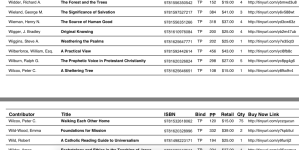
For those of us whose books sell in the double digits, seeing yourself on a remainder list would be kind of a thrill. The other day I looked at Wipf & Stock’s 50 percent off sale to find a copy of Weathering the Psalms listed. Probably it was overprinted for the AAR/SBL annual meeting, since I saw that they did have copies there again last November. If they hadn’t bothered to print out a bunch, I would never be on the remainder shelf in Eugene. I don’t mind because I’m in good company. Looking at the list I feel like I belong in some kind of academic crowd in the reduced bin. There’s a sense of community among the overprinted.

Turnabout, they say, is fair play. I’ve bought plenty of remaindered books in my life. Lately I buy used academic books because the new editions are out of the reach of an independent scholar who isn’t independently wealthy and who doesn’t have access to a university library. If I buy others cheaply, I turn the other page and expect the same back. Most of us who write academic books aren’t in it for the money. We want to be remembered for our contributions to the discussion. We took the many months and years it takes to research, write, and polish a book, and we want others to take an interest in what we have to say. It’s all about the dialogue. It’s all about the community. For those of us who never really found a home among the established academy, publication can mean a lot. It doesn’t matter that the books are sold cheaply—in fact, that’s good, because it means somebody might just read what you wrote. It’s all a matter of scale.