
Strange noises in the night. Objects moving of their own accord. Disembodied voices laughing fiendishly. It must be nearing autumn. After having a brief discussion on novel writing with Brent Monahan earlier this summer, I decided to read his book, The Bell Witch: An American Haunting. Setting the story in the “found manuscript” genre, Monahan tells this famous account through the eyes of Richard Powell, one-time elected official in the Tennessee House of Representatives. The can be no doubt that the story has some basis in actual events, but the serious study of “ghosts” is a taboo that serious scholars break at their own peril. On my long bus rides this week I read Monahan’s version of the story as the rain continued to fall. As I read I was continually reminded how dependent we’ve become on genre labels. The book purports to be an eyewitness account and there is no genre declaration on the back cover. The Library of Congress Cataloging in Publication (CIP) data declares it fiction. Where is truth to be found?
Human beings are capable of great and terrible acts. Working in a city the size of New York after having been raised in small towns, the amount of distrust is very blatant. Security is evident in many places with cleverly locked doors and guards surveying those who enter buildings. We simply can’t trust everyone. Or anyone. When it comes to literature, stories often blend fact and fiction. Guidelines on books or classifications in bookstores help us to decide if our reading material is conveying actual events or not. The Bell Witch is one of those reminders that sometimes the truth will never be known. Historical records can be searched, but even these are often subject to human error. If someone tells us a ghost story, we base the veracity on the teller’s reputation. At the end of the day, sometimes we just can’t know.
Perhaps the most poignant aspect of Monahan’s version of these events is his reconstruction of the history. Although the supernatural remains intact at the end, Powell is able to uncover the “fact” that Betsy Bell was abused as a child and that the poltergeist-style events that pervade the story are an extension of her trauma. Actually, the treatment is very closely tied to the religiosity of the Bell family, good church-going folk who ran afoul of a fine point of church teaching. In the end, it is this rejection by the church that pressures John Bell to the point of incest. Is the story true? Yes. Did it every really happen? Probably not. The two are very different questions. In a society that increasing seeks easy answers, stories like this remind us that we are all a blend of fiction and fact. Easy answers are inevitably wrong. The movie An American Haunting once again revived “the Bell witch” but also raised the specter of the ambiguity of truth. Is it out there? If it is, how will we know when we’ve found it?
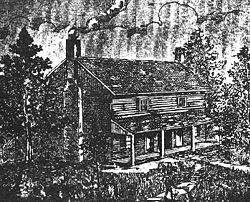
What really happened here?


3 thoughts on “The Truth of Ghosts”