Melting Psalmists

With weather like this, I could use a Psalm or two.  Of course, in my mind, weather and Psalms are closely connected.  Here in the mid-Atlantic states, we’ve been experiencing a heat wave.  Unlike many parts of the west, such heat here in the east is accompanied by very moist air, meaning that cooling down is only possible in a large body of water or air conditioned interiors.  We have neither readily available at our place, so we try our best to keep cool and compose psalms, mostly imprecatory, I fear, about the weather.  Although it was thunderstorms that stirred my interest to write Weathering the Psalms, I included a chapter about temperature, for the Psalter sings of hot and cold as well as lightning and thunder.

The world of ancient Israel was quite different from that of North America.  There are mainly two seasons in the Levant—dry and rainy.  The dry season isn’t always as hot as we tend to imagine it, although the day I visited Masada the air temperature was about 120 degrees.  Enough to make a dip in the Dead Sea look inviting.  The Bible often views high heat as a form of divine punishment.  Although we human beings have expanded to fill just about every ecosystem our planet has to offer, we thrive in central California conditions.  Not all of us can live there, however.  And it’s a good thing that global warming’s a myth since it’s awfully hard to function when it is over 90 degrees for days in a row.  WWDD?  What would David draft?  Perhaps, “I’m melting”?
The interesting thing about the global warming myth is how real it feels.  I suppose the solution is to use more fossil fuels to help keep cool.  Fans, arctic air conditioning, lingering languidly at the open freezer door.  I stand here sweating, wondering what the Almighty could possibly find wrong with a country that is now great again.  One that takes children from their mothers yet insists birth control is evil.  One that loudly and punishingly insists guns should be in every home.  One where the elected head of government is involved in over 3,500 lawsuits, yet gets to appoint justices in the Supreme Court.  David got caught, if not in flagrante delicto, at least within a couple months of adultery with Bathsheba.  Instead of paying her off, he had her husband murdered.  But then—and here’s the key difference—he humbled himself and repented.  The sweet Psalmist of Israel might yet have something to teach us yet about weather and the Psalter.  Until the United States becomes the chosen nation again, I think a cold shower will have to do.

Mythologies

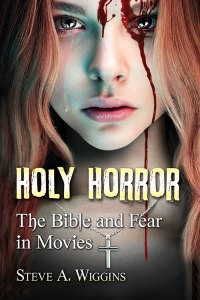
Now that Holy Horror will be appearing soon, I’ve been neglecting my horror movies. It’s not on purpose, I assure you. I don’t feel comfortable speaking as a writer—publishers tend to agree with that, and besides, my job is more of being a reader—but my experience of it suggests you never have enough time. (Or money; movies never come with no costs.) With another book under contract and a lot more going on behind the scenes than I reveal on this blog, as Morpheus says, “Time is always against us.” So when my wife showed me a story about Hereditary, I knew my list of must sees would only continue to grow. I haven’t even seen Get Out yet!

Beyond being simple guilty pleasures, horror films area also a means of coping. I know this because although they’re generally very successful at the box office, I’ve rarely met anyone who admits to watching them. Horror thrives on secrets. We act one way in public, and a different way when we shut the door and pull the drapes. Since we’ve outlived our belief in gods and heroes, cinema has taken the role of mythology in modern life. Crammed with archetypes—and yes, stereotypes—movies act out age-old themes in impressive displays of color and sound. You might even learn something without trying. Mythology may have originated in stories told around the campfire, but science never displaced the need for hearing them again and again in different media.

I’ve taken to writing books about films because it’s clear that meaning lies there for many people. The invention of cinema and television forever changed culture. Yes, there’s cheap, thoughtless material available in both formats. Still, movies have an ability to convey truths in a way that sermons often fail to do. The values they depict are often very human ones. Horror, for example, isn’t about blood and gore. It’s about survival. That’s not to say the protagonists always reach a happy ending, but we learn from their mistakes. There’s a reason you shouldn’t open closet doors in a house not your own. Those who do, however, often find uncomfortable truths inside. Holy Horror looks in the closet at the way the Bible functions iconically in horror. Since writing it I continue to notice the Bible in horror and I feel affirmed in the conclusions I drew. And if only I had a bit more time, I’d be watching more mythology. And the list only keeps getting longer.


Losing Ahab’s Head

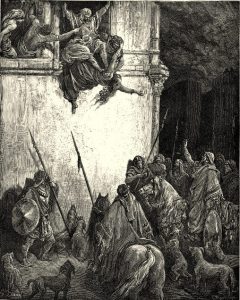
Call me Ishmael. There was a time when I heard about archaeological discoveries impacting the Bible soon after they were made. Now I have to wait until they appear in the paper, just like everybody else. When I saw a story asking if a recently found statue head might be that of Jezebel’s husband a number of things occurred to me. First of all, how cool is it that a king is referred to as the husband of a more famous wife? Well, I suppose Jezebel is infamous, but as the Washington Post article I read indicated, some biblical scholars are inclined to view her more sympathetically as a strong woman in a patriarchal morass. Seems like something we should be able to understand these days.

Another issue is that underlying bugbear of wanting to prove the Bible true. There is little doubt that Jezebel’s husband, a king by the name of Ahab, existed. Quite apart from the Bible he is historically attested—one of the earliest biblical characters to have received outside verification. If he actually struggled with a prophet named Elijah or not, we can’t know. In any case, the non-talking head of the statue looks like just any other pre-Roman guy with a crown. The article wistfully wishes the rest of the statue could be found, but one thing that we know from ancient iconography is that ancient figures, be they gods or heroes, are seldom inscribed. As I long ago argued about Asherah, without definitive iconic symbols to identify them, ancient images must remain ambiguous.

What would iconically identify good old Ahab? Certainly not a white whale—it’s far too early for that. He was represented in the book of Kings as the worst monarch Israel ever had. Politically, however, he seems to have been somewhat successful. Would he have been represented with the grapes of Naboth’s vineyard? Or, like a saint, holding the arrow that eventually slew him in his chariot? Ahab is a mystery to us. Unlike Melville’s version, he’s a man eclipsed by those in his life, notably the prophet Elijah and his wife Jezebel. Although the latter’s been baptized into the acceptable form Isabel, her name is synonymous with being a woman who knows what she wants. In the biblical world her main crime was being born into a family who worshipped Baal. The difference between her day and ours is that if a Republican president declared himself a Baal worshipper, evangelicals would cheer and joyfully follow along. Rachel, after all, cannot stop mourning her lost children.

The Republican National Convention?


Let the Sunshine in

The earliest sunrise does not occur on the longest day. At least not at this latitude—I can’t speak for the entire world, but sunrise lags behind the latest sunset by a few days. In Germany the longest day was January 30, 1933. It seems that the Nazi Party did not win the majority, but Hitler was made chancellor anyway. All he wanted to do was to make Germany great again, right? No matter who it hurt. When Americans, who sacrificed thousands of souls, found the concentration camps they swore it would never happen again. That was, however, before Donald Trump was born. Indeed, those seeking the transmigration of souls might wonder where he’d been wondering for the previous thirteen months. There’s some cryptic stuff happening here.

How can it be that sunrise isn’t earliest on the longest day? Back in the days when science mattered, it was simply explained: the number of minutes the sun is in the sky maxes out on the summer solstice. Sunrise can keep getting earlier for a few more days, but so will sunset. The longest day, in the biblical world, was when Joshua was fighting at Makkedah. The slaughter was going so well that the big white guy upstairs (oh no, he’s not Jewish, you see) reached out and held the sun in place for another 24 hours so it could continue. That, you see, is the longest day. Not exactly sand chairs and sunscreen, although the latter might’ve been awfully useful.

Although in modern times the solstice is known as the first day of summer, in olden times it was considered midsummer. The solstices and equinoxes were the midpoints, not the start of something. Such a perspective can make a world of difference. June, it is said, is named for Juno, the pagan wife of Jupiter. The constantly cuckolded goddess of marriage. Only we call her long-suffering, since stormy weather should be over by June, shouldn’t it? With enough lawyers even sin can be made to sound righteous, for longest day brings everything out into the light otherwise. The longest day, you see, can be fake news. Around here the sun will rise still earlier tomorrow. Experts—those we no longer believe—tell us that the solstice was yesterday. And yet, what is that orange thing arising in the east so early in the morning? Don’t be fooled; the longest day is over.


For It Is Written

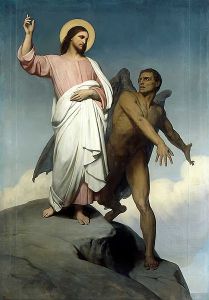
“The devil can cite Scripture for his purpose,” William Shakespeare wrote in his controversial Merchant of Venice. He was, in fact, using the Bible as the basis for this line. The story of Jesus’ temptation in the wilderness famously has Satan quoting the Good Book at him. It comes as no surprise, then, that Sarah Huckabee Sanders, following Jeff Sessions, uses the Bible to justify cruel and unusual practices of the Trump administration, according to a story in multiple media outlets. Trump himself doesn’t know the Bible well enough to quote it, but his minions feel that it can be summarized in one principle—obey the government. Oh, hi, Mr. Orwell, please take a seat over there; I’ll be with you in a minute.

Back in the days before leopards could change their spots, evangelical Christians tended to say that Jesus came to free them from the law. It seems that what they really meant was that Jesus came to allow them to cherry-pick the parts of the law that make the best cudgels against those they don’t like. Those who actually read the Bible know that it can generally be used to support either side of most arguments. Ironically, matters such as adultery *ahem, ah, Ms. Daniels, we weren’t expecting you here; please wait next to Mr. Orwell* are non-negotiable. Even Jesus said so. But let’s not talk about that—we’re too busy trying to pry children from their mother’s arms. Doesn’t the Bible say Rachel can’t be consoled because she’s lost her children?

That which is most holy is most horrible when it’s profaned. The Bible can hardly be called “holy” when found in the mouth of habitual liars. If Jesus were a gentile I’m sure he’d agree that whites have the right to do whatever they want in his name, right? Separating families because it’s the law is robbing Peter to pay Paul, then blaming Thomas. Sanders, Sessions, and their ilk pander to the biblically illiterate who like the sound of the phrase, “the Bible says.” Prooftexting, as anyone who takes the Bible seriously learns the first day of class, is cheating. Ah, Rev. Luther—I didn’t see you come in. What’s that you say? “Sin boldly”? Now there’s a message our government can live with. Especially if you let the Devil into the room. Yes, he’s welcome at the White House these days. And yes, he knows the Bible very well.


Redefinition

The striking thing about Evangelicalism is its protean nature. The earliest forms of this conversion-based “Christianity” began with the Reformation among Pietist Protestants. They sincerely believed in two things: the Bible and Jesus. Today Evangelicals deny both. They believe in Donald Trump. Racism and subordination of women are their two main foci. And yet, they wish to keep the brand. Daily we see the standards of traditional “Christianity” tumble: turn the other cheek, love your neighbor as thyself, if a man asks your cloak give him your coat also. All of this jettisoned like so much non-capitalist clap-trap. Thing is, it’s in the Bible. Thing is, it was said by Jesus. And also anyone who even looks at a woman with lust in his heart is guilty of adultery, let alone those who pay them off so they can grab another on the way out the door. All of that’s now “Christianity.”

The funny thing is that those who object to such behavior are what Evangelicals scornfully call “liberals.” So much for the group that just three short years ago advocated the reinstitution of biblical law. Now that 45 would have committed a capital crime according to such laws, they have changed the Good Book rather than rebuke the pastor in chief. Ironically, some of the children of famous evangelists have drunk deeply from that Kool-Aid. It’s fine to sleep around as long as you lie the right way at the right time. Bear false witness? What does that even mean? You’d think liberals were suggesting that those God loves are chasteneth by him, for goodness sake!

Many of us feel as though we woke up to an alternate reality in November of 2016. We supposed the Republican Party would show some backbone, but when they didn’t we weren’t all that surprised. What shocked us most is that the leopard has changed its spots. Those of us brought up with the Bible were led to believe this impossible. After all, who can change a hair from black to white (although some of us would rather have it go the opposite direction)? We thought that Holy Writ would guide the Evangelical heart. We thought they would remember who Jesus was. All of this is negotiable now. The only solid rock on which they build their church—those to whom they give the keys to the kingdom—are those that fall into goose-step behind a “leader” for whom the truth changes daily. Opportunist be thy name. Were Jesus alive to see all this, surely he’d weep.


Only Which King James?

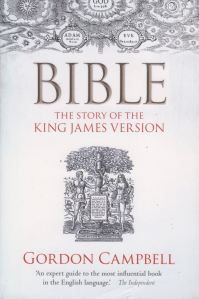
Nothing is as simple as it seems. Not that the Bible ever claims simplicity for itself. Among those who make up their minds before seeing all the evidence, there’s a strong preference for the “King James Version” of the Bible. Many with that preference will claim that they don’t interpret the Good Book, they just read it. Reading itself is an act of interpretation and stakes tend to be pretty high when the claim for divine authorship is on the table. So I figured I’d better interpret something about the King James Bible myself. Gordon Campbell’s Bible: The Story of the King James Version is an informative, authoritative, and often witty treatment of the topic. One of the immediate takeaways is that there is no single KJV.

Beginning in the beginning, Gordon tells the story of the Bible in English. There were translations before the King James, and its translation companies used these previous efforts and sometimes borrowed extensively from them. In other words, there’s nothing new under the sun. Once the King James was done in 1611 it had to be printed, and printing, being what it is, led to errors. Although these were of the secular, human kind, they nevertheless appear from the beginning and new typesettings led to corrections and other errors, some perhaps intentional. Then came the revisions. What readers buy—and some claim is an inspired translation—as the KJV is a revision of a revision. Of a revision. In other words, the inspiration seems to lie with the redactors rather than the translators themselves. There are many different “official” King James versions. Translations are never static.

King James Onlyists (a modern movement) may not realize that the New Revised Standard Version is the modern descendant of the King James. The Revised Version (RV), followed by the Revised Standard Version (RSV), and its more recent, feared progeny (the NRSV) are all based on the King James translation. That is the version “Revised” in each of these efforts. They consult improved versions of ancient texts that have been discovered since the Jacobean era, but where they earn the ire of conservatives is in the updating of the modern language. A Bible with no thees or thous hardly seems sacred at all. The line of continuity is there, however. Other Bible translations “start over” but still consult the KJV, such is its stature. The real problem comes in supposing that any one translation is the original. No original Hebrew or Greek biblical manuscripts survive, and no original King James Version exists. How uncomfortable these facts are, everyone will have to interpret for her or himself.


The Hardest Part

The waiting, Tom Petty suggested, is a most difficult portion (no copyright violations!). The late, great departed rocker had a point. When I was younger I thought waiting was a theological problem, but the fact is it’s an unavoidable part of life. Right now I’m in that holding pattern between having submitted my files for Holy Horror and awaiting anxiously the proofs. Anxiously because there’s so much going on right now that I’m not sure how I can carve out the time to read them. Time and tides, they say, wait for no one.

I suspect a big part of this is that I have high hopes for this book. Not that I’m being unrealistic. I’m hoping to break that 500 copies barrier that holds most academic books hostage. Holy Horror isn’t really academic—it’s not technical at all like my last two books were—it’s just that the premise is academic. What do horror movies tell us about the Bible? I take that question seriously. You see, I read about the Bible a lot. Whether we want to admit it or not, western culture is based on it both implicitly and explicitly. People who castigate it don’t seem to realize that our very way of thinking is based on it. If you doubt that, talk to someone raised in eastern Asia. Someone thoroughly Buddhist or Confucian in outlook. The way we frame our thinking is based on a biblical worldview over here. It’s smart to pay attention to things like that.

At the same time, we are believers in media. Looking out the bus window on the way home I’m always amazed at how many people on the Parkway are texting while they’re driving (yes, you can be seen from above!). We can’t live without our media. When it comes to the Good Book, most people rely on media to tell them what it says. Horror, although not popular with many people, always does well at the box office. And one of the things I explore in Holy Horror is just how often the Bible appears in such movies. It’s not ubiquitous, but it certainly isn’t rare either. We should take to heart what other people say about us. Not that they know the truth of the matter—they seldom do—but we are social animals and we make our reality based on interactions with others. Those who make horror movies know things about the Bible that scholars don’t. And they know that suspense—waiting, as it were—is the hardest part.


Driving Truth

One of the problems with driving is that you can’t get pictures of billboards. Well, given the way people drive around here, I suspect that may not always be true. Nevertheless, I always think of billboards as trying to sell something. There’s sometimes fairly easy to shut out, but in long stretches of otherwise uninteresting road you fall into their trap. Now having grown up in western Pennsylvania, we always thought the people out east—Philadelphia was the largest city in the state, after all—were more sophisticated. It is around here, however, that I often see billboards selling evangelical Christianity. If you put out your wares, you’ve got something to sell. Money to make.

As I was traveling that stretch of somewhat plain highway 33 between Stroudsburg and Easton I noticed a billboard reading “In the beginning God created the heavens and the earth.” To shore up its academic credentials the billboard footnoted Genesis 1:1. An inspirational sunrise, if I recall, shown over the Bible. Of to the left—of course to the left!—was a small “no circle” and inside the famous skeletal progression from ape to human. The message was “no evolution.” The more I pondered this, the more strange it became. Most Americans are well aware that billboards aren’t exactly the locus of truth. They are gimmicks to try to get you into the store. Like the one a few miles down that advertises the world’s largest humidor; even those with no interest in tobacco might feel just a touch curious what such a place might look like. Why would you take your most intimate personal beliefs and put them on a billboard? Does that make evolution any less likely?

A strange perception has lately taken over this country. The idea that an individual’s wants equate with the truth. Shout it loud enough and it has to be true. Billboards would never stretch the truth, would they? Is that image enlarged to show texture or what? And wouldn’t a better choice of anti-evolution rhetoric have been Genesis 2? That’s where God makes Adam from lowly dirt. Yes, Genesis 1 gives us the dramatic six-day creation, but Genesis 2 manages to say it all happened in one day—isn’t that more in keeping with capitalistic ideals? Greater efficiency leads to greater profits, after all. And profits, we all know, are the real purpose behind billboards for any product under the sun.


Biblical Popes

It was the end of the world. The year was 1979, if I recall. One of those occasional manias that sweep the nation weighed heavily upon my high school. My English teacher—for her class was at the very hour of the appointed end—sensibly scrapped her lesson plan for the day and had us each write an essay. Would the world end or not, during this very class period? We then shared what we wrote. I recall one answer—not my own—quite clearly. “The Bible says when the reign of Pope is short after the long reign of the previous Pope, the world will end.” (This was just after the death of Pope John Paul I.) A moment’s thought revealed that there are no Popes in the Bible. How could anybody think there were?

Of course, we were at the end of a decade whose bestselling book was Hal Lindsey’s The Late, Great Planet Earth. It was part of what analysts call John Todd Phase of the world’s end scenarios. Or was it the Pat Robertson Phase? In any case, all kinds of obscure signs floated in the air. But Popes in the Bible? Had any of my classmates even read the Good Book? This may have been the only occasion when it was beneficial to have been raised a fundamentalist. I’d already read the Bible many times through and it said nothing about Popes. Not even the Catholic translations.

The iconic role of Holy Writ in secular society is greater than many people suppose. “The Bible says” is practically gospel because few people will check it out. I knew from my conversations with clergy, even as a teen, that few ministers had actually read their own foundation document the whole way through. That leaves them vulnerable to the “cloud of unknowing” whether something is biblical or not. The only way to find out is to sit down with the tome and start reading. Although today such sites as BibleGateway make reading the Good Book online remarkably easy, it’s still a commitment of many hours immersed in an arcane world and mind-numbing lists of who begat whom once upon a time. Examined closely, the Bible is an odd book as far as Holy Writ goes. The same applies to the scriptures of many world religions. Somewhere along the line someone decides that this book, or collection of palm leaves, or set of scrolls, has divine origins. And since world scripture is vast, there’s got to be something about Popes in there somewhere, for when the next end of the world scare comes along.


Holy or Not?

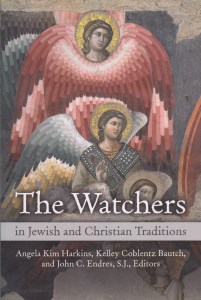
The ancient divine world was a slippery place. When you stop to think about it, this makes sense. The deities and demons of antiquity were invisible. Different opinions existed as to what they were. The idea of “the Bible” that contains infallible information didn’t exist. Apart from the books now accepted by Protestants, the “Apocrypha” and even more fun Pseudepigrapha contained many more traditions than the average reader might guess. I’ve been a student of that ancient divine world for decades now, and I learned quite a bit from The Watchers in Jewish and Christian Traditions, edited by Angela Kim Harkins, Kelley Coblentz Bautch, and John C. Endres, S.J. Appropriately divided into three parts (origins of fallen angels, Second Temple developments, and Jewish and Christian reception) these collected essays explore different dimensions of these mysterious beings.

Watchers are seldom mentioned in the Bible, in just a few verses of Daniel. In some traditions they are high angels—think the hymn that includes the word “ye Watchers and ye holy ones”—but mostly they are fallen angels. If you limit yourself to the Good Book you really get only four verses of Genesis 6 to explain them. Other ancient writers, some of whom likely influenced the New Testament, took up the subject. The book of 1 Enoch contains a section called The Book of the Watchers. Here the Watchers come down to earth with a couple of purposes—to share forbidden secrets with humanity, and to mate with human women. The offspring of these matings are giants, Nephilim, or demons. Perhaps all three. These events are retold in Jubilees and are taken up by early Christian writers especially.

Although this book isn’t a monograph with conclusions based on all the information it contains, it nevertheless gives a very good sense of the various traditions that developed around these Watchers. Even when reading through the Bible as a child, the Genesis 6 episode caught me off guard. The story isn’t highlighted in children’s Bibles, and the way it’s told in Hebrew leaves a lot of ambiguities in the adult reader’s mind. It’s almost as if this brief account is bing kept deliberately obscure. The Good Book drops this bomb then blithely goes on its way without mentioning it again. This episode reminds us just how little the Bible clarifies. It wasn’t written to be the “inerrant word of God,” and those heady days just after Eden were full of stories that it never bothered to tell. The Watchers, meanwhile, made their way into popular culture because the silence of Scripture allows readers to fill in the blanks with either angels or demons.


Which Bible Again?

Which Bible? That’s a fair enough question. No matter how much you want to deny it, western culture always has been and always will have been biblically based. That being the case, it’s best to know which Bible we’re talking about. The Protestant Bible is America’s Good Book. Although there were Catholics before Protestants were a gleam in Luther’s eye, the latter laid early claim to the Bible. When a Bible appears in a social or civil religion context, it’s most likely Protestant. The Catholic Bible contains extra material—that which Protestants call The Apocrypha. Satisfied that Luther was right to leave the Deuterocanonical books out, their role as fake good news has never been questioned. If the King James was good enough for Jesus and Paul, they say, only half in jest.

Some Evangelicals belong to the King James only movement. They come up with alternative facts when faced with the reality that the King James translation includes the Apocrypha. Yes, it’s right there in black and white. The Authorized Version of the Bible included the “Catholic books.” I was reminded of this the other day when I was searching for a simple factoid—how many words are in the King James Bible? The vast majority of websites give the unquestioning answer of 783,137. They may then break it down into “Old Testament” and New. Almost always they leave out the Apocrypha. The word count there is 152,185, and if my math serves, that brings the total to 935,322—not quite a million words. The Good Book is a big book.

The King James Onlyists (yes, that’s a thing) have bigger problems than the Apocrypha. What King James is the onlyist? The KJV you buy in your Christian bookstore is one of the many 18th century revisions of the 1611 King James. You see, translations are hardly stable. They change over time. Even the Revised Standard Version isn’t completely standard. I noticed while reading it as a kid that words had been changed over time. If our beloved Onlyist friends want to be purists and go back to the 1611 then they’ll have the problem of the Apocrypha to deal with. So which Bible? It’s a fair question. Catholic Bibles are bigger. Some Orthodox traditions also include such exotic books as Jubilees and 1 Enoch. And, from this we should take a lesson. Where there’s 1 Enoch, there’s always another not far away.


Ask an Evangelical

News stories this year have plowed up a frequently repeated question: what’s an Evangelical? This was the subtext to a Washington Post story that declared “Half of evangelicals support Israel because they believe it is important for fulfilling end-times prophecy,” as if it’s news. The media’s a little shy, I get it. Those of us who grew up Evangelical could have told them that at least 40 years ago. As a child I knew that Israel had to be fully restored for Jesus to return. Politics, we thought, were holding God hostage. You see, if the Bible says something, and it’s infallible, then even the Almighty has to obey it. And some parts seem to indicate that Israel has to be restored—interpreted a certain way—before Jesus gets his invitation back.

This Evangelical support isn’t because they love the Jews. No, no. Let’s not get personal about this. It’s because the second coming isn’t coming until the pieces are laid out in order. The Bible’s like a crystal ball, only it’s holy. It can predict the future with great precision. You can be sure someone like Trump is in there someplace, maybe in the passage where an ass speaks. In the 1970s it was Nixon. The wonderful thing about prophecy is that it’s made with interchangeable parts. As Millenniarians know, if you get your year wrong never apologize. Simply recalculate and keep preaching as if nothing happened. The Almighty is a forgiving God. At least to those He likes.

Intellectuals seem to think Evangelicalism is contagious. Well, to be fair, historically it has been. That was the whole point of camp meetings. Most Evangelicals aren’t too shy to tell you what they believe. In fact, their reading of the Bible sort of insists that they do. If you’re too bashful, many of those in the academy (or even formerly so) started out in their ranks. Rare is the biblical scholar who decided on that field of study purely based on intellectual curiosity. There was likely a method to their madness. Yes, of course Evangelicals support any politician who moves the embassy to Jerusalem. Tis a consummation devoutly to be wished. The divine heels have been dragging for a couple of millennia now, so it’s time to get this show on the road. All you have to do is ask an Evangelical. They’re not hard to find; in fact, they seem to be everywhere these days.


Taming Shakespeare

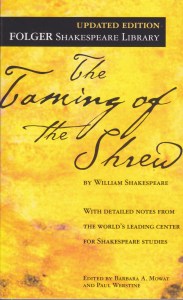
It hardly seemed credible, from what I heard in high school, that anyone would read Shakespeare if it weren’t required. I’m not completely naive, but I do wonder if we insist on introducing kids to the Bard before they’re ready for him. The real stumbling block is the unfamiliar words from the Elizabethan period. With enough regular reading they’re less of an obstacle to adults. Or should be. Or not to be. In any case, one of this year’s reading challenge books required that I read The Taming of the Shrew. I’d never read it before and kind of shied away from it because of the chauvinistic theme—Katherine has to be “tamed” by Petruchio so that her poor, sweet sister Bianca can be married. The overall theme is biblical—Rachel can’t be wed before Leah, so Laban declares. The play’s a comedy at the expense of women.

Those who know Shakespeare better than I question whether the playwright’s motives were as undeveloped as all that, but it is in keeping with the time. That’s not to excuse such patriarchal thinking, but we can’t rightfully blame people for thinking in the terms of their time. Yes, we now realize (except on Pennsylvania Avenue) that women and men deserve equal treatment. We are all human beings and should be treated as such, not as if one gender were somehow more important or better than another. In the Tudor Era, however, that idea had not yet caught on. The Taming of the Shrew contains clues as to why.

Perhaps the most reviled part of the play is Katherine’s closing speech as to why women should be subjected to men. Her reasoning is distinctly biblical. Indeed, the edition of the play I was reading took pains to point out the biblical allusions in the speech—primarily to letters of the New Testament. The fear, unaccountably real after all these centuries, is that we might go back to such thinking. The Bible, after all, doesn’t change much. The most conservative of society still read it in the King James, although the Bible Shakespeare’s contemporaries knew best was the Geneva translation. And, like the schoolchild reading Shakespeare, such conservatives need a little help with the language since words have changed their usages over time. They also may need some assistance realizing that not only words evolve, but so does our understanding of what it means to human. It’s not women who need to be tamed, Mr. Shakespeare. No, it’s quite the opposite.


In God’s Name

If anyone ever bothers to go through my personal zibaldones (if the word’s unfamiliar, please use the search box for my post on it) they’ll find my personal shorthand. It’s not extensive since I’m a firm believer in explaining things and if I don’t write things out I often can’t decipher what I meant. One of the shorthand marks that I do use is the Greek letter theta. Those who know me will have no trouble guessing that it stands for “God.” Or more appropriately, “theos” the Greek word for God. This particular Indo-European lexeme has a venerable history and appears in such forms as deus, Zeus, and deity. Although in a case such as Zeus it can be used as a personal name, it is, in fact, a title. Somewhat like “president” used to be. And it can be used for any number of divinities.

In the Bible there exists a well-placed concern not to dis the Almighty. God—to use his title—had a temper and was known for not being afraid to show it. Among the Ten Commandments is one not to take God’s name in vain. Scholars argue over what exactly that means, but Judaism, on the ground, had to make decisions about it in a practical way. The best way to avoid divine wrath was never to say the divine name at all. God’s name isn’t “God.” That’s a universal word, applicable to any garden variety divinity. God’s personal name, we think, was Yahweh. To ensure the keeping of the commandment whenever this noun was encountered in the Good Book, the word “Lord” was used. That’s the convention behind Lord in small caps in some Bible translations. If you don’t say the name you can’t break the commandment.

In more recent days, in print culture, a further caution has been introduced. In academic writing it’s common to see “G-d.” I can guess the origins of this convention, but I have to admit that concern can lead to obfuscation. Nowhere does Scripture proclaim that you can’t use the title of the ineffable one. I can’t help but think this is following the conservative tendency to see the use of “God” in exasperation as swearing. The fact that another common swear abbreviates itself as “G. d.” might caution against using this particular combination in an effort to preserve the sanctity of the title. No one ever doubted that Baal was a god—but note the carefully lower case “g”—or for that matter, Mars or Zeus. Or, just to be safe, B-l, M-rs, and Z-s. May I suggest, based on personal experience, that theta might be used instead? But only if referring to the true G-d.