Come Together

Although today is Easter for some, for many it generally isn’t. And I don’t mean just those who follow faiths outside Christianity. One of the hallmarks of religions is their tendency to fragment like a sugar egg under Thor’s hammer. Christians have long disagreed on the date of Easter depending on which time reckoning scheme they follow. That which makes it onto most work calendars is the first Sunday after the first full moon after the Vernal Equinox after the Gregorian calendar. After all those afters it’s easy to get confused, but the fact is this kind of precision makes it possible to date Easter until the Earth slows on its axis or Mitch McConnell learns to look at things from someone else’s point-of-view, although we all know which is more likely. This year, in a rare coincidence of the Gregorian and Julian calendars, however, Orthodox Easter is the same as Catholic Easter. Could it be sign of hope?

You see, calendars aren’t just markers of time. They’ve always been religious devices. In fact, our current calendar, the Gregorian, was introduced by Pope Gregory XIII. The world still marches to the beat of Rome’s drum. Nature, it seems, is indifferent to our calendrical needs. The point of all this time keeping was to help those who lived by the soil to know when to plant and when to harvest. That might seem simplistic, but if you follow how it feels outside there would’ve been some sowing going on in February around here. Global warming, for those who’ve advanced to the Gregorian calendar (that’s okay Mr. McConnell, you may leave the room) will throw that off, and maybe we’ll be needing a new calendar. Will we retain the one with it’s pagan month names or shall we adopt one with months of evangelical heroes? But wait, not all evangelical groups celebrate Easter!

I had a college roommate who believed all holidays were of the Devil. His sect of Christianity didn’t celebrate Christmas or Easter. So even as Orthodox and Heterodox join together in recognizing today as Easter, not everyone’s together on that point. Some mythologize bunnies and eggs while others dismiss them as hopelessly pagan. So it is that we have to agree to disagree. Teach the controversy, right Mitch? While some celebrate resurrection today others put their Peeps in the microwave just for the fun of having that kind of power over the weak.

Having your cake, and having it too.


To Whom?

The other day I heard someone use the phrase, “preaching to the converted.” I’ve read enough anthropology to know that regional variations on folk sayings exist, but I’ve always heard this as “preaching to the choir.” What’s the difference, you ask? Actually, these two statements imply very divergent things. It all comes down to preaching. Preaching is what clergy do. (I know I’m over-simplifying, but bear with me.) And where do ministers preach? That’s right, in the church. Aha, you might say, those in the church are both converted and some, anyway, are in the choir! What’s the difference? The difference is the choir has to be there. It’s an issue of volition.

Since this isn’t eighteenth-century New England (at least not yet, although the current administration is trying to make it so) there are no real consequences for not attending church. Many of the converted exercise their God-given right not to worship. The choir, however, has committed itself to being there. They’re more than converted. They’re the faithful. The minister, in other words, doesn’t really need to preach to them at all. Turn this around. Preaching isn’t necessarily to convert someone so much as to improve their lifestyle. Preaching to the unconverted is actually evangelizing. “Evangelizing the converted,” though, just doesn’t have the same ring to it now, does it? Preaching to the choir is applicable to the rest of the church goers who show up regularly. They’re not, however, in the same league with the choir.

I decided to research the history of the saying. It turns out that the original is “preaching to the converted.” The saying originated in England in the 1800s. “Preaching to the choir” appears in America in the 1970s. Perhaps the choir emerged as a new ecclesiastical force in twentieth-century America. Some of the clergy I know would certainly agree with this assessment. They’re really a smaller subset of the converted, after all. The committed converted. Of course, it’s a distinct possibility that I’m spouting nonsense here. If that’s the case, I’m probably preaching to the choir.


Thick Skin

Religion and folklore encapsulate what folk believe. Human beings, despite rationality, are ritualistic creatures. Psychologists have their work cut out trying to explain why we do this or that odd thing, and historians sometimes dig deep into the backstory to find some hint of a tradition’s origins. Although I lived in Edinburgh for over three years, and drove through South Queensferry in the shadow of the great Forth Bridge a number of times, I never heard of the Burryman. In case you haven’t either, here’s a link a friend sent to a brief video about him. In it Andrew Taylor explains the tradition. Each year, going back to South Queensferry’s pagan past, a citizen dresses in a suit of burrs to ensure a good harvest and bring good luck. What’s fascinating here is that burrs are something people generally avoid, although they are an ingenious method of seed dispersal. They stick to clothes, and even skin and can be annoying even singly. Why anyone would submit to an entire outfit of burrs is something only folklore can answer.

Anthropologists are in short supply. Universities don’t like to fund the study of folklore since it doesn’t lead to jobs. The end result is that what we know of many strange traditions is anecdotal. A few years back I got soundly dressed down in an academic setting for referring to a popular publication of Scottish ghost stories. You see, I was writing an article for publication in an academic journal. I wanted to document a story I’d memorized by dint of the fact that a ghost tour guide would stand beneath our window every night in Mylne’s Court and recite his tale. (I traced it back to a potential Ancient Near Eastern origin.) The problem was, no academic would deign to write about such decidedly low brow tripe. In order to find a written source, I had to cite a popular book. Academic reviewers responded with scorn that I would never pass on to an author, speaking as an editor. This was, however, in the old school days.

So, how would we find the backstory to the Burryman? Great Big Story went straight to the source. Andrew Taylor, the incumbent Burryman, tells what he knows of the tradition. You can’t even see the Burryman from high in your ivory tower where pure thought is your only companion. I’ve always been a street academic, though. Growing up blue collar, I find it much more interesting to see what people are doing out here where the professionals don’t tell them how to behave. The pagan past is still alive. We don’t need a wicker man to prove the point. All it takes is a bunch of dried burdock and some very thick skin.


Palms and Thorns

“Holy Week” affects only some. That thought may be disturbing to those who still think of religions as a one-size-fits-all phenomenon. So, although today is Palm Sunday for many, for others it’s just Sunday. Not even all Christians recognize the same Palm Sunday. The question that interests me, though, is the one regarding which religion is the right one. I personally suspect this is the behind the rise of the Nones, but I’m getting ahead of my story. How did we come to this impasse? How did we come to believe that only one winner takes it all, spiritually speaking? The answer may lie in evolution.

I don’t mean biological evolution. Borrowing a principal for how this factual occurrence works, however, may help to understand the diversity of religions. For species to differentiate, they must be isolated from each other somehow. Groups that are available for interbreeding will do precisely that. When populations are separated, subtle changes add up over the passage of time so that when they come together down the road mating’s simply an impossibility. Religions behave the same way. The difference, apart from biology, is that many religions allow multiple gods. They aren’t so different from each other. In fact, we’re not even sure if gods are sufficient to define “religion.” People from diverse cultures in ancient times, the evidence seems to indicate, tried to match up their gods. Your Zeus is our Odin kind of thing. Monotheism—the main form of religion that has a problem with evolution—is the ultimate exceptionalist belief system. Our one deity is the only deity and everybody else is wrong. When populations come together we can’t even agree that the God who’s historically the same is in reality the same. Ours is slightly better.

Amid all the chaos created by religions, academics have decided they’re a phenomenon not worth studying. Academics often lose sight of the larger picture. What happens outside the classroom or laboratory is real life too. And outside the walls of the ivory tower the faithful are gathering. Some today are doing it with palm branches in hand. Others are looking on, bemused. The important thing is we don’t talk about it because talking might lead to understanding. And understanding might make us concede that others have some good points to make with their religion as well. How can you feel special in the eyes of your own god when other people suggest other truths might also apply? No wonder someone will end up crucified by the end of the week.


Crossing Beowulf

Beowulf, from Wikimedia Commons.

Slaying dragons is costly. In much of the western hemisphere the ultimate metaphor for the perils that await humanity in a world imperfectly understood, dragons were the bane of the medieval imagination. And earlier. Dragons are mentioned in the Bible and were stock creatures in the bestiaries of the Mesopotamian imagination. And, of course, it is a dragon that causes Beowulf’s fall. Almost a type of a latter-day Gilgamesh, Beowulf likewise holds an early, if non-negotiable place in the western canon. In this month’s Atlantic, James Parker discusses the dynamic of this pre-Christian poem in our post-Christian context. Specifically he addresses how modern renditions, perhaps inadvertently, Christianize the story. A popular subject for movies and graphic novels, Beowulf is a monster-hunting story that begs for baptism.

The story itself is familiar to most alumni of American high schools. Perhaps before we’re ready to be exposed to Old English, we find ourselves assigned a story of drinking, rage, and violence. Make no mistake—Beowulf is a hero. A deliverer like the judges of old. Grendel, after all, is the spawn of Cain, the evil seed that continues into a moody world of stygian nights and dismal swamps. Parker’s brief article demonstrates the reception history of the poem nicely. It also raises the question of what’s going on when heroes fight monsters. When the Christian imagery that’s deeply embedded in our culture comes to play Beowulf can’t help but become a Christian monster slayer just as Grendel becomes the enemy of God. All of this may be quite unintentional. What we see, however, isn’t imaginary. That’s the way reception history works.

Parker suggests that, although Beowulf is a pre-Christian poem, the cosmic order laid out in the tale is a Christian one. Even today in a post-Christian America it’s vital to understand how important religion remains. It’s not so much that churches are overflowing (unless they’re mega-churches stating that you can get rich by attending) as it is a recognition that centuries of Christian identity can’t help but leave their mark on culture. We see crosses in the handles of swords. Or even in the grid patterns laid out in city streets. Telephone poles. What’s so remarkable is that we see such things naturally and think nothing of it as we go on our secular way. There may be monsters out there. What may not be so obvious is that in slaying them we’re engaging in a religious activity as old as Gilgamesh, if not as obvious as a crucifix held up to a vampire in the present day.


The Scofield Connection

While reading about Cyrus Scofield recently—and that book has stayed on and played with my mind for some reason—I ran across the conferences that he held in preparing his famous reference Bible. Although he claimed the sobriquet “Doctor,” placing D.D. after his name, like many a self-puffer Scofield has no university that will support the claim. (It’s amazing how many high-level CEOs and “important” businessmen pad their résumés with false degrees. Even some government wannabes do it, and then they want to defund education after they get into office.) Perhaps because he had no seminary training, and likely didn’t even graduate from college, Scofield might’ve felt a sense of insecurity when it came to a very large book originally written in languages he couldn’t read. There’s a reason “King James Only” Christians exist. In any case, he set up meetings in a couple of conspicuous places to go over his work. One of those places was Grove City College.

Now, like many small, Christian colleges, Grove City isn’t widely known. Most of the student population—at least when I was there—was fairly local. Pennsylvania, Ohio, and New York, for the most part. Still on the (admittedly rare) occasion when someone asks me where I went for my undergraduate work, they generally haven’t heard of Grove City at all. Even though I spent four years of my life there, I had no idea about the Scofield connection until I read Joseph Canfield’s book. That’s because not all Fundamentalists grow up with Scofield. I’m sure I heard about the Scofield Reference Bible but I didn’t own one and I wondered what the big fuss was all about. After all, the annotations were the work of a man, and I was interested in the words of God. Far more popular was the revision of Scofield known as the Ryrie Study Bible, but I never read that either.

The end result is that many people think that Scofield’s words are “the Bible.” As I used to tell my students, binding pages together within a book makes a statement. If you’re saying “this is the word of God” and part of “this” is Scofield’s annotations, most people can’t distinguish between text and commentary. I eventually acquired a Scofield Bible, not for valid information, but simply for information. I was amazed at how poorly executed it was. Nevertheless, a true believer reading through the first chapters of 1 Chronicles is ready to accept even minimal narrative as divine. So it is that many Americans have come to believe in a Bible that’s not biblical. Religion is full of paradoxes and in this case I’d shared sleeping quarters with one in my more formative years although the connection was unknown at the time.


Non-Lending Library

One of the hidden benefits of the coming societal collapse is the chance for the resurgence of print books. Since I’ve spent most of my life surrounding myself with volumes thick and thin, dense and light, I’ll have plenty to read between bouts of skulking out for food like a feral cat and clawing off those who follow me home, thinking that it’s edible stuff I’m stockpiling. Won’t they be surprised to learn it’s only books! My wife sent me an Atlas Obscura story the other day about book curses. The description of the life of a medieval scribe sounded oddly compelling to me—hunched all day over a writing desk, copying books by hand. Not having to worry about catching the bus before sunrise or being too tired to answer your personal email in the evening. The point of the piece, however, was the book curses.

I’ve been an avid reader since moving to a small town where the main occupation of kids my age was recreational drug use. I was one of the very few who didn’t inhale. Reading became my escape from the loneliness I felt. And I used to lend books to people who’d ask me. I quickly learned that others didn’t share the same care for books that I had. Lent books seldom made their way back to me. We were poor and there were no bookstores nearby and Amazon wasn’t even a meme in Jeff Bezos’ eye yet. Replacing books wasn’t easy. Once I lent out a book I’d already read (but you couldn’t tell it, I’d been so careful). The borrower actually did return it, but the spine was all creased and cracked so that you couldn’t even read the title anymore. I soon began to regard books like those medieval monks who put curses on them so nobody would steal them. I stopped lending them out.

The thing I’m banking on is that books will retain their barter value when society implodes. Of all possible universes only in that one will I be considered wealthy. Those who visit our little apartment inevitably comment on the number of books. What they don’t realize is that there’s a strategy involved here. Like those medieval monks, I have a suspicion that knowledge—including facts that don’t have alternatives—will one day in our dystopian future be valued above all the tweets and lies Washington seems to suggest we follow blindly. And blindness will make a great curse, now that I think about it, to protect these books from being stolen. Or “anathema-maranatha,” as my medieval mentors used to say. Or as Sarah Laskow ends her piece, “May whoever steals or alienates this book, or mutilates it, be cut off from the body of the church and held as a thing accursed.” Maybe this isn’t so strange for a guy whose first academic appointment was at a school that reminds many of The Name of the Rose. (Which was the last book I lent out, for the record.)


Direct Address

For a man as amazingly influential as he was, Cyrus I. Scofield hasn’t been the object of much curiosity. In the venerable academic tradition of ignoring those you disagree with, serious scholars dismiss Scofield as some kind of evangelical aberration, a theological leper, if you will. It’s difficult to locate book-length treatments of the man, although he may claim considerable credit for the elections of Ronald Reagan, George W. Bush, and the current incumbent. Somewhat skeptical of the obviously polemical The Incredible Scofield and His Book by Joseph M. Canfield, curiosity drove me to read it as an accessible and thoroughly researched account. Now, one evangelical going after another isn’t a pretty sight, but if you can get past the “this is what the Bible really means” oneupmanship, there is clear evidence of a sharp mind with legitimate historical accuracy as its priority in Canfield. This is especially clear where he demonstrates that scholars shown the evidence will choose to ignore it to preserve the sanctity of a man hardly a saint.

The strange religion that has developed from the Scofield Reference Bible has had an astoundingly long reach. If you know what “the Rapture” is, it’s probably because those who took their cues from Scofield’s Bible ensured that it became a standard American trope. It generally doesn’t have to be explained, even though the idea doesn’t occur in the Bible. It’s based on a set of “dispensations” developed among the Plymouth Brethren, a fairly small British and Irish sect that influenced the world through its prophet Scofield. (Scofield himself was not a member of the Brethren, but he learned his system of “history” from them.) Although the Scofield Reference Bible wasn’t technically the first study Bible, it was the first widely influential one. It is, in a sense, America’s Bible.

Scofield himself was hardly clergy material. Canfield documents this clearly and doggedly. Among the evangelicals, however, an admission of guilt—no matter how insincere—has to be taken at face value. If you’re caught “backsliding” after that, all you have to do is admit that too. They’re obligated to forgive you 490 times, if they’re truly literalists. We can see this at work in the bizarre evangelical backing of Trump, a Christian only by the loosest possible definition. If you say you’ve accepted Jesus they have to believe you. It’s the ultimate scam. Scofield himself seems to have been aware of this. Particularly wrenching was the account of how, after he was making a respectable income from his Bible, he refused to give money to one of his daughters from his first marriage when she wanted to buy a house. His will left no money to any charitable organization at all. You can take it with you, apparently. And so, we’re left with a world devised by such a man with no theological training. Since he’s so obviously low brow, however, we lack scholarly biographies that take the care of Canfield in exposing information readily available to those with open eyes.


Who Knew?

Reading about Jesus is an occupational expectation for an editor of biblical studies. Not that this is anything new for someone who grew up thinking of him constantly. One of the issues often raised about the son of Mary and Joseph is what he did during his childhood. There are apocryphal gospels that address that question since the canonical ones don’t, other than a Lukan visit to the temple in Jerusalem where the professors were stumped by the student. A query that’s pondered from time to time is why nobody thought to write down the early years. A related question is less often asked: who knew in the early days that Jesus would amount to what he did? It’s pretty much accepted that the tales of a miraculous birth were borrowed from the common stock of quotidian cultural heroes of the day. Anybody famous had to have had a spectacular start. If they knew from the beginning, however, that he was going to be great, why didn’t they write his story?

Unless, of course, they didn’t know. Jesus was born, according to the best that we can reconstruct, in a working class family. He had brothers and sisters, according to the gospels, and since Joseph disappears from the story rather early, he was likely raised in by a single mother. Who pays attention to such mill-fodder as this? One of the common people who will, more likely than not, come to nothing? A statistic to make great the egos of Herods and Caesars. Who bothers to write such things down? It’s only after fame that we become interested. What made him so? How did his meteoric rise get started? Before then, who really cared?

Stuck here in the middle of Lent, it’s easy to forget that even Jesus started life as a nobody. Many who start life privileged end up obscure. There’s perhaps a cosmic balancing act taking place here. The fulcrum—and who thinks of the fulcrum while riding on the teeter-totter?—the fulcrum is the common person. Fame may ease the path to halls of power. Cronies will fall over themselves to kiss the hem of any robe headed toward the Oval Office. Those who claim such rights will do so on the back of a guy so occluded we don’t really even know where he was born. Or what he did before he was thirty. And had he lived out his life like the rest of his neighbors we wouldn’t be asking the question even now.


Neologism

I like a good neologism as much as the next guy. Oxford English Dictionaries recently released a covey of new words added to the famed lexicon. Most of them, it seemed to me, had to do with dangers of technology, like “drunk text” and such fare. Still, increasing vocabulary is one of those rare joys in life that is continues to be free, so I indulge. A friend sent me a BBC story about another new word: champing. Well, my spell-check recognizes that one so maybe it’s not new. In any case, this champing is derived from two words “church” and “camping.” Some locations with medieval churches—which kind of rules out anything on these shores—are now opening them up as camping spots, thus church-camping. The article asks what it’s like to stay overnight in such a place.

Growing up in western Pennsylvania, medieval churches were hard to find, but I spent more than one night sleeping in sacred spaces. It’s an uncanny experience. In what may have been more innocent days, our United Methodist Church allowed youth group sleepovers, as long as there were counselors present. (Ever naive, I only learned later that there were ways around such obvious strictures.) On a Friday night, then, we could occasionally gather with our sleeping bags and slumber under the sanctuary. For theological reasons we couldn’t sleep in the sanctuary itself (although that couldn’t be prevented on the occasional very long sermon) but we could go in. Churches are scary at night with the lights out. We may give lip service to holy ground, but large, cavernous spaces suggest so much by absence and implication that it would take a stout soul indeed to sleep there.

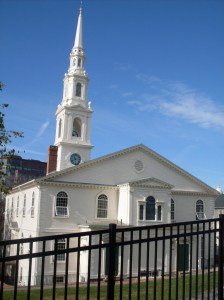
Looks okay from the outside.

Sleeping in sanctuaries in ancient times was an acceptable practice. In fact, there’s a name for doing so: incubation rituals. A person who slept in a sacred place believed any dreams had that night were a message from God. Knowing the dreams I tend to have, I do wonder. Once, at the United Methodist camp called Jumonville—famous for its large white, 60-foot, metal cross visible in three states—we counselors (still naive) had our charges sleep outdoors at the foot of the sigil on the bare top of the mountain. In the morning my champers gleefully informed me that I’d been praying in my sleep. “You kept saying ‘Amen. Amen,’” they told me. Alas, I don’t remember the dreams of that night. Perhaps when I find a medieval church on my journeys I’ll be brave enough to try an incubation ritual once again. This time I’ll take a tape recorder.


Do unto Yourself

Selfishness goes by many names. One of the strangest is “Christianity.” I wouldn’t presume to define a religion, but some time back my wife sent me a story about the prosperity gospel. Written by Michael Horton, himself an evangelical, the pre-greatest inauguration of all time piece is called “Evangelicals should be deeply troubled by Donald Trump’s attempt to mainstream heresy.” Horton goes on to describe the belief system of the prosperity gospel that includes people becoming gods and the idea of positive thoughts drawing good things to you. Quite apart from completely ignoring most of what Jesus is recorded to have taught, the prosperity folk tend to think the Almighty wants them to be, of all things that most shallow, wealthy. “More for me” also goes by many names. The most common is “selfish.”

I grew up evangelical as well. One of the messages drilled into my malleable head was that Jesus taught putting other people before yourself. “Do unto others” was the least you could get away with and still call yourself “Christian.” Part of the disconnect here is that nobody has the authority to define a religion. Not even the Pope can say unilaterally what Christianity is. Protestants aren’t obligated to agree. And with prosperity gospelers with their enormous cash flow telling us that it’s God’s will, well, heresy looks mighty attractive. We’ve come to see the error of heresy, however. Nobody can claim their brand alone has the answer. It’s a theological anything goes. I suggest we go old school and call a cad a cad. Selfishness by any other name would smell as bad.

It’s poor taste to claim your own self-gain as a benefit to society. I, of all people, would handle my wealth properly so that nobody suffers. Except those I don’t like. Doth not Scripture saith, “ I have said, Ye are gods”? Yet earlier in the same Psalm come those easily ignored words, “Defend the poor and fatherless: do justice to the afflicted and needy.” Missing are “build a wall across your southern border,” and “speak untruths when it is convenient to do so,” and “distrust those who speak a language not your own.” Oh what the Bible would say if only we could write it ourselves! But fear not, for we have many who believe the prosperity gospel. And they’ve already got the task well in hand. And their lexicon doesn’t even include the word “selfish,” so you need not worry about such uncomfortable thoughts. Get rich and all will be well.

Photo credit: Kriplozoik, Wikimedia Commons


Excarnation

To those raised in the Christian tradition incarnation is a familiar concept. The idea, more complex than it sounds, is that God becomes human. In a world of DNA and general disbelief in anything non-physical, it boggles the mind how disincarnate “matter” (for lack of a better word) might bond with the double-helix in order to create something new. Since science can’t explain such things spiritual, believers have long hung the cloak of mystery here and passed on to more practical matters. But what about excarnation? It’s actually not the opposite of theological incarnation, but it does involve spiritual practice. A friend sent me an article on Vintage News (much better than fake news, in my humble opinion) titled “The Towers of Silence: Ancient reminders of an eerie Zoroastrian burial ritual.” This was a nice find because I’ve been reading about the Zoroastrians again recently, and if ever there’s been a case of an important religion going underground, their’s is it.

I don’t mean to sound patronizing about it, but Zoroastrianism has been one influential religion. Having roots in the world between Vedic and Semitic religions, it had an impact on both. In my teaching days when I covered Zoroastrianism my Hindu students remarked on how similar the concepts were to their tradition. More reluctant were those of the Judeo-Christo-Islamic side to see that key concepts such as Heaven, Hell, the Devil, and Armageddon have their ultimate roots in the dualism that Zoroastrianism put on offer. Thus spake Zarathustra. We know very little about this founder of the religion. We do know that he set out to create a “systematic theology” that explained the world he saw. The result has changed the world many times over.

Those of you drawn in by catchy titles may be wondering what excarnation has to do with it. Believing dead bodies to be inherently corrupt, burial wasn’t the best Zoroastrian option since it only polluted the ground. The response was the ultimate in up-cycling—expose dead bodies until the vultures eat all the polluting flesh and then handle the dry bones afterward. This practice is arguably the most natural way of disposing of human remains, but it’s distasteful to many people. Who wants to be eaten? Unless, of course, you’re a believer in incarnation. For in that tradition God incarnate told his followers to eat his body and drink his blood. The more squeamish have done what religions have always excelled at—they turned earthy reality into a metaphor. Even vultures have to eat.

Image credit: John Gould, HC Richter, Wikimedia Commons

Image credit: John Gould, HC Richter, Wikimedia Commons


An Apple a Day

Have you ever bitten into a piece of rotten fruit? I suspect most of us have had the unpleasant experience. From the outside the apple looks fine but that first bite sinks into a brown and corrupt interior that turns your stomach. There’s no rehabilitating it—once fruit’s gone bad it’s bad. Jesus is once said to have said “by their fruits you will know them,” them being the righteous. Over the last several days we’ve watched, not exactly surprised, as the news revealed Attorney General Jeff Sessions lied under oath—what used to be a very serious crime—about consorting with the Russians. The difference between that and the apple I described is that this one didn’t look so good from the outside either. Eve, I think, would’ve chosen a different piece.

The strange thing about this is that evangelical Christians of the sort that voted for Trump should know about the fruits passage. Not the Eve one, the other one. Growing up in a Fundamentalist context I frequently heard about knowing others by their fruits. People are capable of deception, even under oath. That’s why we have a name for it. Thing is, we expect better from those who hold the highest offices in the land. And we’d expect honesty on the part of the evangelical crowd. Once you’ve bitten into that apple there’s no turning back. Ideology trumps theology, it seems. Even the Bible. That’s one of the great mysteries of our time—those who loudly proclaim they live their lives by the Bible count on others not having read it. Kind of embarrassing to be caught with your bias showing. Those whose sins you’re willing to overlook in the name of principle.

As the rogue’s gallery that we now recognize as the presidential cabinet was being nominated, many in this nation suffered shock wave after shock wave of incredulity. Steve Bannon later admitted that their role was to dismantle the agencies they’d inherited—so much for the meek inheriting the earth bit—while power-blinded Republican leaders followed like, well, sheep. The evangelical crowd, ignoring that troublesome leather-bound book they love, refuse to criticize. Who hasn’t forgotten meeting with the Russian Ambassador from time to time? I’m old fashioned enough to believe there’s a difference between biting into an apple that to all appearances is fine and one that’s obviously rotten from the start. In one case you end up disappointed. In the other you get what you deserve.


The Cargo of Cults

Among religious studies scholars “cult,” in the popular sense, is a swear word. Professionals in the field don’t use it because it implies that a belief system—usually modern—is somehow less important than an established religious tradition. Instead, we’ve been taught to call these “New Religious Movements,” or NRM for short. Looking around it seems that political correctness is now gone and open advocacy of white power is the new norm. After all, the minority of the American electorate voted for it so we can change the rules on that basis. Even before the election, however, Rebecca Nelson wrote an important article on GQ about the cult of Trump. As a person, what’s there not to dislike? A long history of shady business deals, lawsuits, and sexual harassment (we just couldn’t get beyond Bill Clinton and Monica Lewinsky just a couple of decades ago, but all that’s water over the dam) such a man couldn’t have been elected even in the W era. Well, cult thinking explains that.

Nelson cites the work of Rick Alan Ross, an expert (back from in the days when we still had those) on cults. The rise of Trump followed exactly the pattern of how cults work. A single man (nobody voted for Pence) who is able to fix this great broken machine called America. He can do it by referring to a black box that nobody may open to examine, but yes, believe me, the solution’s in there. Stir the muck and tell people things are awful when life expectancy is better than it’s ever been, everybody has health care, and the economy’s finally starting to stabilize, and you’ve got yourself a cult leader. As Nelson insinuates, the Kool-Aid is in the future.

We learned a sum of zero from Jim Jones, David Koresh, and Marshall Applewhite. We wrote them off as weirdos getting off on a power trip. Swept away by the mere fact of being followed. Mentally unstable with delusions of grandeur. Narcissistic to a fault. Wait, what? We ignored them so well that we’ve elected a candidate who took not just a page from their playbook, but an entire chapter. Back in the days of political correctness, when there was still such a thing as experts, I sensed that things were pretty good. As horror movies should’ve taught me, too good. Caligula insisted that his statue be set up in the Jerusalem temple next to where Yahweh resided. The temple may be gone, but the desire to be worshiped will always be with us.

Wait, that's not the Washington Monument is it?

Wait, that’s not the Washington Monument is it?


World Stories

worldofstoriesAlthough I’ve not formally studied it, Buddhism has long been part of my thought process. Like Thomas Merton—and this may be the only point of comparison between us—I find little difference between the contemplative worlds of Buddhism and Christianity. Mindfulness knows no denominations. I suspect David R. Loy’s book The World Is Made of Stories would cause anxiety for some. Those not comfortable, for example, with paradox. Or those who believe that only the literal is meaningful. Separated by the vast land mass of Asia, eastern and western ways of thinking about the world—telling their stories about the world—diverged widely in antiquity. There was a kind of “rediscovery” of south and east Asian thought in the late nineteenth century western hemisphere. Since then occasional famous explorers such as the Beatles, or professional practitioners such as the Dalai Lama, have brought Buddhism’s ideas to the mainstream, but because they coexist well with Christianity there has been no cultural reason to displace them.

I found Loy’s world compelling. All is narrative. That’s the way human brains work. If you’re reading this right now, you’re following my narrative. If you’re not really paying attention, another narrative has gripped you. Science is a narrative just as religion is. It is the way we think. The internal monologue. Consciousness itself. Stories. People will follow a story quite naturally, which is one of the reasons it’s such a shame so few people read for pleasure. We can watch our stories (what is a sporting event but a narrative playing out before a fan’s eyes?) and many people do. The written story often, however, takes us deeper.

Contemplation is an endangered species. Although I found the enforced quiet days at Nashotah House (such as Ash Wednesday) to be an onerous rule, I would arrive home with little to say in any case. The world of busyness that we’ve made our business can choke the meditative spirit. Although some workplaces offer yoga sessions (themselves based on Hindu spirituality) they hardly encourage meditating at your desk. It seems the natural enemy of productivity when, in reality, it increases it immensely. Who doesn’t work better after a vacation? The business world often presents the religious life as one of indulgent non-productivity. I remember being made to feel stupid asking for one Good Friday off while working my first full time job in retail. When cash transactions grew to be too much I’d find a church on my lunch hour and just sit. Now I only find time to read Buddhist books on the bus on the way to work. Look deep enough and there’s a story in that.