Eating Earth

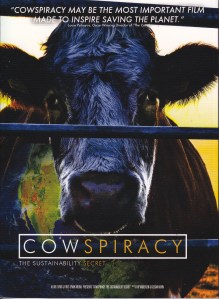
Some things are hidden in plain sight. That doesn’t make them any the less insidious. One such hidden truth is that the earth is of a finite size. Another is that, consequently, its resources are limited. Our species is easily led, as are most herd animals. Standing out can be embarrassing. Painful even. This is the recipe, along with a generous dash of greed, that has put us on the brink of worldwide catastrophe. We live in an unsustainable system, and some of the largest culprits are our appetites. As a fan of horror movies, I can honestly say Cowspiracy is the scariest movie I’ve seen in a long time. It’s a documentary, not genre fiction. Scientists had generally already thrown up their hands because we’ve passed the tipping point for global warming, and then we elected ourselves the stunning leadership of Donald Trump.

No one can predict exactly what form the collapse will take, but we’ve set the key factors in place. We’ve been warned for years. Cowspiracy demonstrates something we don’t want to admit—the agricultural lobby is extremely powerful and the least sustainable aspect of life on this planet is animal husbandry. In early civilization, where technology did not exist to support large-scale farming, meat was not a staple of the human diet. Families that could afford animals gained more value from their beasts alive than on the plate. And they had only a few. As mechanization increased in the last century, we made livestock valuable commodities. When I was a kid word on the street was you were even poorer than we were if you couldn’t eat meat every day. Humans were the absolute, if blind, masters of their own domain. Now agriculture is the single largest force of degradation of the environment on the planet. And nobody wants to listen.

Cowspiracy is not an easy movie to watch, even for a vegetarian of many years’ standing. So why watch it? Because our reliance on animal-based food is destroying our planet. Not slowly either. If this is true, why haven’t we heard of it? Kip Andersen and Keegan Kuhn spend an hour-and-a-half exploring that in this important film. While it can’t be fully summarized here, in a word it can be said: money. There’s huge money to be made in a business rightly called animal husbandry. Wedded to profits at the expense of the very soil that gives us life, we eat our way to the grave. And we do it even when technology has already offered viable alternatives. They are also hidden in plain sight.


Biblical Hurricanes

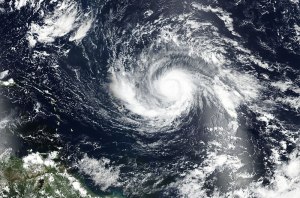
Say what you will about western Pennsylvania, but it was a location fairly safe from natural disasters. My hometown was too far inland for hurricanes to cause much damage. A little too far east for Midwest tornadoes to touch down (mostly). Adequate-to-too-much rain, so wildfires didn’t occur. Not on any fault-lines that invited earthquakes, and volcanoes only thousands of miles away. We did get floods along the rivers during spring, but if you lived up the hill they weren’t much of a personal threat. It felt safe from the big news items of today. Leaving home for the sake of finding work moved me into Tornado Alley for many years, and currently, in New Jersey, in the range of hurricanes now and again. Still reeling from Hurricane Harvey and lack of effective national leadership, Irma is devastating lives, and Jose is in her wake. Then a massive earthquake rocks Mexico. It feels like the apocalypse.

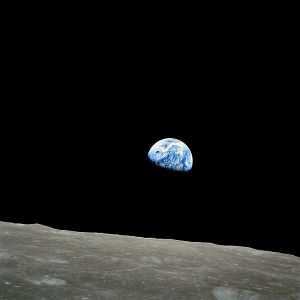
Image credit: NASA, public domain via Wikimedia Commons

Ironically, many people read the Bible as a linear story from the creation of the world in Genesis to the end of the world in Revelation. They make an obvious set of bookends. Unlike western Pennsylvania, Israel lies on a fault-line that means earthquakes are not uncommon. Droughts occur. And being right on the path between major empires, it was frequently subject to human disasters such as invasions. It was not the most secure place to write a book that would change worldviews for millennia thereafter. What is so fascinating about this is that the message (or more properly, messages) of the Bible gets lost in the conceit that this is somehow a story of the history of the world with lots and lots of pages of preachy stuff between the exciting bits at the beginning and the end.

In times of natural disasters, people turn to the Bible for comfort. There are verses, often pulled from context, that do a fine job of that. Nevertheless, the Bible is an enormously complex text. Of its many books, Genesis and Revelation have had disproportionate influence on society. Any natural disaster big enough can be called “biblical.” Since the time of William Miller and John Nelson Darby, such disasters have been interpreted as heralding the end of the world. It is scary to see the devastation a single hurricane can cause. When it is followed closely by a second, one can’t help feeling a bit like Job. The apocalypse, however, is a misreading of Revelation. The book ends with Heaven on Earth. And if you can find a quiet place to read, you’ll find plenty of unexpected stuff tucked away in the middle. Just don’t take it too literally since that too leads to disasters.


Night of the Museum

I admit to being a relative stranger to contemporary commercial television. We don’t have “triple play” at home, and since the internet provides more information and entertainment than one person can possibly handle in a lifetime, why pay extra? On a visit home, however, where internet does not yet exist, I fell to the default of watching TV. Scrolling through the cable channels available in this small town, I start to understand why we don’t pay extra for this at home. Much on offer appeals to the lowest common denominator, and although some educational programs exist, they have to put somebody in danger in some remote location in order to draw the viewers in. Then I stumbled on Mysteries at the Museum.

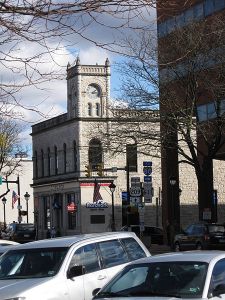
For those of us hopelessly enamored of the past, museums are an irresistible draw. I joined the program already in progress. It was talking about Stroudsburg, Pennsylvania, through which we’d driven to get here. A resort town in the Poconos, I always think of Stroudsburg as a traffic bottleneck, particularly on a holiday weekend. Instead the story was telling of a haunted jail in which a prisoner had to be exorcised after it was found that he could make it rain inside his cell. Then the name of the Warrens was mentioned. The Bible used in the exorcism is from their occult museum (thus the tie to the title of the program). Ed and Lorraine Warren, as my regular readers know, get mentioned here every once in a while. Real life ghost hunters, they kept a museum of the occult in their Connecticut home. I’d missed the part of the program where they revealed the provenance of the artifact. Now things started to make sense. After the commercial break, however, the story shifted to a historic pair of hiking boots.

Image credit: Creative Commons Share Alike 2.0 Generic license. Photo by Doug Kerr, Wikimedia Commons.

What was so striking about this brief segment of the show was not the implied credulousness of the investigation, but rather the certainty with which those interviewed declared this was a water demon case. Okay, so I’d just finished a seven-hour drive and I may not have been at my sharpest, but where did such certainty come from? Who were these experts telling us what had happened? I’ve read enough of the Warrens’ accounts to get a sense of how they worked, but not even the name of the priest was presented, let alone that of the demon. What we had, then, in this 15-minute segment, was a Bible and an anecdote of rain falling in a Stroudsburg jail. As I switched off the program to go to bed, I knew that I’d find the missing information on the internet. Even without triple play.


Hurricane Warming

Image credit: NOAA, public domain via Wikimedia Commons

My heart goes out to those suffering from Hurricane Harvey in Texas and Louisiana. Natural disasters like this are often tied to the “wrath of God” model, and outdated though it is, it still captures how it feels. The sheer amount of rain dumped by this one storm is literally inconceivable. Trillions of gallons. Coupled with a completely ineffectual president, the disaster is even greater. Like many others, I’ve been watching since the weekend as the numbers and statistics of woe rise. Lives lost. Property washed away. Once more it reminds us just how small we are in the face of the weather. Some of this same awe was in my mind as I wrote Weathering the Psalms. Ancient Israel did not experience hurricanes—the bodies of water nearby aren’t large enough to generate them. A single thunderstorm, however, is enough to put the fear of God into a person. In ancient times, with an under-developed meteorology, all of this was the provenance of providence. How else could you begin to explain such tragedy?

One of the books that got me started on my meteorotheological quest was Erik Larson’s Isaac’s Storm, about the Galveston hurricane of 1900. Thousands died in that storm, and it remains the most deadly natural disaster in US history. Although Hurricane Harvey developed quickly, there was warning. The death toll is remarkably small (at least at the moment) compared to the fury of the storm. The natural tendency of human psychology is to look to supernatural explanations for such devastation. What have I done to deserve this? How could God do this? Are we being punished? Questions such as these come to mind, although we know that hurricanes are entirely normal features of this planet. Somewhere in the back of our minds, though, we probably are aware that global warming causes more radical weather.

Even as Trump continues to surround himself with climate change deniers, we see what global warming looks like. The weather is an intricate mechanism. Small things effect it. Large-scale changes throw it into chaos. Those who see climate change as a pain in the pocketbook will do anything they can to deny its reality. More powerful than a freight train or battleship, the weather can’t slam on the brakes and suddenly resume a more milder form. No, we’ve already started the process, no matter how many billionaires disagree. My heart goes out to those who continue to suffer from the hurricane. We need strong leadership and clear thinking at such times as this. We will need more of that in years to come. But we must also keep in mind this isn’t the anger of God. Unfortunately the wrath of human greed can be just as devastating as the wrath of the Almighty.


Photographic Evidence

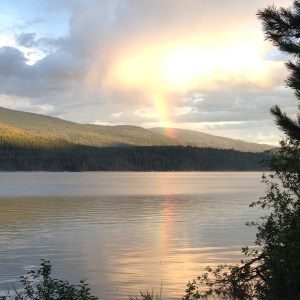
All photographs are lies. That moment preserved, formerly on celluloid but now with electrons, is gone for good as soon as the shutter is snapped. The camera doesn’t see as the eye sees. I was reminded of this during a mountain thunderstorm. I awoke early, coated with jet lag and the residue of my regular early morning schedule. It was still dark, but the reddish sunlight soon wrestled through a valley fed by a creek across the lake. The color was impressive, but my camera washed it out to a diluted Creamsicle orange. In reality the clouds were roiling overhead and lightning was streaking through a thunderhead like synapses firing violently in a massive brain. Thunder in the mountains can’t be photographed. Nor can it be forgot.

My work used to require quite a bit of travel. Before I would visit a campus I would spend some time on faculty pages, trying to put faces together with names. Impressed with how young these professors were, I’d knock on doors armed with foreknowledge of who might greet me. I wondered who these older people were when the door actually opened. It’s disconcerting to see someone age before your eyes. I would think back to the photographs online that had assured me this person would be much younger. The picture was a fossil. A moment frozen in time. The very next second after the photo capture that smiling face had changed. The best that we can hope for is a gross approximation.

Perceptions of reality, as all religions teach us, contain a healthy dose of illusion. While it contains ethereal beauty, this vision I’ve captured in my lens is only part of the picture. There is something deeper, more meaningful behind it. Photographs enhance memory. In the days before Photoshop they could be submitted as proof of an occurrence. They are a form of art. Whatever else they may be, they are also lies. Lies need not be of evil intent. Religions try to explain what some privileged individual realized was the truth. These who found a way of looking behind the photograph. The streaking lightning outside evades the slowness of my finger on the button. The thunder rolling and re-echoing through these valleys will remain in my head long after the sound waves cease to reverberate. Reality is more than it seems. Even my experience of this mountain thunderstorm is that of a single individual seeking enlightenment. Elsewhere others are up early, observing it too. What they experience may be something very different from me indeed. I have a photograph to prove it.


Sky Blue

How do you capture a true and abiding fascination in words? That’s a thought that comes to me once in a while when I think about the sky. It’s so hard to define, yet it’s always there. To quote myself: “To understand the weather is somehow to glimpse the divine” (used with permission). I waited for The Imagined Sky: Cultural Perspectives, edited by Darrelyn Gunzburg, for years. I think I first saw an ad for the book two years in advance of publication (yes, scholarly presses can do stuff like that). I kept stopping by the Equinox booth at AAR/SBL to see if it was available. It was the same kind of drive that led me to write Weathering the Psalms. That hope of grasping the intangible. To hold the sky itself. One of my early creative writing club stories was about a boy who wanted the sky. I wanted this book.

Like all books of essays from different authors, it’s a mix of fruits and nuts. There’s some very interesting pieces in here while others seem to have been made to fit only with some difficulty. Still, the sky. I admit to being somewhat disappointed as I read along. This wasn’t for research—my book on the topic is already done—it was for pure intellectual curiosity, what passes for pleasure among academics. Many of the pieces were mired down in detail. Written bout the sky, they refused to soar. Then I came to Tim Ingold’s essay. Here’s what I’d been looking for. Someone who knew the sky could only be approached in terms that contradict themselves at every turn. There is something to say about the daytime sky. It has to do with the nature of light. And of the sky seeing us.

The sky, by definition, is larger than this rocky substrate we call home. It encompasses everything above us. I work in a cubicle with no access to outside windows. I wilt daily like a plant deprived of sun. (Although the wonderful article on light pollution by Tyler Nordgren gave me pause over even that.) I need to see the sky. When clouds block my view, my outlook begins to suffer. It’s that ethereal cerulean I crave. Without it I am but a troglodyte eking out a minimal survival on toadstools and lichen. The sky is our orientation. It is our timepiece. It is eternal. Of the things we do that are evil, polluting the sky is one of the most unforgivable. The key may be in the word “imagined,” but if we could only understand the sky we will have found true religion. They’re called “the heavens” for a reason.


Weather Vain

The other day I was awakened by a severe thunderstorm. It’s been quite a while since that’s happened. Unlike when we lived in the Midwest, thunderstorms in New Jersey tend to be widely scattered and somewhat uncommon. (It’s all a matter of perspective, I know.) My basis of comparison is how often I notice such storms. I’ve never been able to sleep through one. Thankfully this one came at around 4:30 a.m., past when I’m usually awake on a weekend. I’d forgotten the raw power of just how loud and bright such a storm can be. Danger seems all around. The feeling is primal and urgent. As I got out of bed and walked into the dark kitchen, windows filled with electric blue followed by and tremendous blast, I thought once again of Weathering the Psalms and the story behind it.

By the way, when I speak to young scholars about publishing I tell them this isn’t the way to go about finding a topic. That having been said, my book was born in the Midwest. Life at Nashotah House revolves around required chapel twice daily. Weather does not stop it. In fact, holding the daily office by candlelight because a storm had knocked out the power was not uncommon. Morning and evening prayer—indeed, all of the canonical offices—are built around the recitation of the Psalms. Reading the Psalter in slow, stately tones while thunder raged outside, rattling the ill-fitting stained-glass windows, left an indelible impression. It was only natural in such circumstances to notice how often the Psalms mention the weather. Thus a book was born.

I’m currently at work on a new book. I can’t say the topic just yet because someone might be able to beat me to it. (Knowing the way I come up with book ideas, however, I doubt it.) Sitting in my darkened living room, in my writing chair with the fury just outside, I was strangely inspired by the storm. Then it was over. Silence followed by birds singing, just like in Beethoven’s sixth symphony. The thunderstorm is one of nature’s psalms. As at Nashotah House, in the Midwest we had perhaps too many of that particular kind of psalm. Nevertheless, in the silence that followed I was left strongly in touch with my muse. These are the states that lead to poetry and song. Every great once in a while they might even lead to a book idea. As I tell students, just don’t expect that anyone else will get it.


Whither the Weather?

The weather which we’re having, showing the impact of imaginary global warming, has been quite dramatic of late. I recently had occasion to be out driving during one of the more intense weather events when the sun broke through only to reveal an impressive array of clouds heading in—all the way from the ground to the gray ceiling of the firmament itself. It was quite beautiful in a threatening way. Of course, I’ve been fascinated by the weather for years, going so far as to write a book about weather in the Bible. A friend recently sent me a story reminding me of an under-recognized aspect of witchery. Our standard cultural myth suggests witches are all about casting spells on your cow, or your family. In reality, many witchcraft accusations were about bad weather.

The story by Pollyanna Jones, “Storm Callers—The Art of Weather Magic,” describes beliefs in witches and weather magic. I couldn’t help but think of our current situation. We live in an age of empowered climate change deniers who also happen to be misogynists. Can this be mere coincidence? 45 and others of his caliber seems to think that women are the cause of all masculine problems, which are, after all, the only problems that really matter. The red states do seem to have a preference for the dark ages, overall. I don’t need to worry about them reading this because electricity is of the Devil and the internet doesn’t really exist. It’s amazing how liberating blinders can be. February was spring this year and April feels like January. Must be some woman to blame.

The truly tragic aspect of this tiresome repetition of misogyny parading as righteousness is that the myths behind it have been thoroughly debunked. The atmosphere’s so complex that even with all our understanding of fluid dynamics and chaotic systems we still can’t be sure what tomorrow’s weather will be like. The atmosphere, by definition, is larger than the surface of the earth and is constantly trying to adjust itself like a passenger on a long-distance commute. Yet we go from McCarthyism to Watergate to Reaganomics to 45 rpm, each one as tawdry as the previous attempts to blame the poor for the woes of the rich. “He maketh His sun to rise on the evil and on the good, and sendeth rain on the just and on the unjust,” Scripture saith. That doesn’t sit well with true believers, however. It’s much easier to hunt for witches than to deal with facts.


Theoretical Monsters

We’ve had a lot of rain lately. One rainy night over this past weekend I talked my wife into watching Dracula with me. It’s been a few years since I’ve seen this classic myself. Difficult to believe that it was ever scary. This is the film that launched the horror genre that has become such a major part of the entertainment industry. It has the right mood for a rainy night. Movies were paced much more slowly in the 1930s, and viewers are given ample time to drink in what’s happening. In some current day films the cross-cutting in action scenes is so rapid that I really have no idea what took place. Dracula is slow, stately even. Thinking back, I believe this was the first monster movie I ever saw, so it has a resonance with me. When Renfield balks at the huge spider web in Dracula’s castle, the vampire quotes from Leviticus—“the life is in the blood.” Monsters are religious creatures.

A year ago in January, with the help of two colleagues, I proposed a new unit for the American Academy of Religion annual meeting—Monsters and Monster Theory. After working on this proposal a couple of months (strictly off work time for me), the new unit was declined by the academy. We decided to try again. This year our exploratory session was approved. The idea had come to me when I noticed that papers on monsters and religion had been on the rise, but there was no central forum to discuss them. They were like zombies without a shepherd. Not being an academic, I couldn’t start the session by myself. Now the society agrees that we’re worth at least one meeting room and a couple of hours to see whether the topic might become a recurring one.

Some people, I’m well aware, find this combination odd. Religion, after all, is about sweetness and ethereal light. Being nice to one another. Things like that. Monsters, on the other hand, inhabit the dark. They’re creepy and unsettling. They’re also wonderful metaphors for so much of life. What some of my colleagues have come to realize, and the academy seems to be backing us up on this, is that if anyone can understand monsters, religion can. Psychology will continue to try. Literature will continue to create them. Scholars of religion, however, are those who would like to bring some order to a chaotic world. We study monsters to learn about what it means to be human. It has been raining quite a lot lately.


Blizzard Warning

The dangers of prognostication were well known in antiquity. Most prophets, who didn’t so much tell the future as warn about probable outcomes, weren’t the most popular of people. They knew that feeling of walking into a crowded room and announcing their career had something to do with religion only to have the place fall silent. Cricket chirps. We all have our secret sins we’d rather not have some stranger judge. So it is with the weather. Something like this must’ve been in the back of my mind as I was trying to write Weathering the Psalms. I lived in Wisconsin in the days before Paul Ryan and, like said Ryan, tornados could strike at any time, unannounced. My family and I spent an anxious afternoon or two in the spider-infested basement based on the inherently uncertain predictions of how a nearby tornado might move.

Those of us in the northwest are sitting here wondering about this monster nor’easter. It’s been in the making for several days and the forecasters, unlike the prophets of old, have been hedging their bets. If this massive cold front from the midwest fails to meet up with the intense storm off the east coast we could end up with only a smattering of snow. If the two collide, well, Isaiah, Jeremiah, and Ezekiel together can’t help us. It’ll be like the book of Revelation. Only colder and with far more snow. Oh to be able to predict the future! It would certainly help when it comes to deciding whether to climb onto that bus or not. I mean a simple rainstorm can add two hours to the homeward commute without the threat of a meteorological Trump coming our way. I thought Punxsutawney Phil didn’t see his shadow.

Although predicting the future wasn’t really what prophets did, it didn’t take long before people thought that’s what they were up to. People have always wanted to have the advantage of being able to see disasters before they arrived. Wouldn’t it have been helpful to know the results of 11/9 before Thurston Howell the President was elected? We could’ve bought our Russian grammars and dictionaries before there was a run on the local Barnes and Noble. At the same time I politely dispute the saying that hindsight is 20/20. If we could see anything that clearly we would be such Untied States at the moment. Right now the glass seems to be falling and the wind’s picking up from the northeast. What does it mean? Nobody really knows.


Seeing Thinks

Look, up in the sky! It’s a bird! It’s a dude! What what is it? It’s actually a cloud. I enjoy the entries on Mysterious Universe, but sometimes a cigar is just a cigar. It seems like decades since I laid down on the ground and looked at the clouds, seeking shapes. The sky is nature’s cerulean canvas and although they’re just water vapor, clouds take on endlessly fascinating shapes. Since religion has historically been projected onto the sky, many people take signs in the sky as somehow divine. The photo on Mysterious Universe is of a cloud that some thought was Jesus and others thought was Mary. Herein lies the rub of pareidolia. You see what you want to see.

There is, in traditional Christian thought, a world of difference between Jesus and Mary. You really don’t want to mix the two up. I mean one is divine and the other is only venerated. Don’t want to cross that line into worship because idolatry leads to all kinds of trouble. So who’s in the sky? Someone that we should perhaps think sacred: water. In a world quickly running out of fresh water (of course since now, officially, there is no global warming we’ll have to find another way of explaining our disappearing ice caps) we should all perhaps worship our clouds. The harbingers of fresh water. It won’t last forever.

I, for one, complain when it rains too much. I suppose that’s because I’ve lived most of my life in the rainy climates of the eastern United States and Scotland. Days can pass without a glimmer of sunshine. I get depressed and truculent. Yet the freshwater falls. Water tables are replenished. In much of the world—indeed, in much of the United States—it is not so. Water shortages are bad and are growing worse. We use far too much and when the ice caps are gone, the largest reserves of freshwater on the planet will be empty. Then again, capitalists have never been too keen on saving up for the future. Most of us alive today, at least in the rainy climes, will have our lifetime supply. The future, however, looks pretty hot and thirsty. So who is it in the sky? Could be either gender—wearing robes makes it hard to tell at this level of detail—but whoever it is, let’s hope they’ve brought plenty of friends with them.

Look like anybody you know?

Look like anybody you know?


Samaritans, Good and Otherwise

It’s the coldest day of the winter so far. I’m noticing this because I’m standing on the shoulder of the New Jersey Turnpike counting the NJ Transit buses that are flying by at highway speed. It’s been a morning of irony so far, which explains why I’m standing out here instead of sitting inside the broken down, but still warm bus right next to me. I felt the cold while waiting at quarter to six for my bus to show up. Thankfully on time. It’s very empty this morning; I’m maybe the fourth passenger. Somewhere along Route 22, miles later, the bus gives a distress cry. Ironically, the engine is hot. The temperature outside is in the single digits. Also ironically, the radio on our bus isn’t working, so the driver has to call dispatch on his smart phone. Meanwhile, the engine cools down enough for him to try it again. We’re fine until we pass exit 15 on the Turnpike.

While I try to think of others before myself, I sit near the front of the bus—the first or second row. That way when it’s time to get off I don’t have to wait for dozens of people to wake up, stretch, and slowly shamble into the aisle. (If you think that’s an exaggeration, you don’t commute by NJ Transit.) “The first shall be last,” the Good Book says, and I believe it. I lost count of how many of the company’s buses have zoomed past, but when one finally stops, I’m person number 8 off the bus. The Good Samaritan driver stops me outside his bus. “Sorry, no more seats. No more standing room.” No room in the inn. My driver urges the long line behind me to get back on the bus, where it’s warm, to wait. I was first, now I’m last. That’s why I’m standing out here in the cold. As I approach the bus I see all the first several rows are filled by those first back on the disabled bus. They will be the first to be offered a ride by the next driver along this road to Jericho.

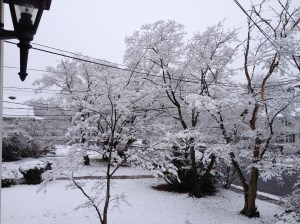
winter

The guy behind me, now in front of me, comes to the same conclusion and waits outside too. At least we both have beards. I’m thinking of Jesus’ words about the end of the world. “Pray it won’t come in winter.” Out here, all prayers are frozen. At least thirty NJ Transit buses buzz by creating their own wind chill before another stops. I want to be first because I paid more for my ticket than those who sat further back on my bus. In fact, I could rent a small apartment in many places in the country for what I pay a year for a bus pass. I wonder if that’s what it means that the first shall be last. Or maybe my brain’s just frozen, since it’s the coldest day of the winter so far.


My Stranger’s Keeper

img_3106

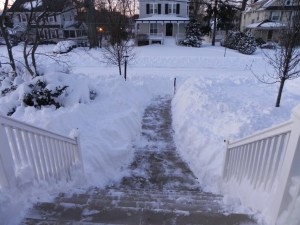
He was a bearded young man, maybe in his twenties. He kind of reminded me of my own youth, only cooler. I was at a stop sign on a snow-covered hill with tires honestly a little more worn than they should’ve been. Three times I tried to get some traction only to have to reverse and give it just a touch more gas. He walked by and called out “On the count of three, okay?” I shouted my thanks. It took him a couple of minutes to get me moving and as much as I wanted to stop and give him something for his efforts I knew that if I did I’d be right back where we’d started. Once I got moving, I had to keep going. I’ve driven in snow since I earned my Pennsylvania license in the snow belt of Lake Erie and I’ve helped drivers stuck in snow a time or two, but I was touched by this young man helping an older guy in a neighborhood he didn’t know get out of a jamb. That’s what I think of Americans as being like.

Seeing the utter selfishness of those “elected” officials posturing over the last few days I say to myself they didn’t grow up in the snow and cold. Nothing compels a young man with better things to do to help a frazzled older guy except for common human decency. Those who grow up with hardship know the value of their fellow human beings. We help each other because that’s what people do. Those born to wealth and power help themselves and only themselves. They need to learn the message of snow. Nature is our most natural teacher.

I don’t know his name. He didn’t have any idea that I had four hours to drive through snow, sleet, and freezing rain, but he helped me despite that. He didn’t ask for any money and I’m sure he expected nothing so coarse. I’m old enough to miss such kindheartedness and to cherish it deeply when I encounter it. Snow and hills and bald tires aren’t a winning combination, but the human capacity for goodness mixes well with any conditions. On a cold winter’s day I encountered the warmth of human concern for a guy in trouble. I need to listen to what the weather is saying more closely. More than that, I need to step out of my car more often and throw my shoulder against a stranger’s hatchback. It’s what makes us human.


God’s Meteorologist

weatherexperiment“To understand the weather is somehow to glimpse the divine.“ I honestly don’t remember writing those words. A friend of my drew them out in a quote last year (perhaps the only time my book has every had such an honor) and they resonate with what a much better known writer has said. The Weather Experiment: The Pioneers Who Sought to See the Future was a book I bought upon first sight. Peter Moore’s story, like the science of the atmosphere, is only a small part of the whole. I glanced through the index for Increase Lapham while still in the bookstore, but despite his absence bought the tome anyway. I’m glad I did. Throughout this account of how meteorology developed in the nineteenth century religion and science are continually at play. As Moore points out, when faced with a violent storm, before any means of grasping the sheer enormity of the atmosphere existed, the only reasonable explanation was God. And it wasn’t just the clergy who believed this. Those we now recognize as scientists thought so too.

There are several key players in the drama of how we’ve come to our current understanding of the weather, but one that surprised me most was Robert FitzRoy. Everyone knows that FitzRoy was captain of the Beagle on Charles Darwin’s voyage that revolutionized science for ever. Some are even aware that FitzRoy, especially after his marriage, because a staunch evangelical Christian, parting ways with Darwin so far as to wave a Bible over his head at a public debate on evolution. I, for one, had no idea that FitzRoy almost singlehandedly invented the weather forecast. And that he did so as a government employee and doing so brought the ridicule of the scientific establishment because predicting was considered the purview of unscientific minds. It was as if the world I recognize had been whirled 180 degrees around by some unseen storm.

Any book on the weather, as I’ve learned, has to include a discussion of global warming. Climate change is real, and it is something we’ve done to our own planet. In a day when statistics can be produced showing that many scientific results are funded by companies with vested interests in the outcome of the experiments—even those at top universities—and we can see just how complex this web of financially motivated truth has become. Science is not pure rationality. It never has been, and it never can be as long as humans are the ones undertaking it. And we are beginning—just beginning—to see that there are some places where the wind blows freely through although those in white coats have assured us the room is sealed. This is a fascinating read and any book that makes me think I had the start of something profound to say is one I’ll buy on impulse any day.


Enter the Labyrinth

Trying not to think too much about Children of the Corn, I visited a corn maze over the weekend. This particular autumnal activity highlights just how much detail a human mind can pick out in a mass of sameness. You can tell if you’ve been to this particular juncture before—that oddly shaped leaf, or that peculiar stone, or that specific ear with the missing teeth will give you the clues. This particular maze, however, also uses printed clues. Before you enter the labyrinth, you may choose your species of guidance. There were 4-H clues, Girl Scout clues, history clues, and more. One of my companions handed me the scriptural clues. Although it may have been an obvious connection, I thought about it in terms of salvation. A corn maze is not unlike life in the real world; confusion, false leads, and aimless wandering. Having a guide—in my case, knowing the Bible—will lead you out.

corn-maze

Of course, the point of a corn maze is the fun of getting lost. This particular farm had eight acres dedicated to fall fun, and our party did get hopelessly mired in one location and had to ask for help from the corn cop who wanders like a friendly minotaur, or maybe a personal Daedalus or helpful Ariadne, directing those who’ve lost their way. The idea is that once you enter the maze, you look for numbered clues at various junctures—only a few crossroads have them—and answer the question for instructions about which way to go next. Even with the Bible in hand, or in head, we managed to lose our way. Baptized by a sudden cloudburst, we sought shelter in an open field. The only way ahead was to press on.

Those who’ve been with this blog for any length of time know that it is intentionally kind of a labyrinth, often using metaphor. In the case of the literal corn maze and its clues, minimal biblical knowledge was required to figure out the correct way to turn. The trick was even after getting all the hints, there was still some distance to go. Wet, confused, and having only our wits to go on, by trial and error we made it through. Our instructions—for we each had a different set of questions—only got us so far. My biblical guide was damp and see-through with the soaking we received. Metaphors were falling as fast as the rain. After all, the point of a corn maze is that you don’t get your money’s worth unless you get well and truly lost.