Roman Women

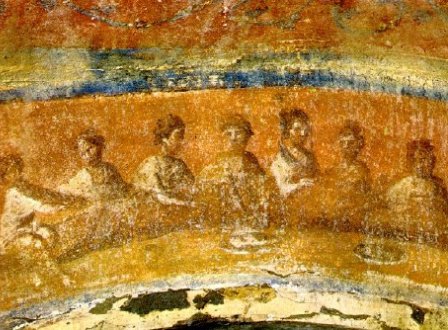
This week’s Life section of Time magazine features an issue that yet again raises the questions of definitions and who decides on correct religion. The feature by Tim Padgett entitled “Robes for Women” demonstrates the conflicted nature of religious authority. With the Vatican claiming women have never been priests, but historians questioning the assertion, the salient point is who has the right to decide. And what is lost, if such a change were to take place. Tradition is not threatened by change – it always stands sentinel over the past, but no religion remains unchanged for any length of time. It is not biblical authority that is lost either. Any religious body whose scriptures state, “call no man on earth your father,” yet which addresses its clergy by the title “Father” clearly possesses the casuistry to get around other biblical injunctions. What is lost is male power.

No matter how vociferous theologians may be concerning the genderlessness of God, the default male image seems deeply embedded in the human psyche. One of the most ancient and pervasive of mythological themes is the search for the father. The loving mother is the one who stays near and raises the child while the father leaves to make provision, or for reasons less wholesome. At some level we know that the deity portrayed by Scripture and tradition is male, a father who is difficult to find at times, particularly times of need. This archetypal image is not an excuse not to re-envision a genderless deity, but it underscores what generations of human experience has taught us. Referring to God as father and mother only complicates the matter by throwing into the mix all aspects of gender complications. Can humans even truly worship a god without gender?

If the Womenpriests movement succeeds, as no doubt it should, there will always remain a group who will not accept their authority. My experience at Nashotah House taught me that some prejudices are so deeply rooted that they are no longer even recognized by those who hold them. Wild examples of theological gymnastics were paraded before me as to why women should not hold priestly office. And like Nashotah House reveals, if women are finally accepted by Rome, others will split away and both sides will lay claim to the true faith. There will be no convincing either that the other is correct. The history of Christianity has taught us this sad truth. Current estimates suggest there are some 38,000 different Christian denominations. This is the common fate of all religions who claim to have exclusive access to the single, unambiguous truth.
The secret of the catacombs

Shopping for Truth

Friends often tell me that I should start a new religion. After all, modern day religious practice is generally a matter of “shopping around” until you find a brand you like. Lifetimes go into shaping religious sensibilities and outlooks, and when we see something we like, we choose that as our spiritual refuge. I was reminded of this once again by a story in Friday’s New Jersey Star-Ledger about a girl who’s been suspended from school for following her religion. Her North Carolina school has a dress code forbidding certain body piercings, but the girl belongs to the Church of Body Modification. The girl’s mother makes a valid point (in the words of the Associated Press article by Tom Breen): “school officials are setting themselves up as judges of what constitutes a ‘real’ religion.”

Religion may be defined in many different ways. Today many people consider religion a belief system that requires a strong faith commitment; belief is primary in such a definition. On the other hand, today’s world still includes many people who are born into a religion that is essentially a system of rituals or practices rather than a belief structure. It could be argued that such people do their rituals and practices precisely because they believe them, but often belief is not even discussed. It is simply a matter of who they are.

If religion entails solely a belief system, then any number of philosophies and outlooks might be defined as religious. Governments would need to be liberal with their tax-exempt status coupon books, since should I declare that my predilection for things Ugaritic to be a religion, who could reasonably protest? With a couple of like-minded adherents, we would have created a new religion (or a very old religion, depending on how you look at it).

Religious freedom defines the United States. For all its faults and foibles, this nation has allowed freedom of conscience to be the yardstick by which we are measured. If the girl’s religion insists on a nose-ring, who is local government to dispute this? If we could learn to define what a religion is, perhaps we would be much further along the path of ensuring true religious liberty.

Finding true religion in the shopping mall of life


Ends and Beginnings

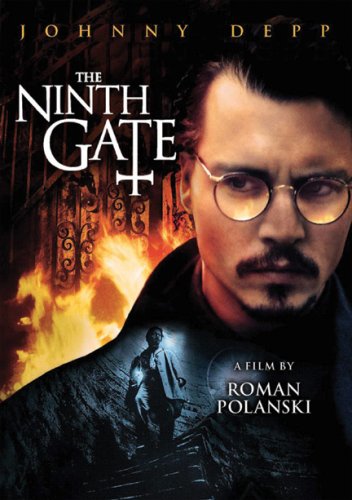
The Ninth Gate, a Roman Polanski film from a bygone decade, portrays a world the director doesn’t believe in. Typical of “devil movies,” the story involves a personified evil that not only seeks world domination, but who also writes books. I’ve been working on a book review for Relegere, the new online journal of Studies in Religion and Reception. In part the book addresses how the devil is portrayed in movies, although this particular film is not cited. Perhaps it is difficult to take seriously a film where the screenwriter is not a believer.

As a young teen I listened with horror as friends described The Omen, a movie that I never saw until just last year. The premise of the movie, that the Antichrist has already been born and is now walking the earth, ready to usher in Hal Lindsey-esque last days, is frightening to those who find a biblical basis for the idea. When finally watching the film the scariest part was viewing the extras. David Seltzer, author of both the book and screenplay, eerily tells the interviewer that he believes the Antichrist to be here now. His acceptance of mythology is admirable, but it is the problematic acquiescence to a modern reconstruction of disparate ancient views that is troubling. Like many late-twentieth century westerners, Seltzer has been influenced by attempts to construct a coherent account of the apocalypse from tattered bits of ancient traditions that never belonged together.

If education included a serious, critical look at how religious ideas developed, the world might be spared this sad predilection for seeking its own end. Apocalyptic ideas thrive in cultures of persecution, such as those very real torments of Jews under Antiochus and Christians under Nero. Their hopes for a brave new world of righteous rule, borrowing freely from Zoroastrian traditions of a new age, offered scraps of expectation of a better tomorrow to those dying today. When nineteenth-century evangelists saw the advances of industrialization and Darwin’s rational explanations of human origins, they felt the need to reconstruct the biblical demise of the world. Modern day apocalypticism, so evident in the Y2K, 9/11, and 2012 scares, is often ready to accept uncritically a supposed future already scripted by a sadly misunderstood Bible. If the world ends it will be our own doing, and maybe Roman Polanski will have to rethink whether or not a devil can actually write a book.


Noah in Time

When the silence was first broken at Gorgias Press, one of my colleagues suggested that I read The Time Traveler’s Wife by Audrey Niffenegger. The title suggested to me some kind of point-of-view rewriting of H. G. Wells’ classic The Time Machine, a novel that had a large influence on my young, science-fiction inclined mind. For some reason I wanted to keep this place sacred to the memory of Wells and I dismissed the suggestion with polite demurral. Since that time Niffenegger has been constructing quite a reputation as a novelist, and because I enjoy the implications of time-travel and I like to keep current – fashionably late, of course – I finally took the time to read the book.

I wasn’t sure what to expect; it is a sensitive love story, wrenching in parts, but the mysteries of time travel are left to a genetic defect and not some technological invention. In the course of wending in and out of past and present lives, the main characters, Clare and Henry, carry on a dialogue that includes the dynamic of a protagonist raised Catholic. Once, while discussing the bizarre nature of time traveling, Henry suggests that Noah is a fairy tale to which Clare replies, “Noah is in the Bible. He’s not a fairy tale.” This statement reaffirms that, for many people, Noah is the obvious touchstone of the Bible and modern society. A versatile figure, enigmatic and only sketchily drawn in the Bible, Noah reappears regularly in the popular media. Just this summer I noted how Justin Cronin’s The Passage also cites Noah as a schematic for much of the plot that bears the story. A few weeks ago I mentioned how the remake of The Day the Earth Stood Still viewed Klaatu’s ship as an ark. Noah from outer space.

Noah is a foundational figure for our society. This should not be surprising since the flood myth is among the most ancient of stories that humanity has relegated to religious literature. The Sumerians and Babylonians told the story long before Genesis was composed. In its own way, the Noah story is an example of time-travel. A tale whose origins are lost in the pre-literate stages of humanity, it becomes history with the uncritical acceptance of the Bible, only to become a defining myth of twenty-first century literature. The world of the twenty-first century often feels like a fragile environment ripe for a catastrophic flood. Consciously or not, we are still looking for our Noah.

Another kind of Noah


Sinful Moonsters

Wednesday night a student asked me about the moon god Sin. The name “Sin” has nothing etymologically in common with the usual English word for wrongdoing; they are simply homonyms. Nevertheless, when students first encounter this odd juxtaposition they often think that there must be something to it. This particular student pointed out that many activities classified as sinful take place at night, under the moon. Could they be connected? Linguistically, no; but it did get me thinking about the idea of the moon’s baleful influence on various creatures of the night.

Serious academic works seldom take vampires, werewolves and witches, some of the moon’s most infamously unholy acolytes, to be worthy of valuable research time. Meanwhile Stephanie Meyer and company are laughing all the way to the blood bank. Popular culture gives credence to the children of the night that the academic world ignores. I tried to do a little research on the moon and its mythology only to find that most moon books deal either with serious attempts at astronomy or serious attempts at astrology, neither of which I was seeking. I wanted to know when the moon had slipped from being the gentle god/goddess of the night into its role as the overseer of evil.

Evidence was scant, but it seems that in the Middle Ages, maybe influenced by late Roman ideas, scholars began to recognize the moon’s potential as a dismal influence. The moon has long been popular in folklore as a source of lunacy and luck. Lovers crave the moonlight, but so do teenage vampires and raging werewolves. This is, apparently, a concept of no great ancient pedigree. In any case, the moon here has nothing to do with sin.


I’ll Take Coffee, Thank You

Yesterday’s victory of Christine O’Donnell in Delaware’s senate primaries seems to have shocked a lot of people. Have these people not been paying attention? Did they sleep through Beckpalooza? Have they failed to see that Sarah Palin’s lackluster life story has become a best-seller? Are Americans in denial that we are facing a major Religious Right comeback? The problem, yes, problem, is that Americans are not taught to think about religion for themselves. Raised with the idea that their political and religious leaders have some special channel open to the divine, they are sheep led to the, well, you know…

Society pays for its sins. One of the most fatal of the deadly sins is the refusal to take ownership of religious education. Unreflective religion in the hands of politicians is a fully armed atomic warhead. Many Americans like to think this is only a problem in nations with Islamic infrastructures, nations unduly influenced by shahs, ayatollahs and imams. Nations influenced by Tea Parties, Neo-Cons and biblical amateurs are much safer, much more friendly.

Problem is, the Bible’s a mixed bag. Some of the loftiest spiritual sentiments nestle down uncritically next to calls for genocide and harsh repression. As long as it is the magic finger from above that’s written it, that’s good enough for tea-tipplers. There are few opportunities to call Americans together for a religious town meeting. We’re all too busy off doing it our own individual way. In such a climate, isn’t it best to let those without any formal religious training tell us what the Bible says we should do? Do you want one lump with that, or two?

O'Donnell takes Castle to school


Utopia

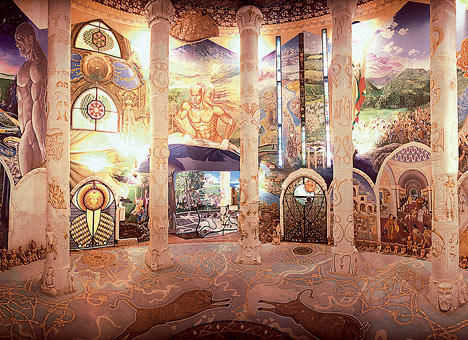
In a rare moment of free time I stumbled across the website of Damanhur, a planned eco-society physically located in Italy but with branches in other (mostly European) nations. The Federation of Damanhur is dedicated to the spiritual, artistic and social development of humankind. It is probably most famous for the hand-carved temples deep within a mountainous location in northern Italy. The Temples of Humankind are, from web pictures anyway, quite stunning, often earning the hackneyed accolade of the “eighth wonder of the world.” The temples are dedicated to Gaia, the earth, and humanity (often, unfortunately, its greatest enemy). The Temples contain a hall of waters, hall of earth, hall of mirrors, hall of metals, hall of spheres, a labyrinth, and the Blue Temple. Begun in 1978 as the vision of Oberto Airaudi, a tunnel was excavated and the temples were carved from the rock. A moving account of how government officials, determined to shut down this clandestine operation only to emerge from the temples emphatically stating that they must be preserved, came to the aid of the Damanhurians is presented on their website.

Like other utopian movements, the Damanhur society seeks a better world. Their vision of a planet in sync with rather than warred upon by humans is compelling. Their achievements are admirable. Still, it remains a sad commentary on the world that greed and capitalism have constructed. Every day self-satisfied faces of wealthy politicians glare out from the newspaper or Internet declaring that they know a better way. The evidence of our world belies their claims. Damanhur and other similar societies only thrive when they are small. Once paradise opens its doors, entrepreneurs enter.

The religion of Damanhur is far from orthodox. It is, however, peaceful and sensitive to the connection that binds all of earth’s inhabitants together. The society promotes education – a simple commitment that seems beyond the will or ability of many state governments in this wealthy, fully industrialized and technologized society. I wish the Damanhurians well. They have constructed a beautiful world for themselves. If they fare better than most utopian societies, perhaps they can continue to be a light for a world that sees only veins of potential bankable wealth inside mountains.

Temples of Humankind


Seeing God

My daughter reminded me that one further aspect that stood out at the Red Mill Museum in Clinton was the persistence of pareidolia. Pareidolia, or matrixing, is the tendency to interpret “random” data as meaningful. More specifically, it is often used to refer to seeing a person (or entity) where it is not. As I wrote in an earlier entry, it has been suggested that pareidolia is the ultimate origin of religion.

For my purposes here, however, I wonder if the sheer amount of false faces we encountered while at the Red Mill might have some connection with the idea that the property is haunted. Somewhat of a skeptic, I am somewhat swayed by ghost accounts since they are so plentiful and since many of those who report them are reputable persons with good observation skills. Ghosts are, however, impossible to separate from some form of religious thought since they are the ultimate examples of the intangible, unmeasurable phenomenon. If there are ghosts in the laboratory, they haven’t been quantified yet.

Old buildings, which abound at sites like the Red Mill, are full of knotholes or other apertures whose original hardware has long since disappeared. Round holes, or spots, as many insects and fish “know” are easily interpreted as eyes. Add a horizontal line beneath your “eyes” and you have a basic face.

Perhaps my favorite example of pareidolia at Red Mill is an old sycamore tree. A large burl on the trunk bears a striking resemblance to a human profile. This is more easily seen in real life where the mind more easily filters out the distracting coloration and focuses on the shape. Since pareidolia is such a fascinating aspect of the human experience of the world, and since it might, conveniently, be tied to religion, this seemed to be as appropriate a venue as any other to share some great examples.


Bibles and Freedom

Visiting the Red Mill in Clinton, New Jersey is always a worthwhile experience. Yesterday, a gloomy, gray September postcard, was perfect for such a visit. In addition to the many buildings on the museum grounds that retain an atmospheric feel year-round, the Mill is supposedly haunted and is frequented by a number of ghost hunting teams. With its long (for America) history and its picturesque beauty, the museum is a popular spot with tourists as well as ghost hunters.

One of the buildings on the grounds is an old one-room schoolhouse. As a family we have visited a number of these, although none of us qualify as having been actual pupils at one. A frequent blandishment at such institutions is the rules by which school teachers had to live in the nineteenth century, usually posted on the wall. Yesterday as we read the obligatory list, one “commandment” stuck out from the 1872 code of conduct: “After ten hours in school, the teachers may spend the remaining time reading the Bible or any other good books.” While many of the rules were condescending in their moralizations, this one carried a perfect example of how a nation, naively short-sighted, was already giving preferential treatment to one religion, Protestant Christianity.

As a nation founded as a haven for religious freedom, the colonists and settlers simply had narrow exposure to religions of the world. Freedom seemed an ideal worth dying for, but usually it meant freedom to be whatever (Protestant) denomination you wished to be. Catholicism was associated with the old powers of Europe, and the religions of the east were barely known. The Protestants were the ones who promoted Bible reading in those days, and while the rules allowed for other good books, there is an unstated superiority given to the Good Book in its pride of place. Once the colonials became nationals, it was still fair to taunt Quakers, Unitarians, and others who didn’t seem to fit the mold. We didn’t see any ghosts at the Red Mill yesterday, but it did seem that a haunting memory of true religious liberty hung about the place.

Clinton's Red Mill sews freedom


Chosen Ones

Religious dominance has been so much in the news lately that when my wife pointed out the review of Todd Gitlin and Liel Leibovitz’s The Chosen Peoples in today’s paper my mind once again fastened on the issue. I have not read the book; today’s review is the first I’ve heard of it. The salient point, however, is the continued evidence that monotheism is a tremendous burden on society. Most rationally considered analyses of western religious traditions recognize that the same “base God” is recognized in Judaism, Christianity, and Islam. These three religions are so deeply intertwined in their influences and theological commitments to the singularity of God that such a convergence is inevitable. Nevertheless, three religions sharing a God is like three children sharing a lollipop. Each wants to claim exclusive ownership.

The issue becomes more complex when ethnic identity is tied to religion. Given the nature of religions, this is, however, another inevitability. Religious thought and practice develop among populations separated, in Darwinian fashion, and those who lived in the original arenas of religious development were probably closely related. This is evident in the easy blending of Judaism as a culture and a religion, as well as ethic Orthodox Christianities that maintain a strong cultural component, and in Middle Eastern descent and Islam. People accept the religion of their own people. Monotheism then takes over with the demands of exclusive rights to chosenness or theological correctness. Religion itself contributes to its own fractionalization.

Those who are excluded protest: who wants to be left out of the chosen ones? If there is one God, who wishes to be the second or third or fourth favorite? If we (whoever “we” may be) are those legitimately chosen, are we not in some measure better than other believers? This logical crux slices through all theological niceties for those who examine the issue honestly. Many religions and one God. Chosen people abound. Perhaps it would be less dangerous if God could be divided among the many: one God, divisible, and available to all.


Athtar in Wonderland

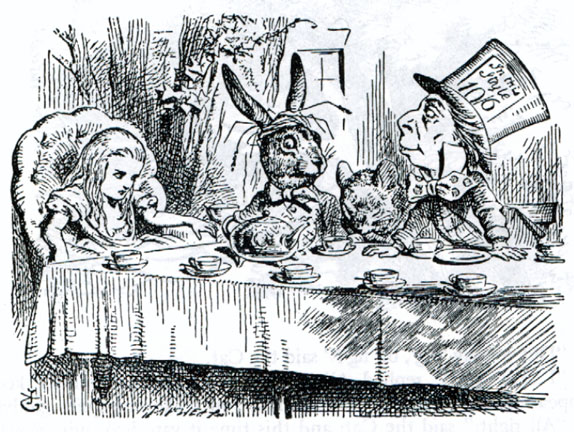
Last night I finally got around to seeing Alice in Wonderland, the Tim Burton version. As a child I don’t recall having seen the overly optimistic Disney original, and I only read Lewis Carroll’s two-part, disturbing original after I had finished my undergraduate degree. When I first discovered Wonderland I was in one of my periodic phases of questioning reality and Carroll’s provocative prose and ingenious lyric ability only made the inquiry more complex. Strangely, it felt as if I had rediscovered a missing piece of my own childhood.

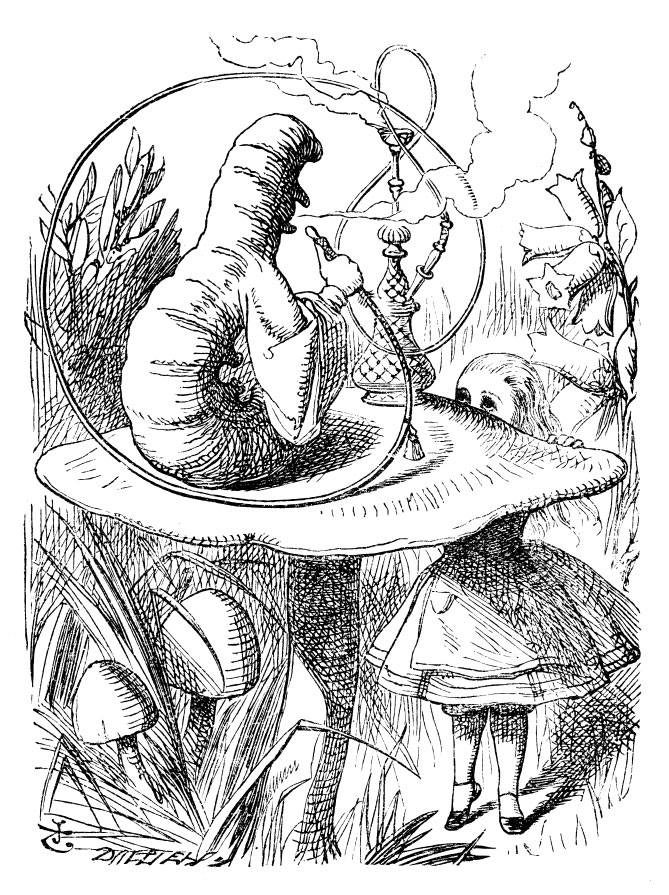
Burton’s versions of childhood stories would likely have been my preferred fare had they been available when I was young. Eerie without the overt horror of an R rating, the vision is one of a world where uncertainty reigns supreme. Then came the hookah-smoking caterpillar. It has been a few years since I’ve read the book, but I don’t recall the larval character as having a name. Linda Woolverton, the screenwriter, presumably gave him the name Absalom. Supposing this to be nothing more than the reassignment of a fated biblical name associated with failed attempts at kingship, I simply let the reference pass. Until the chrysalis scene. There he was, Absalom hanging from a plant, just like David’s son swayed from a tree according to 2 Samuel. This mysterious scene in the battle of Ephraim Forest had captured my attention before when I wrote an article on Absalom, eventually published in the Journal of Northwest Semitic Languages.

Noticing the strange phrase that Absalom was suspended between heaven and earth, I suspected that this might be a reflex of the ancient morning star (Venus) myth. The story of Athtar, the god who would be king but who must decline the throne, is a brief tale preserved in the Ugaritic Baal Cycle. As I watched the sage caterpillar giving wise advice to a confused Alice, the name Absalom took on new significance for me. I have no way of knowing if the reference was intentional or not, but in a culture deeply suffused by the Bible it would appear to be a logical guess. And if I was correct in my article, I was seeing a cinematographic reference to Athtar as a blue caterpillar last night. Wonderland indeed.

Curiouser and curiouser


Mere Typography

Juxtapositions are important. The way that words are laid out on a page can say as much as the words themselves, as any poet knows. In the light of the ongoing media frenzy over Rev. Terry Jones’ misguided attempt to set everything right with the world – through fire – and a natural attempt to keep related stories together, the New Jersey Star-Ledger ran two stories on page three yesterday that display the deep ambivalence many Americans feel about Islamic culture. At the top of the page the headline reads, “In Florida pastor’s eyes, burning of Quran is an act of war against evil.” At the bottom of the same page runs an article headlined, “Iran: Stoning sentence for adultery under review.” Two or more faces of Islamophobia on the same page.

As remarks made on my previous post on the subject attest, many westerners simply do not understand Islam. This is perhaps to be blamed on the all-too-prevalent attitude that “history is boring.” Have people been asleep for the past thirteen centuries? Islam is much closer in time to the origin of Christianity than it is to us. With concerns of supersessionism and the covert desire to capitalize on one’s religion, Christianity has been content to ignore Islam as long as those in charge have been able to maintain capitalist quo. When forced to face the fact that two major monotheistic religions have designs on the same world, some members of each camp are only too ready to declare those in the other “evil.” An attempt to understand other religions would go a long way toward ending the carnage.

Perhaps the phobia should more properly be labeled religious xenophobia. We dislike those different from us. Rare is the person who, when confronted with a contrarian, will attempt to understand rather than destroy. Students may readily qualify for higher education degrees without ever having to face the question of how to handle different religious outlooks. We would rather pretend that they are not there. The ambivalence shown towards the issues of Islam in the Star-Ledger could just as easily be turned on Christianity, or even Judaism, Hinduism, Buddhism, or Sikhism. Religions are conflicted because people are conflicted. Instead of recriminating, we should all take a long, serious pause in front of a mirror before we start accusing other religions of being evil.

Who said what now?


Disconnect

Religion has a bad name among many intellectuals. Hailing from the misty period of superstition in a “demon haunted world,” religion seems to be a quaint hold-over from less enlightened times. Academics, for whom respectability is everything, generally keep a decorous distance from religion as the intellectually suspect field indulged in by the weak-minded. Then something enormous happens; terrorists, fueled by religious fervor, decide to kill many innocent victims. Or a religious guru leads followers into the jungle where they all commit ritual suicide. Or a group of zealots purchase heavy armaments and stockpile them in a Texas hideout to await the Second Coming. The next autumn the university want ads are filled with openings for specialists in this or that religion. Until the next budget crunch comes along.

An unfortunate aspect of this situation is that many deans and administrators make the equation of the study of religion with the promotion of a religion. Why populate a university faculty with superstitious religious sorts when a good secular economist will bring in more practical, if less transcendent, rewards? How often do administrators survey their religious studies faculty to ensure that level-headed, academic treatment of the subject matter is offered? How can we expect to move ahead if those empowered to assure an educated student clientele continually apply the brakes in religious studies departments?

I am no economist. This much is evident by my pay scale. Nevertheless, each year when I return to the multiple campuses that are my temporary homes, I notice the details. New furniture in classrooms and libraries, freshly painted and redecorated facilities. Often, entirely new buildings that were not there the semester before. There was a day when such things were known as window-dressing. I attended Edinburgh University for my doctorate. There were campus buildings that dated from the late middle ages. Classrooms often had mismatched furniture and blackboards rather than fancy projectors and smart-ports. And the educational experience was authentic. The religion faculty was thriving and universally well regarded. I’m no economist, but with fundamentalists already holding a match to the fuse about to light up a Quran, I have a feeling already of what I’ll be seeing in the want ads of next year’s university hiring season.


Quran 451?

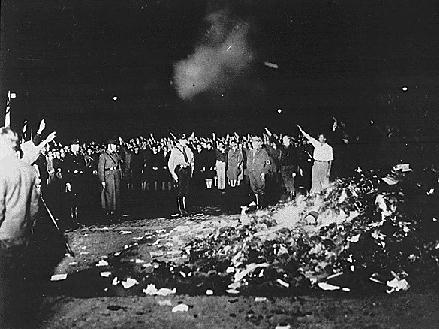
One of the saddest books I remember is Ray Bradbury’s Fahrenheit 451. Any society that burns books has whip-lashed far beyond Fascism into the enemyhood of humanity. Much of ancient culture has been lost through the natural or premeditated destruction of misunderstood “inflammatory” writings and we are much the poorer for it today.

According to an Associated Press story, the ironically named Rev. Terry Jones of the even more ironically named Dove World Outreach Center in Gainesville, Florida, is agitating for a “burn the Quran” day on September 11. Other than momentary, self-righteous catharsis, nothing is to be gained by burning books. The contradictory impulses here lie thick and deep: a Christian clergyman feels insulted by an extremist attack that killed indiscriminately (Muslims and well as Christians, Jews, and Atheists died in the September 11 attacks), bearing the symbol of peace he wishes to declare his personal war, and the follower of the willing victim of Nazareth wears a gun.

Burning books does not solve any problems. Surely Rev. Jones knows that plenty of copies of the Quran abound throughout the world. His action is calculated as a poignant symbol. Is such a symbol anything more than a base expression of outright hatred? When, apart from medieval Christendom, has Christianity insisted that violence is the way forward? All you need is hate? For although the burning of books may not physically harm anyone, the violence in this hatefully symbolic act is the very antithesis of tolerance and understanding that the religious world so desperately needs. Islam has given much to world culture, and we reap the benefits of Muslim scholars and thinkers each day, without any conscious consideration. Rev. Jones needs to read more than just Fahrenheit 451. He must learn truly to read and, like Montag, weep.

Jones' theological comrades


Inception of Theseus

Never the first for new cultural memes, but often among the last, I finally took my family to see Inception over the holiday weekend. The Internet has been buzzing with comments about the movie for the last couple months, so it was difficult not to have preconceived notions of what to expect. Nevertheless, I found the film utterly engrossing. At one point I realized that I hadn’t blinked in so long that my eyes had begun to dry out. Having just finished Mark Danielewski’s House of Leaves at the end of June, and having begun my Mythology class on Friday, the Theseus myth has been on my mind anyway. Inception takes the hero’s journey through the labyrinth of the subconscious.

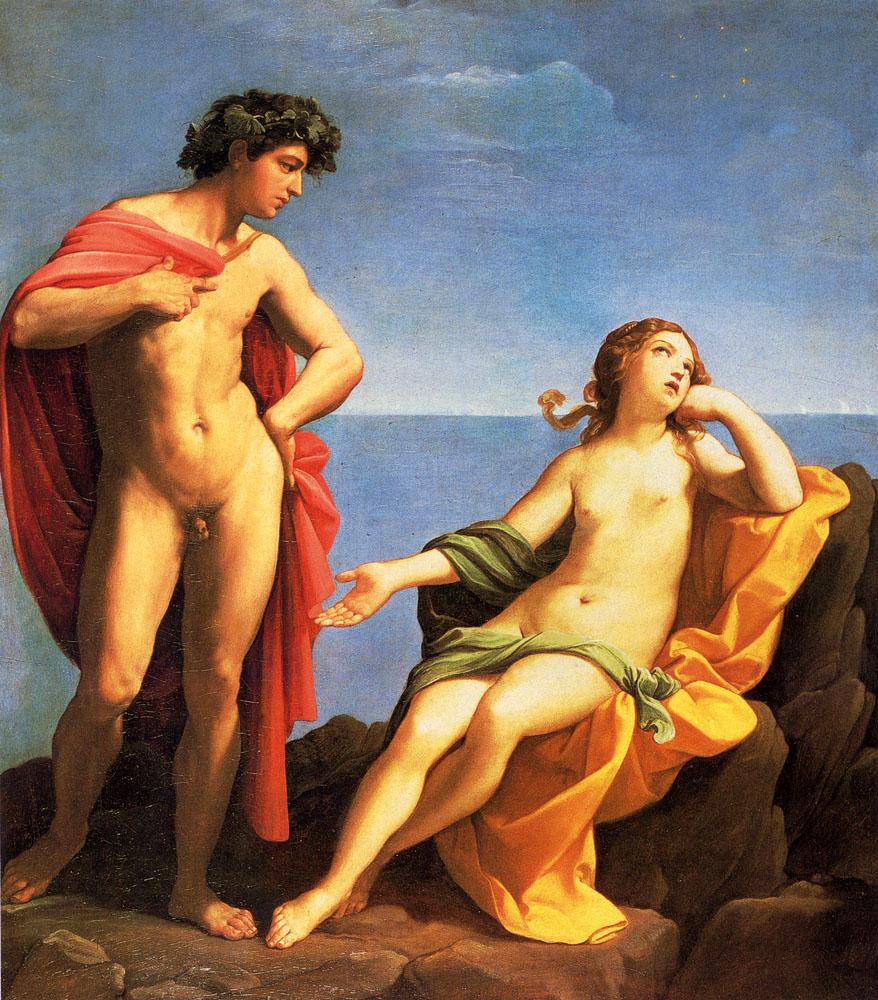
The first hint that Inception was the Theseus story, for me, was the introduction of Ariadne. The daughter of King Minos, Ariadne informs Theseus how to escape the labyrinth, and her first task in Inception is to draw a maze that takes a minute or longer to solve. Dom Cobb, like Theseus, is a deeply flawed hero. Part Theseus, part Daedalus, Cobb has trapped an unlikely Minotaur in the form of Mal, his wife, deep in his subconscious mind. She stalks him in his unsavory work, and when she threatens his very concept of reality, she is slain by Ariadne.

Coupled with classical mythology, the film also raises the unresolved question of the nature of reality. Is conscious existence any more real than the subconscious? This theme was explored in David Cronenberg’s eXistenZ back in 1999 with a similar ending that refuses to answer the question. Both films raise the troubling interference of technology with the most secret of human psychological repositories, the uninhibited subconscious. The closer the Internet comes to a global intelligence, the more the individual mind recoils into its own obscure and unexplored territory. Despite Freud and his disciples, we have not yet even begun to understand our own subconscious minds. Movies like Inception draw on classical sources to help us deal with the Minotaur that surely lurks there.

Ariadne explains her dream to Bacchus