Headliners

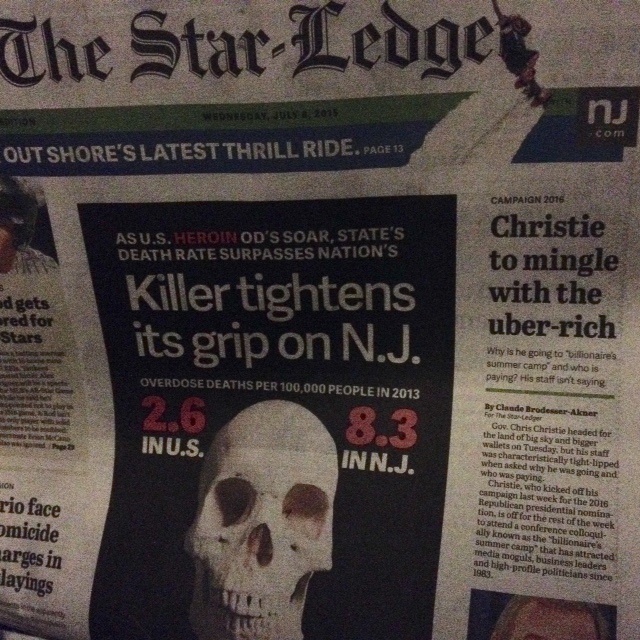
I sometimes wish I was a journalist. Just this past week a couple of people questioned my journalistic skills for an opinion piece I wrote for Religion Dispatches. I’m fully capable of professional research, but who has the time? Still, being a journalist might be fun. Thinking up clever headlines would be challenging day after day, but nevertheless, it might be enjoyable. Editors who lay the articles next to each other on the page must have a sense of irony. This past week in the New Jersey Star Ledger the central headline read “Killer tightens its grip on N.J.” The column to the right began “Christie to mingle with the uber-rich.” Having lived in New Jersey under Christie’s entire reign, I’m no fan. I’ve despised bullies since I was a kid, and rich bullies are worse than the working class variety. New Jersey certainly seems no better off to me. Now he wants to be President.
FullSizeRender

The real headline, however, about the killer in New Jersey is not yet another prison-break story. It deals with heroin overdose deaths. According to the article, per 100,000 people in the U.S. 2.6 deaths are from heroin overdose. In New Jersey the figure is 8.3. New Jersey, as the most densely populated state (1200 people per square mile, I once read) has its share of problems. Most of us like to pretend that drugs are somebody else’s issue, but I’ve known addicts and they are not evil. When life offers you unrelenting recession after recession and all attempts to better yourself run up against the 1 percent, frustration is inevitable. Even earning a doctorate will only lead to jobless misery. What more can you do than get an education? Heroin is dangerously addictive and it makes the user feel great, I’m told. Society doesn’t offer many other options. At least in Rome they had bread and circuses.

He who would be President, however, can’t be concerned about that. The uber-rich must be fed. And fed. And fed. Those whose ambition to high public office is naked power would be foolish to ignore their fellow plutocrats. Down here on the streets, things look a little dicier. Although I think I understand why many turn to chemical relief, I’ve never been tempted by drugs myself. One of the reasons I turned to religion was the prevalence of drug use in the town where I grew up. There seemed to be no future in substance abuse. I may not have chosen the most promising of ways to move ahead either, in retrospect. Now I find myself living with a governor who represents all that’s wrong with government. And if you’re going to die of drug-related despair, it seems like his particular state is the place it’s most likely to happen. Long live the king!



Only Takes a Spark

Fireworks have been the main event for Independence Day celebrations ever since I was a child. The fourth of July is a day for playing with fire. As a child I remember spending the meager allowance I had on sparklers and snakes. I haven’t seen one of those ash snakes for decades now, but the impression they made remains strong. A plug of some kind of carbonish material—you’d light the top with a match and it would flame and hiss and start to grow into a long, twisting exoskeleton of ash. They left a blackened circle on the sidewalk, and when they were cool enough you could try to lift the fragile snake in your hand, but it almost always broke apart before blowing away in the breeze. We also wasted our money on smoke bombs with their multi-colored smoke, but we never had actual firecrackers. Given the trouble we could make with an ordinary roll of caps, that was probably a wise decision on our mother’s part. All of this, however, was just a prelude to the fireworks.

As I sat under a cloudy sky last night wondering why every July fourth seems to rain, it occurred to me that fireworks are a violent form of celebration. Indeed, they are designed to imitate the sounds of battle—before the nuclear age—and we all know the thrill of when the loud, bright burst of pure light sends a shock wave through you. It is like a canon rocking your soul. Like many stirring experiences, fireworks had religious overtones from the beginning. Invented in China, fireworks were used for religious festivals. They were believed to be effective at driving away evil spirits and bring good fortune. Pyrotechnics, however, clearly have military applications as well. It is this strange nexus between religion and violence that makes, I suspect, fireworks displays so compelling.

IMG_2287

The local display here in Somerset County, New Jersey, was impressive for a region without large cities. I couldn’t help pondering the strange aesthetics of contained violence as the colorful explosions took place over my head. Illusions, I know. We always talk afterward about whether some of them are meant to represent anything. Did you see a smiley face, the United States, or even New Jersey? It depends on your angle of view. Is this a religious display or a celebration of violence? Looking around at the amazing diversity of peoples gathered here in this park with me, I feel strangely satisfied. I hear languages I don’t understand, and see people from all over the world here for a good show. Although thousands of us try to get to our cars at the same time, spirits are positive, for the most part, and all go home in a celebratory mood. Maybe the ancient Chinese were right and these pyrotechnics do drive away evil spirits after all.


High Places, NJ

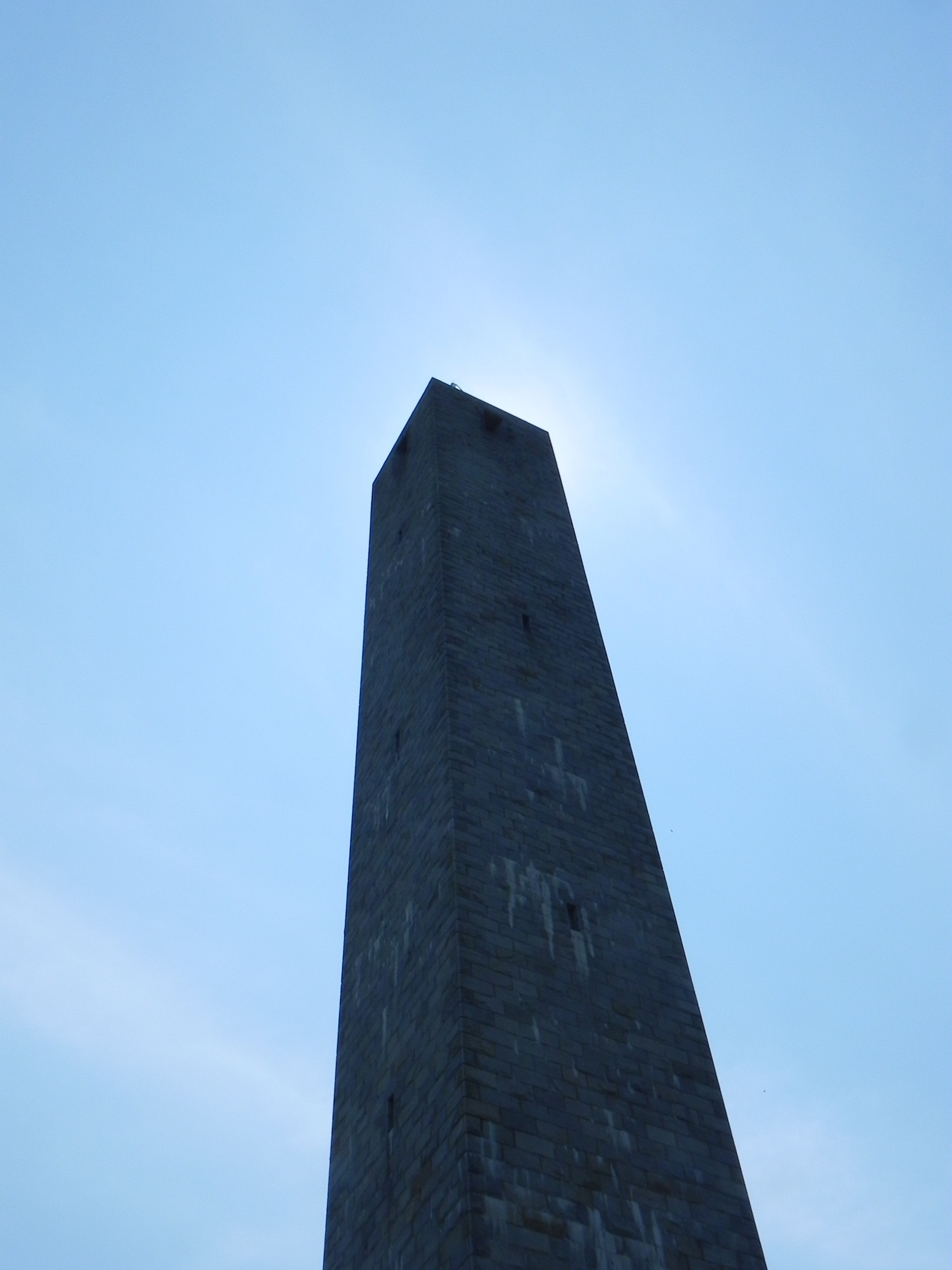
The “high place,” in the Hebrew Bible, was a source of constant vexation to the “orthodox.” Scholars have long puzzled over what was meant by the term, the assumption early on being that they were geographically the highest points around. Although that interpretation no longer holds the sway that it once did, the concept of the high place has remained. I suspect that’s because there’s something mystical about being at the highest point around. July 3 was a rare holiday for everyone in the family, so this year we headed to High Point State Park. High Point is the geographical highest point in the state of New Jersey, up near the New York border. It’s not as high as the mountains you might see in the western part of the country, but at the top there is a panorama that gives unbroken visibility in 360 degrees. Except for the tower.

DSCN5093

Towers are just as biblical as high places. They are very human and always contain at least a small element of hubris. Nature may have said thus far and no further, but we can go higher. And those of us with the inexorable will to climb, must go up. The view from the top isn’t very good since the windows are steamy and the mildew makes you a little leery of getting too close, but the climb is intensive, even for those used to stairs. Nevertheless, a kind of light-headed giddiness attends standing at a point higher than which you cannot go. I pulled out my altimeter to discover we were 1690 feet above sea level. In New Jersey you can’t get any higher. Were there angels up here? How close to Heaven were we? Towers are irresistible as the mythical builders of mythical Babel knew. And although we couldn’t see Manhattan from here, I knew that just across the river taller towers stand.

DSCN5109

One World Trade Center stands at a symbolic 1776 feet, higher than we were at the moment. It was, after all, the requisite holiday to celebrate independence that brought us here in the first place. The vistas that we could see, however, were relatively undeveloped, a rarity for the state of New Jersey. If we had the time, we might have been able to get out into nature itself instead of these structures that humans build to mask the fact of our own limitations. Maybe that’s what high places were all about in the first place. Every day I walk past the Empire State Building on my way to work. I can see it if I find an office with windows. Over my head up here, on the very top of New Jersey, I see a bird soaring. I think of Melville, and Ahab, and Manhattan. Slowly I begin my walk down to lower places.

DSCN5099


The Ethics of Deception

In New Jersey you can’t pump your own gas. If you pull into a station with a line, you have to wait your turn. Once, on my way to an adjunct job, I pulled up to the next available pump. It was the only one free, and a car pulled up behind me to wait. Meanwhile the car at the pump in front of me pulled out. The attendant signaled the car behind me to the vacant pump and then walked back to tell me that my pump was out of order, I’d have to wait my turn. I left that gas station and have never gone back.  I think about that a lot. I don’t mind pumping my own gas, and I certainly don’t mind waiting my turn.  If someone is given preferential treatment, however, my primate blood starts bubbling.

Gas pump
 
Although I’m middle-aged, I keep starting my career out again at entry level.  I’m sure I’m not the only highly trained professional in this boat.  In fact, I keep an eye on LinkedIn so I know that it’s not at all rare.  As I sit and watch the available jobs go to those younger than me, I wonder about the ethics of it all.  After all, I’m very nearly the same age as the President, and that makes me shudder.  Here’s the ethical quandary:
 
When I was a student in the late 1980s and early 1990s, those of us in doctoral programs enrolled because we were encouraged to do so by the academy.  No one can see the future, of course, but in academia it seemed if it was status quo ante from here (then) to eternity.  There would be lots of jobs, and those of us with the talent were actively recruited to enter doctoral programs and—here’s the ethics part—help meet the need that was about to come!  Did we want to see university positions vacant?  Of course not!  So we gamely stepped up, read our brains out, defended theses (far more than 95 of them) and found ourselves in a world with no room for us.  I managed to get a job, unlike many of my colleagues.  When I was let go, however, I discovered that the viable jobs were being snapped up by younger candidates.  These were students who’d entered the fray after we already knew it was a dying market.  They had the virtue of being younger, and therefore cheaper, and so the academy blithely moved on to forget those of us who’d gone through when everything short of a promise told us there would be jobs. There’s an ethical issue here.  If you know there are no jobs, should you be giving first shot at the few there are to those who entered the system when there was a future?  We used to call it paying our dues.  Now, it seems, those who’ve paid into the system all their lives will get nothing from it.  I’ll be the guy at the gas station ready to fill your car.  If you pull in behind somebody else, you’ll have to wait your turn, however.  I’ll insist on it.


Drumheller Drama

Those who’ve participated in the great drive out west—if you’ve done it you know what I mean—have passed through the range of dinosaurs. Actually, dinosaurs can be found here in the east; New Jersey once had a reputation of the home of the hadrosaurus, before an even larger beast took over the state. In my native Pennsylvania the occasional dinosaur footprint would be found. But to really see the dinosaurs, the west is best. In Makoshika State Park you can find triceratops skulls right out on the ground. You can find plenty of Christians as well. Ironically, we’ve advertised to the world that Christians and dinosaurs don’t mix, but, in fact, they can get along just fine. In a BBC story my wife sent me, one of Canada’s great western dinosaur reserves, Drumheller, Alberta, has a potential clash between sauropods and savior. Seen from one angle, at least. The story by Tom Holland points out conflicting wills for an entrepreneur who wants to build a dinosaur display and a long-established passion play that occupies the space he wants.

Dinos

News doesn’t get read without some measure of drama, so Holland pits the dinosaurs against the Christians. What seems to me, however, as the real issue is entrepreneurial expansion versus what seems like an arcane melodrama, the reenactment of Jesus’ death. Ironically, the greater part of North America was colonized by Christians of various descriptions. Many of them established their culture in various ways across the landscape. As a culture, it wasn’t always belligerent, and sometimes even beneficial. Passion plays, once upon a time, were considered the mark of culture. Jesus, I’m sure, knew nothing of dinosaurs but would have had no problem with them, I contend, if he had.

The issue here is less about science versus religion as it is about cash versus culture. Even Ahab turned his face to the wall when he couldn’t have the land that he wanted. If someone else got there first and made a recurring shrine, does capitalism have the right to slough it out of the way? I love dinosaurs. I’ve driven many miles out the way to see dinosaur trackways far beyond the trodden path. These are but shadows of footprints cast millions of years ago. Both dinosaurs and Jesus have their place in our hallowed past. While pictures of Jesus riding dinosaurs may well be over the top, the message perhaps rings true: there’s no inherent conflict here. When someone wants to make quick cash, however, there will always be sacrificial victims involved.


Old Curiosity Shop

I’m not sure how I’ve managed to live in New Jersey eight years without discovering the Old Book Shop in Morristown. Used books represent the opportunity to find things otherwise hidden away, even often from the all-seeing internet. That’s why I visit book sales at any opportunity, and haunt used bookstores. The Cranbury Bookworm, never easy to reach, was denuded of its glory by a greedy landlord and has only a few shelves remaining in a much diminished location. The Montclair Book Center takes a concerted bit of driving from here, but I always enjoy it when I go. Over the weekend, however, the Old Book Shop was my destination. Although it’s not a large space, the books on display are reasonably priced and represent intelligent collecting. I found a book or two on my wish list there, and many more that, were I in a more lucrative line of work, would have come home with me.

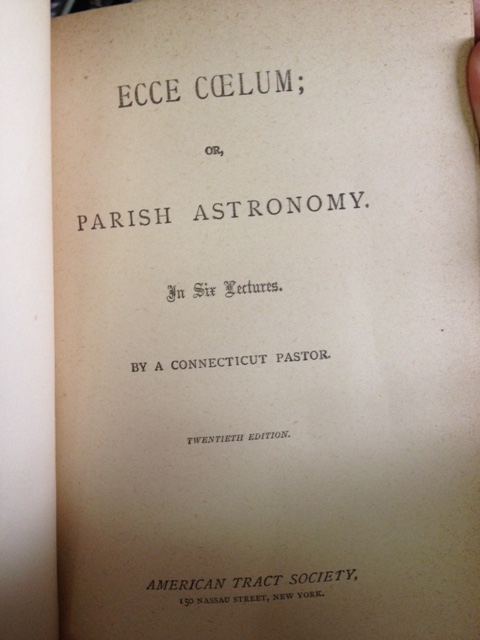
One book my daughter found in the science section, Ecce Coelum; or Parish Astronomy, by a Connecticut Pastor, was clearly from the days when science and religion got along better together. A little research revealed the author as Enoch Fitch Burr. What really caught my eye was the dedication, “lectures on astronomy in the interest of religion.” I’m not sure how I managed to leave that book behind, in retrospect. As a layman both in science in religion terms, I have had lifelong interests in both. It’s only been within the last couple of decades that I’ve noticed a growing tension between the siblings. Like all childhood fights, it is a contested matter of who started it. It does trace its roots back to Galileo and Bruno, but more recently to the Creationists and their never-ending campaigns to have their religion christened science. Back when Ecce Coelum was written, science and religion had much to learn from one another.

IMG_2200

Now they no longer speak. Those who believe all answers lie in material explanations treat religion as a mental disease. The conservative religionists call the scientists atheists, as if that were still an insult. Name calling and bad feelings, I don’t believe, will ever lead to the truth. The science of today will eventually find its way into the used bookstores of tomorrow. Religion books have long lined these shelves, reminding me of the day when she was the queen of sciences. She’s often treated as the jester these days. What scientist now declares, “behold the heavens!”? We might actually benefit to a great degree if both the empirical and the ecclesiastical would behold their world with a little more wonder. And tomorrow’s readers will puzzle at our strange hardness of heart.


Book Culture

The book is not dead. Yesterday, on a warm, sunny spring day that veritably screamed “outdoors,” I found myself standing in line. I was at the Hunterdon County Libraries’ book sale. Having awoken in a panic a few weeks back gasping, “I missed the Bryn Mawr book sale!,” I made it a point to catch this one. You see, I read a lot of books on the bus. My job doesn’t pay very well, so I get inexpensive tomes where I can. And I wasn’t the only one in New Jersey sacrificing a rare, sunny weekend to look at books. I arrived twenty minutes before starting time and was well back in line. Although I seldom find items from my wish list, it always does me good to see so many people out for the purpose of literacy.

thumb_IMG_2160_1024

A book sale, like life, is like a box of chocolates. By far the majority of books here are publications vastly overprinted by excessively optimistic publishers. Of course, some people may buy books without the intent of keeping them, as difficult as that is for me to fathom. Since these are donations, it’s difficult to say much about how they reflect the taste of New Jersey readers. I couldn’t help but notice, however, as I wended my way to the religion table, that those who got there before me were racing through this particular table with a focus I can no longer muster, snapping up the gems, manically filling their bags. About the only other table where I saw that kind of passion was the science fiction section. I get overwhelmed in such environments. Too many titles, too close together, in only the loosest of orders (and sometimes very mis-categorized) can make for frustrated hunting. Nevertheless, I’m glad I marked my calendar.

The religion tables were mostly filled with predictable material that fails to challenge the intellect. Still, if it gets people reading, I have no cause for complaint. After about half an hour it was impossible to get through a single aisle without having to excuse myself a few times. Every subject, every category, had its readers. I was especially glad to see so many young people there. This may be the most hope for the future that I will see all year. Home with an aching shoulder and a supply to keep me going for forthcoming weeks, I notice the clouds drifting over what began as a glorious blue sky. No matter. If it rains, I will have plenty to do indoors. Resurrecting the mind from its slumbers is the most religious of all activities.


States Right

Can you name your state insect? State bird? State dinosaur? The concept of united states, perhaps more obvious in Europe where languages differ, is a complex one. In the United States of America we’ve got our culture wars that generally divide along predictable state lines, but each state has a mix of progressives and conservatives, and caricatures may be funny but are hardly accurate. In this jambalaya of divergent ingredients, each state develops its own image in keeping with a couple centuries (for some) of tradition. We even have quarters that show our distinctive features on the reverse side! As one of those whose profession (whatever that is) has moved me across state borders periodically, I know that choice of domicile often depends on what it might offer by way of employment. Although one of my parents was born in New Jersey, I moved here not out of family loyalty but out of desperation to find work. Nearly every day I cross a state border to get to a job, but it feels pretty much the same to me.

Although I’ve lived in these states for nearly half a century (some of my years were spent abroad) I didn’t know that states had a choice of books. I don’t know if every state has a book. It saddened me to hear that New Jersey rejected “Born to Run” as state song since it was about trying to get out, but I don’t know if we have a state book. The Godfather, perhaps? Moby Dick? When NBC announced that Tennessee had its proposal to name the Bible as its state book shot down, I was a bit shocked. What is a state book? Tennessee, which (as a caricature) still takes pride in the Bryan side of the Scopes Monkey Trial, often leads the way, like Davy Crockett, against the untrusted, heathen other. The undiscovered country of modern thought. The Bible can be a comfortable book in that way.

The Bible justifies our prejudices. Written mostly by white men who believed they were specially chosen by God, well, is it any wonder that it bestows a sense of entitlement? Radical in its time, the Bible now stands for status quo ante, ante meaning before women and non-whites won the right to be considered equal. It is a kind of Paleolithic justice. A caveman ethic. What better way to demonstrate that your state, like Indiana, is a special haven of the Almighty? Only here can the truth be found. If you’re looking anywhere this side of 1611 you’ll miss it. We don’t need to know what came before. Protestants, now partnering with conservative Catholics when it fits the political agenda, have always recognized book over state. We the people and all that. I really do wonder, can you name your state dinosaur?

800px-Crystal_palace_iguanodon


New Faiths

Scientology is never far from controversy. In the light of the new HBO documentary on Scientology by Alex Gibney (with New Jersey roots) the Star-Ledger ran a Sunday piece about the Jersey origins of the religion. L. Ron Hubbard wrote Dianetics while living in the state. The article, by Vicki Hyman, points out that the current head of the Church of Scientology, David Miscavige, grew up in the Garden State. John Travolta and Tom Cruise are also New Jersey sons. Living in a religiously diverse state has tempered my perspective on New Religious Movements somewhat. That applies to Scientology as well.

L._Ron_Hubbard_in_1950

Many critics claim that Scientology began as a scam. There are those who claim that it still is. It seems clear, however, that there are many people who believe in it with all sincerity. No religion is free from episodes of abuse or poor judgment. Thus it is with human institutions. No universally accepted definition of religion exists, making categorizations difficult. What members of Scientology do, in as far as this is known, sounds very much like what other religions ask of their members. Oddness of belief is hardly unique to any religion. All ask for contributions from their members. Religions offer a community for those who belong, and many are strongly hierarchical. Even should a founder have had less than pure motives, that doesn’t translate to any less verisimilitude on the part of the faithful. Some viable religions have been based on known fictions.

Ironically, a common response to religions is anger on the part of unbelievers. (If we are believers of one religion we are, by default, unbelievers of others.) A friend of mine recently mentioned Heaven’s Gate on his blog. Although the outcome was tragic, can we say that those who followed Marshall Applewhite appear to have been true believers. Fear of Scientology may largely be based on the horrific outcomes of Heaven’s Gate, the Branch Davidians in Waco, and the People’s Temple in Jonestown. Religions can lead to people doing strange things. And those of us who live in New Jersey know that is indeed saying something.


Losing My Religion (Excuse)

I’ve always appreciated New Jersey inventiveness. This is a state where lottery winners register with the social security numbers of dead people to avoid taxes. Politicians and honest folk both seem to resort to inventive means of getting around the system. A recent article in the New Jersey Star-Ledger brought this home. An uproar has developed, it seems, over a more stringent regulation concerning religious exemptions for vaccines. If the bill passes, parents and guardians opting out of vaccines for their children will have to state their religion and the cause for the objection. Many have been suggesting this is government of the worst kind, because, well, it wasn’t really a religious reason that they used the religion waiver. Have you met my dead relative? He recently won the lottery.

A timeless problem that arises from a situation such as this is the issue of defining religion. We’re not really sure what it is, other than a reason for not preventing disease. Experts disagree about the essential components of religion. Since the concept of God is up for grabs, doing what pleases said deity (or not, depending on whether a religion has a deity) would seem to be part of it. Most religions, whatever they are, suggest honesty is a virtue. And honestly, most religions have no trouble with vaccines. The paper even had a helpful chart of religions, even indicating that Christian Scientists and Jehovah’s Witnesses have no issues, really, with vaccines. Clearly some churches do. One suspects other may have had such regulations, but they eventually died off.

Since we can’t bother to define religion, it becomes a most convenient excuse for just about any kind of deviant behavior. Many religions exist; more than most people even suspect. Sects of Christianity alone number around 40,000, and that’s leaving aside all other religious traditions and their many splinter groups. Truly held religion, as the media often underscores, can lead to extreme behaviors. The only way to come to grips with this is to try to understand what religion actually is. The most logical locus for such study would be universities. Many of them are run by states. States that are afraid of breeching that wall of separation. Even in the cause of public health. In my opinion, funding the study of religion could be a real shot in the arm. But then, so could winning the lottery.

800px-Typhoid_inoculation2


Public Knowledge

Sometimes the media gets it wrong. If one were to believe in the tales of industry prognosticators, our libraries would be closing, we’d all own Kindles, MOOCs would have replaced expensive college courses, and New York City should still be shoveling out from the worst blizzard since the Ice Age. We thrive on extremism. Although I don’t regularly read the newspaper (who has time?), the internet makes news memes available just as they happen and I feel somehow cheated if I have to wait more than an hour for trenchant analysis of an event I’ve just witnessed. Still, the publishers haven’t all shut their doors yet, colleges are managing to stay afloat, and libraries can be happening places. This became clear to me when I recently attended an event in the quaintly named Old Bridge Public Library. It was a Saturday, the time of the week when the gripping fingers of employers feel their weakest. Although I saw no evidence of an old bridge anywhere, I made my way through the traffic to the library where I met with a surprise—the place was crowded!

IMG_1901

For those of you not fortunate enough to live in New Jersey, Old Bridge is probably best considered a satellite of New Brunswick, home of Rutger’s University stadium. (I think there may be a university associated with it too.) That is to say, it is an urban area, and any antique structures to convey one across the water have long devolved to only nomenclature. Like anything in north-central New Jersey, it’s not far from New York City. When I arrived for my event, the parking lot was already full. It was not because of the event, either. Less than 20 showed up for that. When I went inside I found the library a veritable hive of activity. And it wasn’t just lonely, homeless people trying to get out of the cold. Families with kids, people with their grandparents, even other middle-aged adults like myself, all found their way to this island in the sea of a municipal complex not walkable from anywhere. I left encouraged.

Yes, the world of books and education is changing. Publishers feel stress, but that stress mostly has to do with predicting the best form to provide for content. Self-publishing has become a phenomenon, but many know that the self-published book has a difficult life in front of it. Libraries, however, are not the graveyards we’ve been told that they are. We need repositories of information that isn’t on the internet. And more importantly, we need places where, although the librarian shushing us may be iconic, we can get together with like-minded individuals and truly educate ourselves. I do sometimes tremble when I think of the future. The values I acquired as a young person seem, at times, on the verge of extinction. I learned that when this seems to weigh too heavily on my mind, I need to head to the nearest public library and support the old bridge to knowledge.


Under Who?

Who is God anyway? The question occurred to me as I read about the current Superior Court decision in New Jersey that “under God” in the Pledge of Allegiance remains constitutional. The American Humanist Association had sued to have the offending prepositional phrase removed, based on first amendment rights to religious freedom. I’ve always found the whole indoctrination of swearing to a flag somewhat provincial and perhaps even damaging to the unity of humankind. Nations, after all, are about keeping things for ourselves, something that the God of the Bible seems to find naughty. During the Cold War, waged against the “godless Communists,” the questionable phrase was added in 1954, only after we’d secured nuclear weapons. Does any nation that has the bomb have the right to declare divine sanction? I guess so, on second thought.

IMG_0962In his decision Judge David Bauman said that God, in this context, is not about religion, but about the state’s history. Granted, one of the New Jersey delegates to sign the constitution was a clergyman, and president of Princeton College. The same Princeton that became the home of the man who would open physics enough to let us begin a nuclear reaction. But I’m getting ahead of my story. This concept of God being an arcane aspect of history as opposed to a present and active force motivating people’s lives is a curious one. In order to keep the deity, he (and the historical God is male) must be demoted to an historical relic. If that is true of divinity, what does it say about the concept of nationhood itself? Have we come to admit that it is all a fiction to keep status quo ante?

Humanist and atheist groups have argued for years that public school (which no government takes that seriously) should not be a forum for religious indoctrination. Some religious groups (such as Creationists) clearly see such schools as a mission field ripe for proselytizing young minds. Such was clearly the case in 1954. Today we see the Russian Orthodox Church becoming a supporter of the government in Russia, where godlessness might be more a factor on the ground than on paper. In the United States we have a culture that provides lip-service to the almighty while the true god is secreted away in the shrines of bank vaults and expense accounts. It is really about a way of life, after all. Should we keep or remove “under God” from a pledge to personal gain? It is all a matter of how you define “God.”


Bible Stories

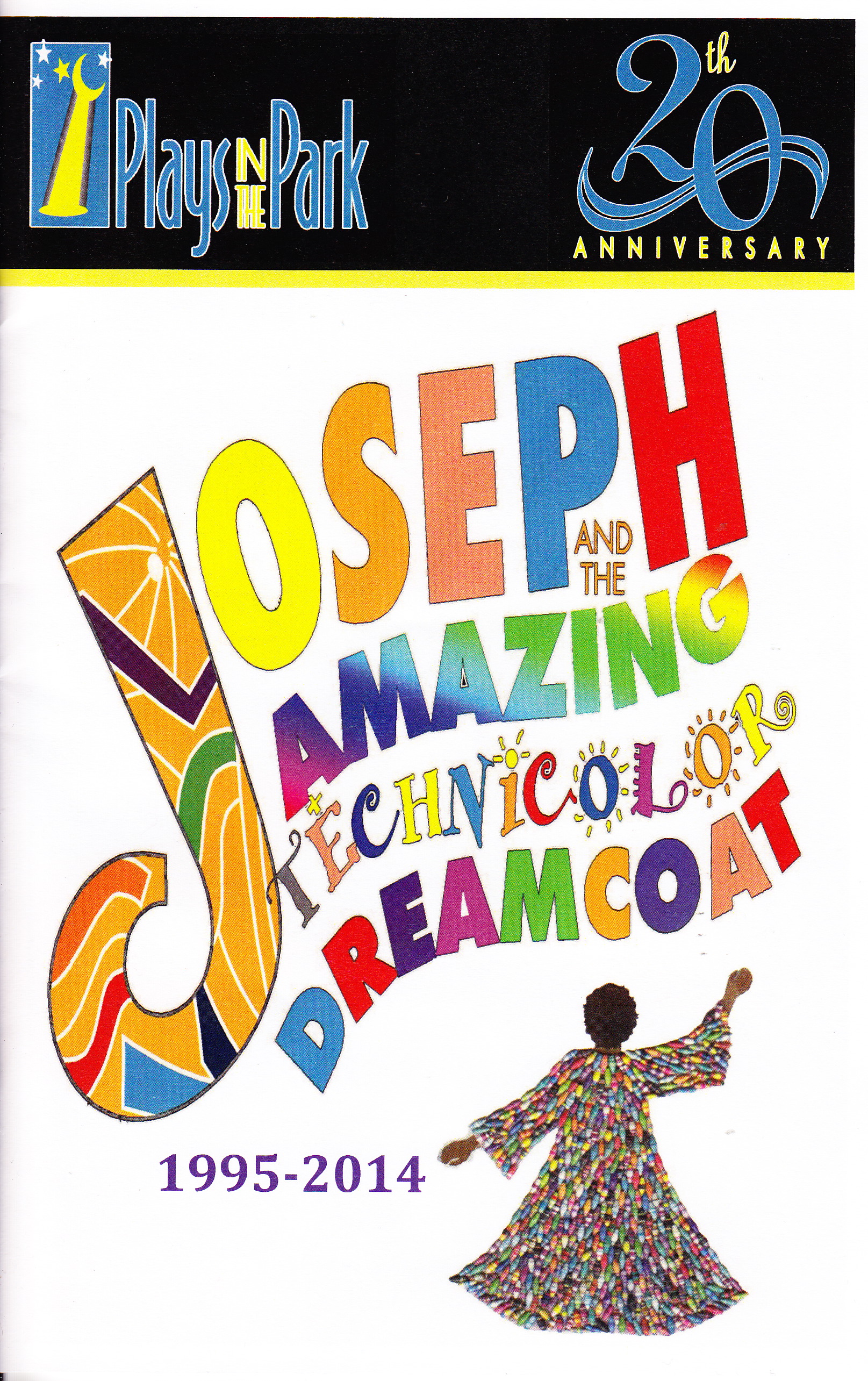
JosephSay what you will about it, but the Bible has some great stories. Based on classical measures of what makes a good tale, the Bible ranks up there with Greek mythology and other ancient fiction that is meant to teach us about being human. Stories do teach, and literature is among the greatest of pedagogues. For the past two decades, Plays in the Park here in the New Brunswick area of New Jersey, has been putting on a post-Christmas, pre-New Year production of Joseph and the Amazing Technicolor Dreamcoat (indoors, due to the time of year). With the kinds of production values you expect of many off-Broadway venues, the show is exceptionally well done, and due to the local color, never too serious. And they play before a packed house. The reasonable prices, I’m sure, have something to do with it, but the fact is the story of Joseph is classic. Full of radical reversals, dreams that come true, and reconciliation, the Joseph novella is one of the great stories of humankind. Unlike many tales of Genesis, God is rather in the background here, perhaps overseeing the event, but not interfering in the human drama.

Although the musical, like most adaptations, takes liberties with the story, it remains fairly true to the Bible. Andrew Lloyd Webber and Tim Rice also had success with Jesus Christ Superstar, showing that, despite its detractors, the Bible still has some appeal. Negative sentiment directed toward the Bible largely derives from the wooden insistence of literalists that everything must be taken at face value. The Bible isn’t allowed its symbolic resonance. Perhaps we can get beyond a worldview where the sun literally goes around the earth, and pay attention to the very human dimensions of the stories it tells. Truth may be of scientific nature, but it may also be—indeed, it must be—human. The very concept of verity is human. We are the ones making up the story.

Scholars point out that even the colored coat of Joseph is based on a translation decision in the Septuagint (the Greek Hebrew Bible). For many people, however, who’ve never read biblical scholars, the truths of Joseph and the Amazing Technicolor Dreamcoat as just as legitimate. The rivalry between siblings is something many of us have experienced firsthand. While not many of us get promoted from prison to vice-president, we still dream that our lives could get better. Our dreams could come true. The upbeat score, of course, helps to reinforce the message—one might say it makes the message believable. That doesn’t mean that the tale is not true. There was no historical Joseph. The colored coat may be a translation error. The story is nevertheless true. Doubters should watch the show. Next year in the State Theater in New Brunswick just after Christmas would be an excellent opportunity to do so.


X-mas Time

As predictable as crocuses in early spring are the controversies that crop up around holiday billboards. Even living in the quite blue state of New Jersey, I see plenty of advocating for the keeping of Christ in Christmas that the “keep Christ in Christie” campaign seems to lack. This year, however, the American Atheists billboard kerfuffle has shifted to Memphis and Nashville. There protests have been lodged that using children on “holidays for all” billboards is a kind of exploitation. And as we all prepare for the visit of baby Jesus, or Santa Claus, or any variety of mythical nighttime visitors, American Atheists are only asking that we all share the presents. It is an odd kind of culture war. Christmas, as we’ve long known, predates Christ. The holiday was usurped from pagan tradition and baptized into a holy day that was barely observed until the nineteenth century. The commercialization of the holiday gave it the current shape we recognize, and some Christian groups feel compelled to reclaim it in a kind of cultural crusade that will only end with complete acquiescence.

This is a holy war in which neither side is right. In the work-a-day world that I inhabit Christmas is above all a long weekend with a respite from the drudgery of a long commute to ensure that the system continues. Thousands stream into New York City, which, amazingly, does seem to transform for the holidays. The city that is, for most of the year, cold and heartless, suddenly displays a more human face. Giant wreaths and tall trees appear, bright decorations hang in windows. Menorahs and dreidels become manifest. Signs of Kwanzaa or other solstice-related holidays are evident for those who know how to spot them. People in general seem more generous than usual. Even many businesses relax their time-grabbing strictures a bit. Christmas did not begin as a Christian holiday, nor, it seems, will it ever be fully supersessionist.

IMG_1849

Celebration, I would suggest, is worth celebrating. Should atheists use a poster-child for the secular celebration of the holiday season? Should Christians have displays of mangers on church property where all passers by can see? Should Mensch on a Bench be displayed in stores? Should Santa be advocating for corporate giants who only want us to spend? Perhaps the answers are obvious. In my mind they are. We gather our families in, and in the northern style that has always resonated deeply with me, we look out the window and await the coming of the purifying snow.


The Wars of the Worlds

Just as it is appropriate for news sources to carry religious stories without ridicule in weekend editions, October is the month when strange things might be reported with a degree of seriousness. I have often noted in the past that “paranormal” (think X-Files) phenomena are closely related to religion. Since our ruling paradigm is one of belittling the intellects of those willing to consider evidence beyond the accepted, news stories featuring the unexplained do so with a generous helping of scorn. I was amazed, then, when my wife sent me a story on the BBC News Magazine from the World Service Sport section. (Which is near enough to paranormal, as sports fail to interest me in the least bit.) A story by Richard Padula is entitled “The day UFOs stopped play.” Near this date in 1954 in Florence, Italy, a soccer game stopped as UFOs appeared above the stadium. Former World Cup players stared upward instead of at the ball. The event was documented and never explained. I kept waiting for the jowl-waggling punchline. It never came. Here was a news story from a reputable source taking something strange at face value.

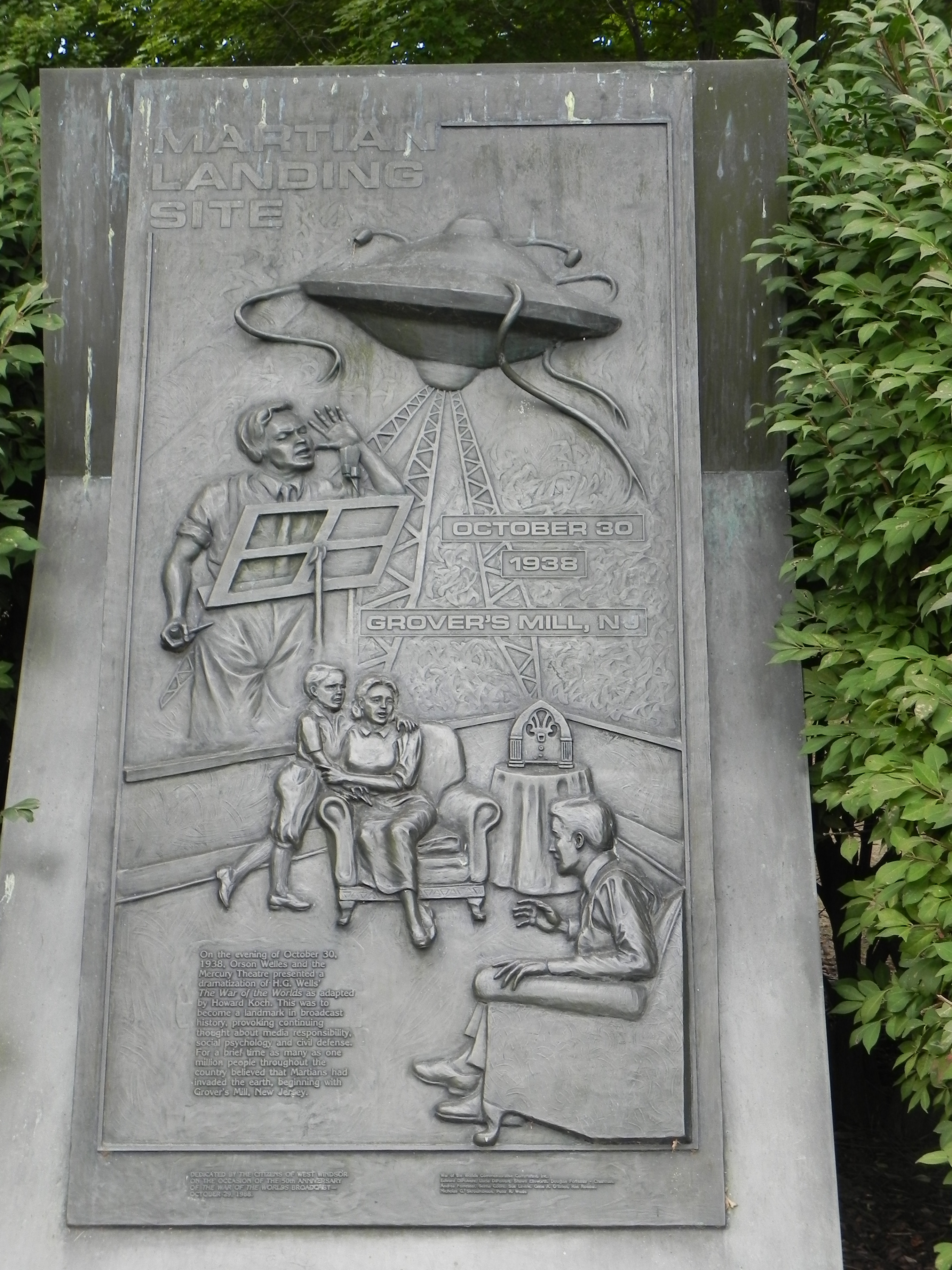
Paranormal activities and religious experiences are in the same category when it comes to a materialistic universe. They can’t exist and so the superior mind must laugh them off, stating they are an illusion, hallucination, or hoax. They still happen, nonetheless. Some world governments are beginning to announce to their citizens that they recognize unexplained arial phenomena exist and—truly astounding for government rulers—they have no explanation. Something weird is going on. It was on Halloween Eve in 1938 that Grover’s Mill, New Jersey, was invaded, according to an Orson Welles radio play. Since the inexplicable panic that came following that broadcast, extraterrestrial visitors have been laughed off the serious news page into the comic section. News stories have never taken it seriously since.

DSCN4237

A sports writer, casting about for an interesting story, might well focus on an event of such Fortean dimensions. Some highly respected people present at that game were interviewed with utter seriousness and traces of physical evidence were even gathered. A substance whimsically called “angel hair” was found all over the city, and despite the chemical signature, was declared to be the webs of a massive spider invasion (who needs aliens to be scared?) by many scientists who didn’t witness it. Laugh and the world laughs with you. The BBC doesn’t seem to be laughing in this story. Tomorrow is Halloween, when many improbable things seem possible, if only for a short time. Weather balloons, swamp gas, and Venus notwithstanding, sometimes people of normal intellect turn their eyes to the sky and wonder.