
Back in January, out of a sense of curiosity on a number of points, I began tweeting the Bible. I wondered how long it would take, at 140 characters a day, to type the King James Bible into Twitter. Since that time, I have not missed a day. Until this week. International travel and business travel with uncertain Internet access have been overcome as I flew with Bible in hand to keep it going. On Monday I was just wrapping up the flood story. Clearly this was going to take a long-term commitment. Then early this week a message popped up on my Twitter account stating, “You cannot send messages to users who are not following you. Learn more,” so naturally, I learned more. Unfortunately I am not now, nor have I ever been, a techie. Just a sentence in and words I don’t understand begin to flummox me, building confusion on confusion. What it appears to be telling me, in layman’s language, is that I can no longer post to Twitter.
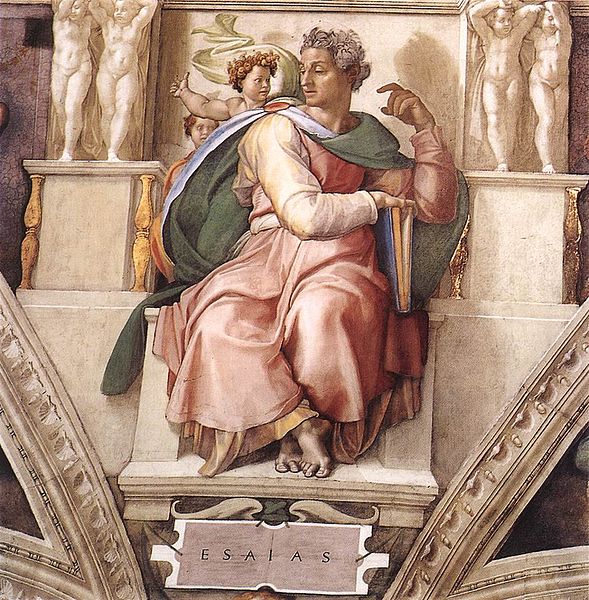 Apart from the personal rejection such impersonal messages inevitably engender, this development brought to mind the famous verse from Isaiah 40.8, “The grass withereth, the flower fadeth: but the word of our God shall stand for ever.” Hath the Lord been stopped by Twitter? Technology changes rapidly, and those of us who’ve never had any formal training in it sometimes feel like we’re driving a car on a dark country road at night with no headlights. I’m not really sure how this all works, but I try to send daily thoughts out into cyberspace and, yes, what you say can and will be used against you. And I wonder about old Deutero-Isaiah sitting there in Babylon peering into an indefinite future.
Our abject dependence on the Internet has changed us as a species. I’ve recently read about how technological innovations have become the evolution of the human species. This collective brain we refer to as the Internet has revolutionized the way we do business, but it has also introduced a component of fragility into the equation. Electronic information is untested in the long term. Some of my earliest writing projects now exist only on three-and-a-half inch floppies, most of which are tucked away in some musty corner of the attic. And what if the earth passes through a comet’s tail or a nasty solar flare jets out our way? Doomsday scenarios have been based on such things (just remember Y2K and smile). So maybe Second Isaiah was onto something after all. Printed books have been known to survive for at least half a millennium, and in rare instances, a couple thousand years. And the pagan sources on which parts of the Bible are based, written in clay, last even longer. And one of the earliest stories recorded was that of a worldwide flood.


7 thoughts on “Isaiah Thwarted”