Nanowrimo Night

Nanowrimo, National Novel Writing Month—November—has been run by an organization that is now shutting down.  Financial troubles and, of course, AI (which seems to be involved in many poor choices these days), have led to the decision, according to Publisher’s Weekly.  Apparently several new authors were found by publishers, basing their work on Nanowrimo projects.  I participated one year and had no trouble finishing something, but it was not really publishable.  Still, it’s sad to see this inspiration for other writers calling it quits.  I’m not into politics but when the Nanowrimo executives didn’t take a solid stand against AI “written” novels, purists were rightfully offended.  Writing is the expression of the human experience.  0s and 1s are not humans, no matter how much tech moguls may think they are.  Materialism has spawned some wicked children.

Can AI wordsmith?  Certainly.  Can it think?  No.  And what we need in this world is more thinking, not less.  Is there maybe a hidden reason tech giants have cozied up to the current White House where thinking is undervalued?  Sorry, politics.  We have known for many generations that human brains serve a biological purpose.  We keep claiming animals (most of which have brains) can’t think, but we suppose electrical surges across transistors can?  I watch the birds outside my window, competing, chittering, chasing each other off.  They’re conscious and they can learn.  They have the biological basis to do so.  Being enfleshed entitles them.  Too bad they can’t write it down.
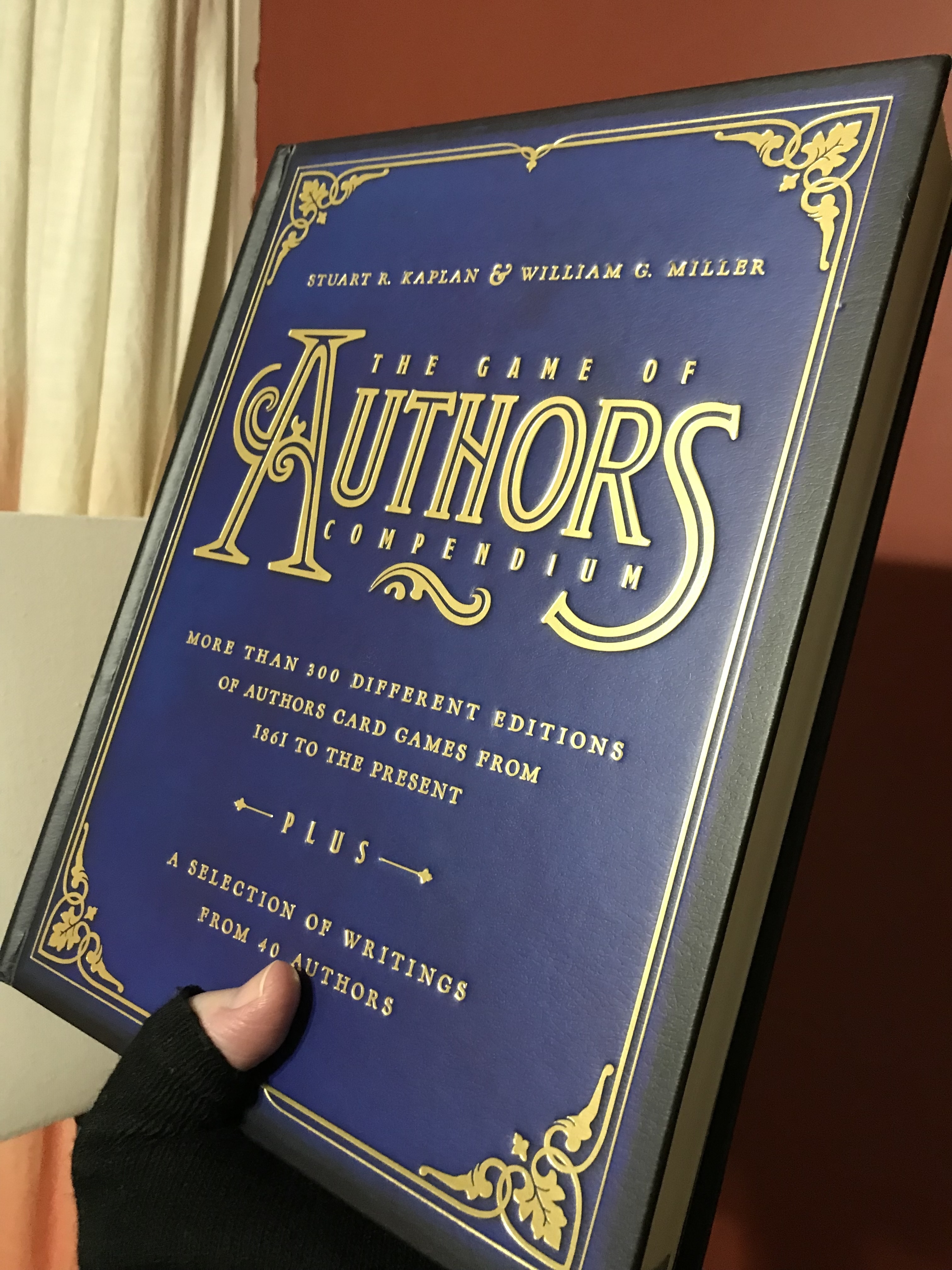
Now I’m the first to admit that consciousness may well exist outside biology.  To tap into it, however, requires the consciousness “plug-in”—aka, a brain.  Would AI “read” novels for the pleasure of it?  Would it understand falling in love, or the fear of a monster prowling the night?  Or the thrill of solving a mystery?  These emotional aspects, which neurologists note are a crucial part of thinking, can’t be replicated without life.  Actually living.  Believe me, I mourn when machines I care for die.  I seriously doubt the feeling is reciprocated.  Materialism has been the reigning paradigm for quite a few decades now, while consciousness remains a quandary.  I’ve read novels that struggle with deep issues of being human.  I fear that we could be fooled with an AI novel where the “writer” is merely borrowing how humans communicate to pretend how it feels.  And I feel a little sad, knowing that Nanowrimo is hanging up the “closed” sign.  But humans, being what they are, will still likely try to complete novels in the month of November.

3 thoughts on “Nanowrimo Night

  1. Grant Castillou

    It’s becoming clear that with all the brain and consciousness theories out there, the proof will be in the pudding. By this I mean, can any particular theory be used to create a human adult level conscious machine. My bet is on the late Gerald Edelman’s Extended Theory of Neuronal Group Selection. The lead group in robotics based on this theory is the Neurorobotics Lab at UC at Irvine. Dr. Edelman distinguished between primary consciousness, which came first in evolution, and that humans share with other conscious animals, and higher order consciousness, which came to only humans with the acquisition of language. A machine with only primary consciousness will probably have to come first.

    What I find special about the TNGS is the Darwin series of automata created at the Neurosciences Institute by Dr. Edelman and his colleagues in the 1990’s and 2000’s. These machines perform in the real world, not in a restricted simulated world, and display convincing physical behavior indicative of higher psychological functions necessary for consciousness, such as perceptual categorization, memory, and learning. They are based on realistic models of the parts of the biological brain that the theory claims subserve these functions. The extended TNGS allows for the emergence of consciousness based only on further evolutionary development of the brain areas responsible for these functions, in a parsimonious way. No other research I’ve encountered is anywhere near as convincing.

    I post because on almost every video and article about the brain and consciousness that I encounter, the attitude seems to be that we still know next to nothing about how the brain and consciousness work; that there’s lots of data but no unifying theory. I believe the extended TNGS is that theory. My motivation is to keep that theory in front of the public. And obviously, I consider it the route to a truly conscious machine, primary and higher-order.

    My advice to people who want to create a conscious machine is to seriously ground themselves in the extended TNGS and the Darwin automata first, and proceed from there, by applying to Jeff Krichmar’s lab at UC Irvine, possibly. Dr. Edelman’s roadmap to a conscious machine is at https://arxiv.org/abs/2105.10461, and here is a video of Jeff Krichmar talking about some of the Darwin automata, https://www.youtube.com/watch?v=J7Uh9phc1Ow

    Like

    • Thanks for the comment, Grant.

      Part of the problem, it seems to me, is nomenclature. By calling it “artificial intelligence” we begin to thin it really is. We don’t understand consciousness and even understanding dreams, if possible, relies on psychological theories. Evolution favored this, for some reason and I don’t believe it’s replicable with binary code.

      Thanks for giving me more to think about!

      Like

Leave a reply to Grant Castillou Cancel reply

This site uses Akismet to reduce spam. Learn how your comment data is processed.