Gray New World

A few months back I purchased a book entitled One Thousand Languages by Peter Austin. Not a “reading book,” this is more of a reference manual to the often bewildering profusion of languages in the world. Having dabbled in the study of about a dozen languages over the course of my academic career, I was interested in seeing what tongues are being spoken in places I’ve only dreamed about. After introducing a plethora of different communication systems, the book dedicates a significant section to endangered and extinct languages. There is a sadness about a language dying; it marks the end of an important aspect of a culture and a move towards a bland universality.
O say what did you say?

Then a Rutgers student sent me this link. It is a video of Wade Davis lecturing on the topic of the rapid disappearance of minority cultures around the world. Initially Davis begins by telling the students that when they were born (this lecture was delivered in 2003), there were 6000 spoken languages in the world. As of 2003, there were only 3000. The rate of language extinction is (was) about one tongue dying out every two weeks. What makes this degeneration so unfortunate, as Davis explains, is that many are dying unnatural deaths. Cultures are obliterated because of exploitation. More powerful members of nations (artificial constructs, all!) ensure compliance by encouraging uniform languages and monochromatic cultures. It is culturocide.

I would encourage my readers to view this video; it is 20 minutes well spent. A major component of these dying cultures is religion, naturally. Davis makes very important observations about this aspect of cultural non-diversity as well. And I can’t help adding that one of the phenomena he addresses is how zombies are made! Quite apart from my fascination with the monstrous aspect of religions, Davis’ cautions are essential to recognizing the plight of the once diverse human cultural domain. You won’t regret seeing this – it is nutritious food for thought.
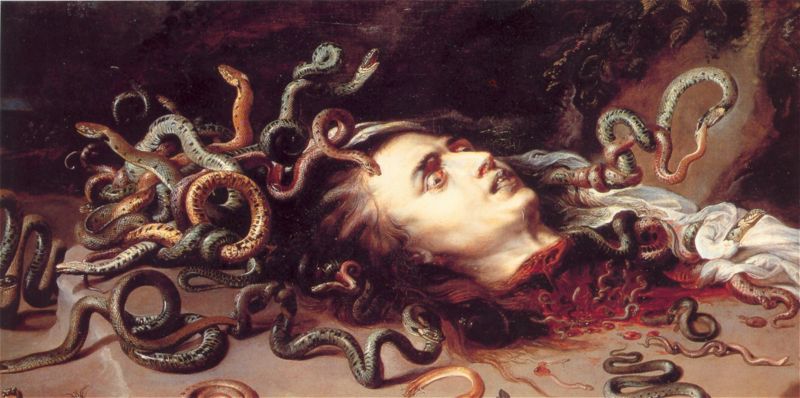
Constantine’s Dilemma

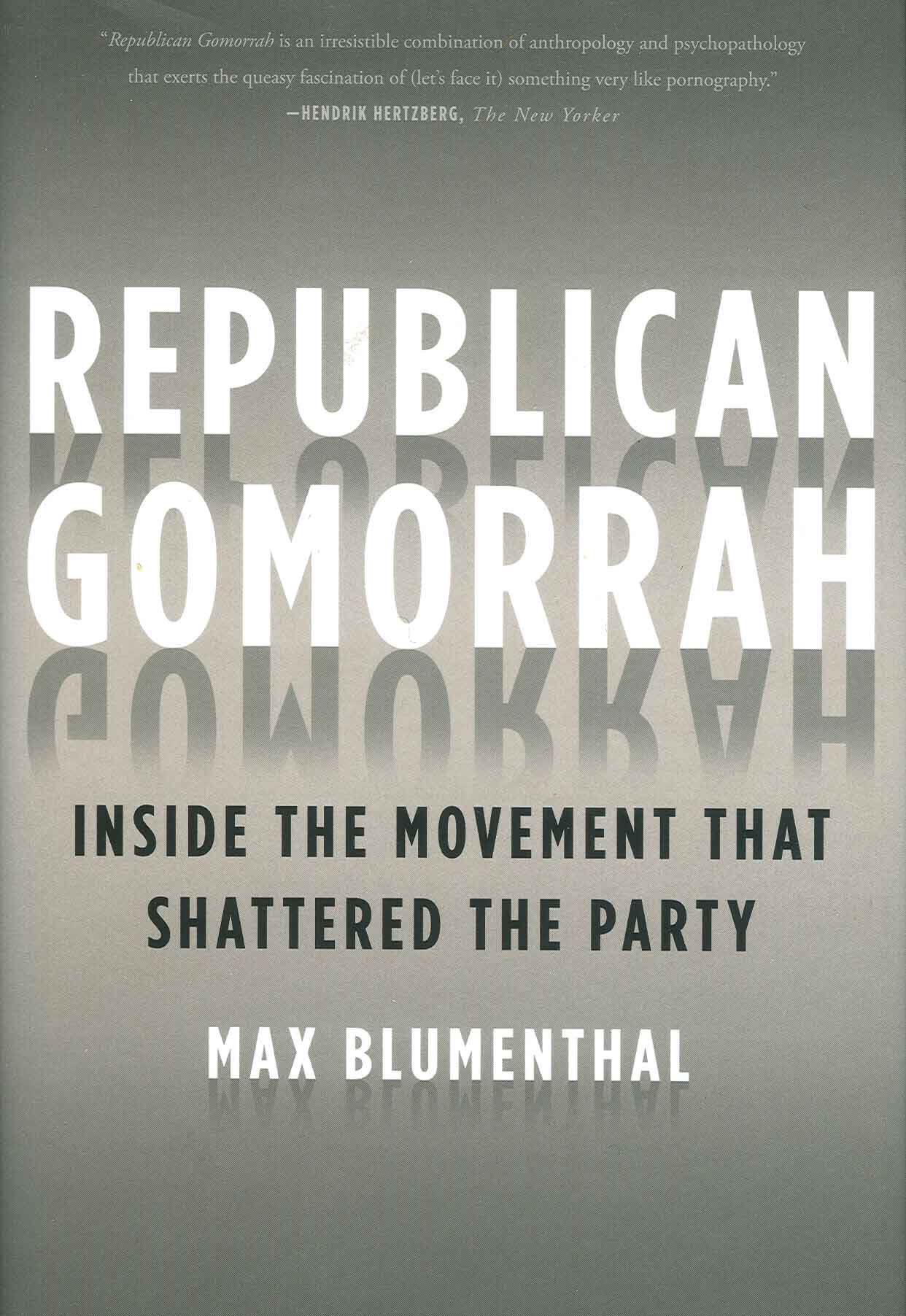
A time-honored adage educates each generation not to discuss religion or politics in polite company. The reasons for this are transparent; both religion and politics tend to be fiercely held belief systems and clashes between differing parties seldom end without scars and regrets. I recently read Max Blumenthal’s Republican Gomorrah: Inside the Movement that Shattered the Party. Initially my impression is that this book ought to be required reading for members of any political party so that they might find documented evidence of whence the real power struggles lie. It is known by anyone with a modicum of political savvy that the past several presidential elections have been decided on the success of courting voters of the evangelical variety of Christianity. What Blumenthal reveals and other sources confirm is just how intermixed religion and politics have become.

One of the most important books of last year

This is a very thorny issue. America was founded as a nation advocating religious freedom and also as a nation that would open its leadership to any qualified (more-or-less) candidate. Clergy have historically served in politics, but presidential candidates who are actively ordained and practicing their office have been rare. Not so rare in recent years, however, are those who forsake the adage and boldly proclaim their faith as a key to garnering votes. This has led to a public interest and scrutiny of what used to be the extremely private life of an individual. Religious beliefs, quietly held, motivate many people – presidents and politicians included. The difficulty Blumenthal highlights erupts when the genuinely religion-driven charge for political office with the hopes of implementing policy based on their personal faith. Americans have taken a new interest in discovering what the Church of Jesus Christ of Latter Day Saints is all about with the recent candidacy of Mitt Romney. We covered that religious landscape in Religion 101. Reading Blumenthal, however, I learned something new about Sarah Palin’s religious convictions.

Deemed “the Third Wave” movement (see also Bruce Wilson’s article in the Huffington Post), Palin’s religion is a variety of Christianity I’d never heard of even with a lifetime in the field of religious studies. What seems clear from the sketchy information available is that the putative wave began in the 1980s (when I was too busy studying religion to notice) with the work of Rev. C. Peter Wagner. Its goal, according to its theologians, is the takeover of first the church and then the world. Not just metaphorically. Since Palin told reporters, according to today’s paper, that she is seriously considering a run for the presidency in 2012, I wonder if it is time for all of us to go back to school and learn a little more about this variety of religious belief. I’m old enough to remember a time when politics was politics and religion was religion, and ne’er the twain did meet. That day is gone, and Americans will find it necessary to learn about religions again to discover the sometimes hidden motives behind politicians’ decisions. Max Blumenthal’s book is an excellent primer, but frankly, I long for the days I still recall when politics and religion had separate, securely locked bedrooms.


On Monsters

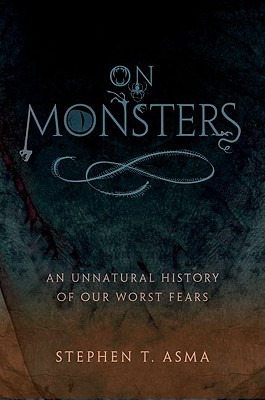
Long-term readers of this blog (both of you – you know who you are!) are aware of my interest in monsters. Constant companions of my childhood, I spent lazy days and sleepless nights both curious and fearful of these imaginary creatures. Like the concept of the holy, they both repel and attract simultaneously. Back in October, when I first heard of Stephen Asma’s book, On Monsters, I knew I would have to read it. I have commented occasionally during the progress of my time spent on the book, but having finished it I stand in a better position to consider the whole.

Not a monsterologist, I have nevertheless been fascinated by the juncture of monsters and religion, a point that Asma repeatedly emphasizes. His book is a masterful treatment of the subject from many angles, working through a roughly chronological treatment of the changing faces of the monstrous. Although monsters first appear with the earliest civilizations, they have persisted even in the strong light of scientific thinking and rationalism. As we comprehend our world, the monsters appear in deeper and darker corners, in the very folds of our throbbing gray matter, in the microbial world that floats invisibly around us, and in the smiling beneficence of technology. At many points in his historical presentation Asma is difficult to read; human brutality and emotional distancing have made for the most horrific of real-life monsters he cites.

Particularly useful in Asma’s treatment of the subject is his contention that monsters still have a place in our society. The word itself retains its usefulness in describing human, all-too-inhuman treatment of others. Unfortunately, the motivation for such treatment can often be traced to bad religious education. We may not be so fearful of the werewolf or the (supernatural) vampire, but we still fear those who treat others without empathy or human concern. Anyone with the parallel interests in religion and its aberrations owe it to her/himself to take a careful look at On Monsters and consider its implications.

A classic monster


Portrait of an Artist as a Young Woman

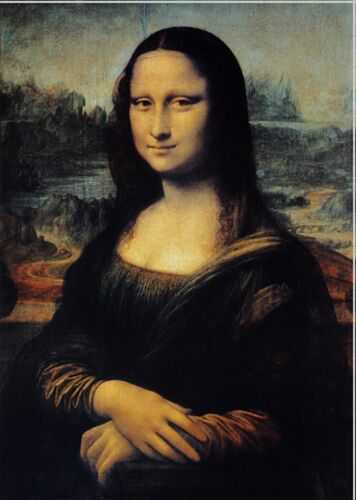
The world is a topsy-turvy place. In times of turmoil people turn to the old, the familiar, the classic, for assurance of continuity and stability. Ah, those halcyon days! Perhaps the newspaper is not a place to seek solace, but as I was flipping through the Friday edition, usually a little lighter after the dread of another week, I noticed a story about Leonardo da Vinci (before the code made him famous).

Self portrait or mirror?

For many centuries people have pondered the understated smile on the Mona Lisa’s placid yet knowing face. Recent forensic-type investigations are now strengthening the old suggestion that the Mona Lisa was actually a self-portrait of the artist as a woman. Some will, no doubt, find such news distressing – a masculine artist portraying himself as feminine? (Surely such a thing has never been done before!) Most concerned of all would be the Religious Right, a group that seeks a god excelling in sharp distinctions. Either male or female, no intersexuals need apply!

Over the past several months I have been reading Stephen Asma’s On Monsters, a book that can’t really be called “enjoyable,” although it has been eye-opening and informative. One of the recurrent themes throughout the book has been the fear of the liminal being conjoined with our growing understanding that sharp distinctions are rare. Ever since Freud it has been known (at least subconsciously) that people participate in aspects of both genders with social constructs determining which role is to be filled, feminine or masculine. Those who look honestly at the aggregate of the human race realize that we are all points on a continuum rather than simply members of one or the other gender. As Asma points out, however, we prefer distinctions.

In painting himself as a woman perhaps Leonardo once again proved himself ahead of his time. Perhaps the Mona Lisa is a mirror we should long gaze into before judging others on the basis of artificial distinctions.


Paul Does the Classics

I first became aware of Greek mythology in fifth grade. My teacher in an industrial, rough and yet rural school, believed in the benefits of teaching aspiring drug addicts and laborers the stories of gods and heroes. I immediately adored the stories we heard and read. Raised in a religious household, however, I feared enjoying the tales of what were admittedly pagan gods after all, too much. In the educational topography of my youth, we were on the brink of this brave new electronic world we’ve entered, and mythology was not considered a terribly useful part of the curriculum after that. I left the gods behind. In a class on the Christian Scriptures in college, however, my instructor suggested we all go see Clash of the Titans (the 1981 version) for its appreciative (if a little hokey) presentation of the Greek world. I enjoyed the movie and even took a class in the literature department on mythology.

Over the years I have touched and gone on Greco-Roman mythology while specializing in the mythology of Ugarit. Now that I’m teaching a course on mythology, I’m going back to my classical roots and rereading the stories of times not quite so ancient as the fertile crescent civilizations’, but older than what is considered practical nowadays. While rereading Euripides’ play The Bacchae, the concentration of images, concepts, and actions that recur in the Bible stood out in chiaroscuro. Especially noticeable were references to Paul in the book of Acts.

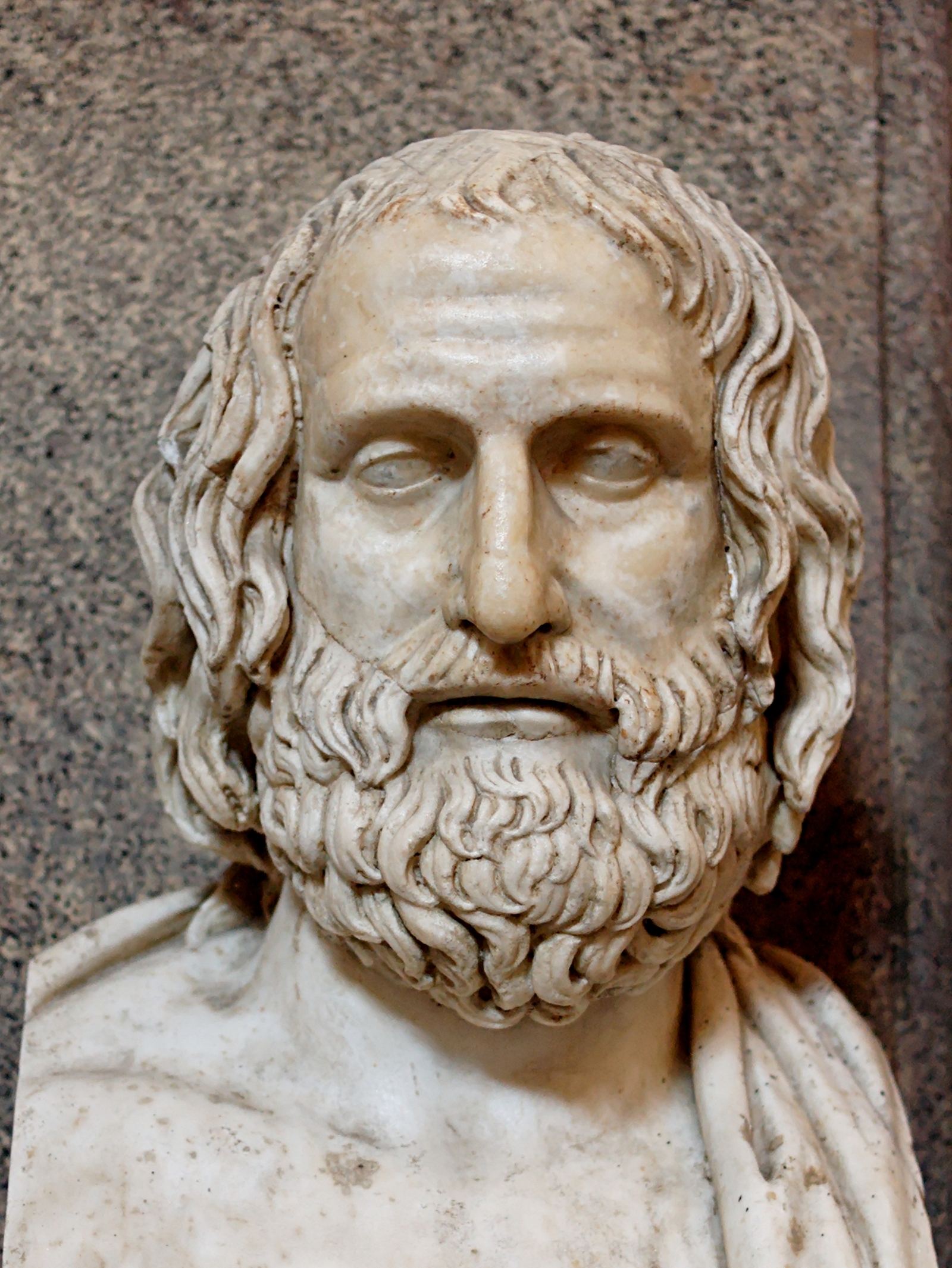
Like Paul, Dionysus comes to be imprisoned. Not recognized as a divine figure, King Pentheus of Thebes locked him in chains until he could demonstrate that Dionysus is just the wild imaginary figure of repressed women. An earthquake, however, soon rattles the city and Dionysus emerges, chains shed, to the astonishment of Pentheus. The scene reads like Paul and Silas’ escape from jail in Philippi (Acts 16). Admittedly this could be coincidence. A few lines later, however, Dionysus, free from prison, tells Pentheus, “Don’t kick against the goad – a man against a god,” (Act 3, Paul Roche’s translation). Even so, Paul on his way to Damascus sees a vision of a god and is asked, “Why are you persecuting me? It is hard for you to kick against the goads” (Acts 26.14). Perhaps Luke had read his Euripides?

Now I’m no scholar of the Christian Scriptures (although I have taught courses on them a time or two), but when obvious parallels exist it is incumbent upon modern readers to pay attention. The parallels of Dionysus and Jesus were evident to early Christians, so what I noticed was nothing new. When the followers of Dionysus, however, strike a rock with their sticks and water flows out, I wondered if Euripides had read his Torah!

Paul's bedtime reading


Tale of Two Anarchies

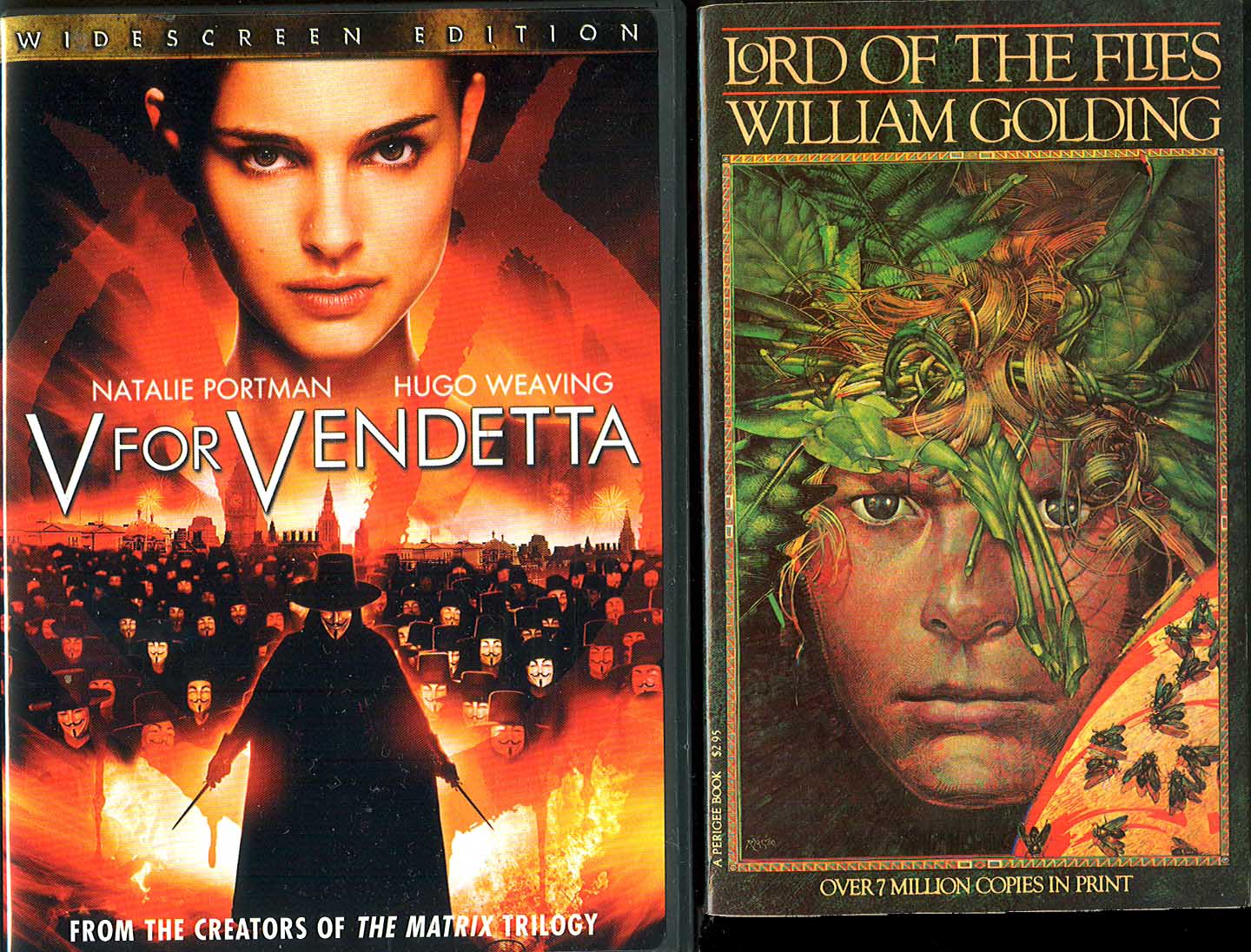
While snowbound over the weekend, I reread William Golding’s Lord of the Flies. I recalled a profound sense of awe from when I read it the first time in college, when students are invincible and optimistic. The second reading was still rewarding, but the message seemed darker, more true-to-life. Children on an isolated island devising their own schemes of democracy cannot repress the deep urge for self-advancement. When it comes to working together for the common good or promoting one’s own will, the latter wins out and seeks to destroy all dissenters. Anarchy becomes their natural state.

A few weekends ago I finally got around to watching V for Vendetta, the Wachowski Brothers’ dim and hopeful dystopia where individual conviction wears away at a conformity that benefits the privileged class. Recasting Guy Fawkes as a hero, albeit a tragic one, is a bold move in the post 9/11 world. The anarchy here leads to a rule by consent, the oppressed rising up as one to say “no more.” Even V is dead so there is no one to lead.

Better together?

Anarchy is a frightening prospect. Most people feel more comfort in the rule of law. One time I joined a discussion my brother-in-law was having with some friends on the rule of law. They were suggesting that if rule of law could be brought to bear on the Middle East then the seemingly continual crisis there might terminate. I disagreed from the far end of the table, not close enough to hear the whole conversation. My rationale is that the utter conviction of religion trumps the rule of law. Rule of law assumes all are equal, but religion in a monotheistic theater always assumes only one is right, and therefore superior. All others must submit. Problem is, many monotheistic religions feel the same way. We see it in the extreme power structure of the Religious Right in this country. Who is willing to say maybe the rule of law is superior to the rule of God? Watching the graceful anarchy of V, and reading the disturbing anarchy of Lord of the Flies, sometimes even the most stalwart free-thinker wishes everyone would bow to the rule of law.


Im in ur blogz

Translation. The Bible as we know it would not exist without translation. Ours is a culture of convenience — Americans want divine revelation dished out in easy-to-swallow portions in their own tongue. Going through the rigors of learning new alphabets and grammatical systems, not to mention the eerie specter of textual apparatus, are enough to frighten off all but the most stalwart of truth-seekers. This is a good thing. We would never advance as a culture if we all had to spend our time learning actually to read our religious texts as they were written, only to find out that we have no original texts at all. So we trust our translators.

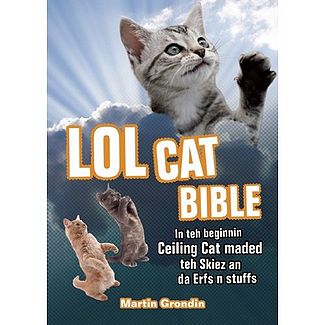
A few weeks back I posted an entry on Andrew Schlafly’s misguided (imho) Conservative Bible, devoid of liberal bias. Since then Stephen Colbert’s interview with Schlafly has been making its rounds on the internet and thousands of people are now aware of the project and its biases. I stand by my original objection that biased translations are unfair representations of the actual ancient texts. But it looks now like I’ll have to be eating crow. A new translation is scheduled to arrive in stores next month, and it looks like it may have a bias. Still, it is a translation that no internet-savvy reader can afford to ignore. Yes, the Lolcat Bible is nearly ready to pounce from the press.

The culmination of the Lolcat Bible Translation Project, over two years in the making, a Bible in Lolspeak will soon be available. Comparing what I’ve seen of the two projects, I think there is more truth in the Lolcat Bible than in the Conservative Bible. I’ve studied more ancient languages than any sane person rightfully should, but I do rely on my able research assistant (aka daughter) to help read Lolspeak. She suggested the title for this post, but the full text reads, “Im in ur blogz, postin mah wurdz of wizdum.” That’s straight from the mouth of Ceiling Cat!


Anomalies in Paradise

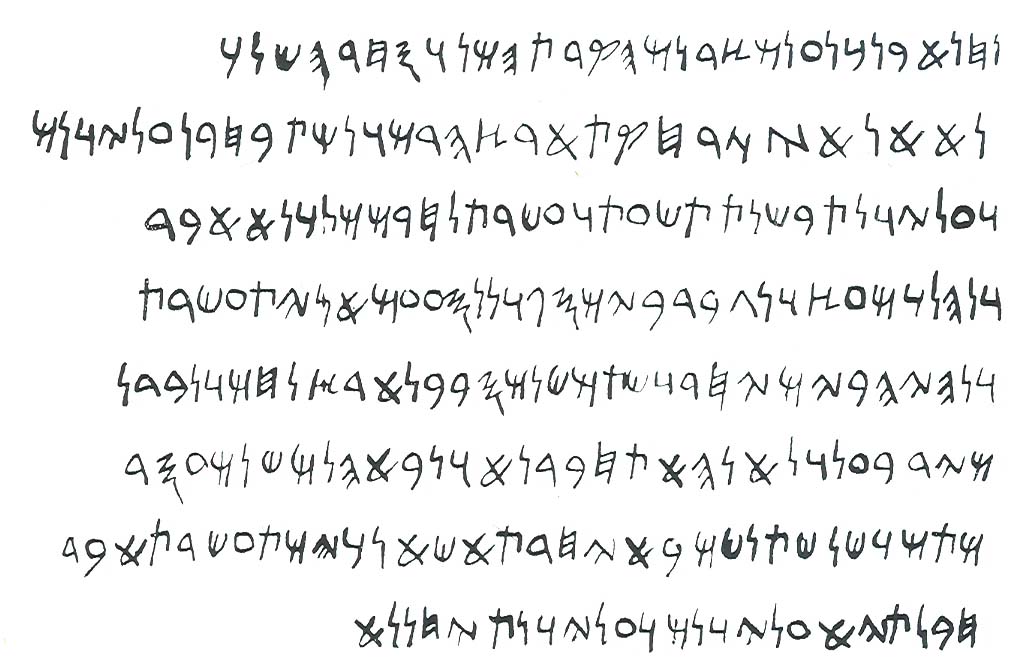
In 1874 (C.E.) a mysterious ghost of an artifact from Brazil was announced. In a story full of twists and turns and multiple Spanish surnames, a director of the National Museum of Rio de Janeiro had received a copy of a Phoenician inscription allegedly found in Brazil. Efforts to trace the letter to its source and to find the actual artifact both ended unsuccessfully, leading the director, Ladislau de Souza Mello Neto, to conclude the letter was a hoax and the artifact non-extant. The story might have ended there had not Cyrus Gordon, one of the premier Semiticists of the last century, allowed his open mind to reexamine the evidence. Gordon, in an article in 1968, argued that the inscription had to be authentic because of advances made in the understanding of Phoenician that would have been unavailable in the 1870’s. Gordon’s interpretation was in turn challenged by Frank Moore Cross, noted Harvard epigraphist, and scholarship heaved a collective sigh of relief and returned to the status quo. No Phoenicians ever crossed the Atlantic.

Neto's un-copy of the un-inscription

This little incident highlights one of the persistent conundrums of academic life. Anomalous objects are found/reported every once in a while and mainstream academia immediately debunks them to come back to center. A student of Hinduism asked me recently about the correlation of ancient calendars; before British colonialism hit India artifacts were dated to much earlier periods. Under the influence of Britain Dravidian culture grew younger and the background to European culture was considered more ancient, more time-honored. Those with investment in the system do not like to have privileged positions challenged.

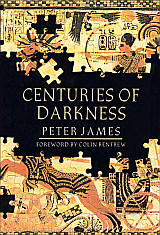
While a post-graduate student at Edinburgh, my advisor had me read Peter James’ Centuries of Darkness, a study that challenged the accepted chronology of the ancient world. Intrigued, we set up a seminar with representatives from the Archaeology Department to discuss whether this was a feasible approach to the many problem areas of ancient chronology. The archaeologists duly trooped in, set up their weapons and took pot-shots at the book, blowing multiple ugly holes in its arguments. After about an hour, when the archaeologists were unable to answer a very specific question by my advisor, he asked, “How many of you have read the book?” Sheepishly, not a hand was raised. The premise of the book was sufficient for its well-deserved snubbing. I learned a valuable lesson about academia that day — open minds lead to trouble. It is a lesson that demonstrates a very basic insecurity of those who do not wish to have their assumptions challenged.


Dog-Headed Saints

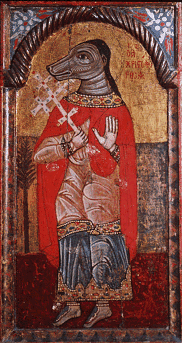
Eastern Saint Christopher

In Stephen Asma’s recent book, On Monsters, he discusses the role of early Christianity in perpetuating or perhaps even inventing various monstrous creatures. As is clear from sources going all the way back to Sumerian times, ancient religions are the spawning beds for monsters. One of the monsters Asma mentioned that caught my attention was the familiar St. Christopher. According to sources as orthodox as St. Augustine, there lived races of dog-headed people in Late Antiquity and the early Middle Ages. These Anubis-like cynocephali were barbarians in the extreme, eating human beings like the more familiar werewolf.

In some Eastern Orthodox traditions, St. Christopher was said to be among the cynocephali. Converted to Christianity, the dog-headed saint was martyred and entered the great kennel in the sky. The message proclaimed by this strange story is the tolerance of the early Christian movement. While battles raged over Orthodox vs. heterodox vs. Gnostic vs. pagan, there was still room to allow dog-headed humans into the fold. (They could be quite useful in rounding up straying sheep as well, one supposes.)

One of the hallmarks of modern Christianity is its exclusiveness. Naturally, not all Christians fit this profile, but many of the current movements define themselves by those not permitted to enter. In the sordid history of the Religious Right there are many chapters demonstrating a stark mistrust of non-Anglo believers. Roman Catholicism maintains that it is the only historically correct version of the faith. Other religions also erect barriers to keep others out. If religions truly promoted tolerance we might see a few more dog-headed saints in the news today instead of those who earn headlines for their exclusive claims on the truth.


On Faithful Monsters

From the moment I saw Stephen Asma’s On Monsters summarized in the Chronicle of Higher Education, I knew I had to read it. Having been fascinated by monsters as a child, and then having grown out of that fascination, this book is a respectable way to indulge my juvenile interests while learning something. The book’s subtitle, An Unnatural History of Our Worst Fears, reveals perhaps why I was so compelled by this particular volume. Those of you who follow this blog know that I contend that religion and fear are very closely related, well nigh inseparable even. As Asma delves into the origins of our monsters, he pauses for a while on the Bible.

The Bible hosts its share of monsters. From lengthy descriptions of Leviathan and Behemoth to tantalizingly creepy references to Azazel and the night hag, the writers of holy writ were as aware of monsters as we are. Asma focuses on the fantastic beasts described in the apocalyptic material, Daniel and Revelation. Obviously not intended to be taken literally, the descriptions of these fantastical beasts represent various ancient empires that threatened the early Jews and Christians respectively. Their monstrosity rests in their intent to destroy, not their hideous physical form. To quote from our host, “monsters are not creatures of natural history but symbolic warnings of a horrifying life without the Abrahamic God (or, in the case of Christians, without his son).”

The ancient fascination with monsters very likely has religious roots. These beings appear to stand outside the rationally created order and lurk in places where the divine is not. The fear they engender leads to the very religion that shuns them. Vampires fear a crucifix, demons are banished at the name of Jesus, and even the headless horseman shuns a church. People run to their faith to protect them from monsters, and monsters, in their turn, provided early believers with a rationale for their faith.


Sects Sells

Once again the headlines tell the story of a child molested by a “celibate” priest now suing the church as an adult. That money dropped in the collection plate goes to cover the cost of sin. The disclosures continue to find the light of day not only in the Catholic Church, but across the religious organizational spectrum. It is an extremely unfortunate situation, but I can’t help wonder if religions are naturally susceptible to sexual expression.

Sexuality and religion go back a very long way. I have suggested elsewhere on this blog that some of the earliest evidence for religion, all the way back to the Paleolithic era, is sexual in nature. One of the blatant aspects of our own cultural conditioning is that we can no longer see the connection. We inhabit a post-Victorian world, a world that strenuously repressed sexuality and removed it from the sphere of human discourse. One of my favorite examples of this is when the standard classical Hebrew-English dictionary (Brown-Driver-Briggs, for those of you who need to know!) makes reference to sexual activity in the Bible (and it is abundant), the editors delicately slip from English to Latin, so as not to offend the sensibilities of clerics and other gentleman-scholars reading the entry. This antipathy to the human condition can be traced even further back to the Greeks who felt that the physical body was much more base than the spiritual, or intellectual aspect. Sexuality was a source of embarrassment and perhaps even shame.

I’m not a psychologist, but it is pretty clear what occurs when strong feelings and drives are repressed for a long time. The early Christians who believed Jesus’ second coming to be imminent did not wish to be caught in flagrante delicto. Sexuality was to be avoided since time was short. When this became formalized and priests, probably very decent people overall, were forced to relinquish their sexuality, it was assumed that it would simply evaporate into the ether and harm no one. We have known for decades that this is naively wishful thinking. As the margarine commercial used to say, “it’s not nice to fool Mother Nature!”

What's Mother Nature hiding?

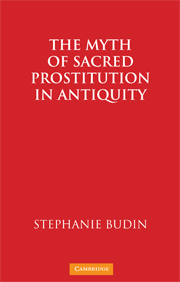
Ancient sects were not sexually depraved. Stephanie Budin (The Myth of Sacred Prostitution in Antiquity, Cambridge, 2008) has done a good job showing that the case for sacred prostitution in the ancient world has been grossly overblown. Nevertheless, sexuality had a natural place in ancient religions. Any number of nervously giggling teenagers who’ve just discovered the Song of Songs in the Bible know that! The problem arises when our religious culture refuses to acknowledge the obvious. We bottle it up and try to keep it hidden, but when it finally appears the price tag is very steep indeed.


Sacraments and Sea Cucumbers

Directly across the fold from each other on pages 4–5 of today’s New Jersey Star-Ledger are two articles that my brain comprehends as related by more than mere proximity. On page 4 the headline reads, “In sunless depths, marine life thrives.” In an Associated Press article bi-lined New Orleans (where many of my colleagues are currently enjoying the Society of Biblical Literature annual meeting), scientists reported that over 17,000 deep-seas species have been found below the point where sunlight ends. What was thought to be a barren zone just decades ago, it turns out, is teeming with organisms adapted to living without light.

One page 5 the headline reads “Bishop admits barring Kennedy from sacrament.” In a ploy that has become distressingly frequent of late, the Roman Catholic bishop claims that Representative Kennedy’s political views on abortion effectively excommunicate him. I find it unconscionable that clergy feel that they have the right to direct public policy when they are not publicly elected officials. Any clergy attempting to coerce officials democratically elected are guilty of abusing their putatively divinely appointed trust. The millions of Catholic laity who privately support freedom of choice they may rhetorically chastise from the pulpit or by some papal bull but they do not deny them the sacrament. Let’s be honest here, this is about politics, not theology.

I have been reading Max Blumenthal’s Republican Gomorrah, perhaps the scariest book I’ve ever read. In it Blumenthal demonstrates how the Catholic Church got onto the pro-life bandwagon in the intricate political maneuverings of the “Religious Right.” They quickly learned techniques up to and including lying to get their agenda across. It should distress all members of a democracy that their leaders are being led by dishonest clerics of all stripes. Those who mix their religious views with politics seek to end the religious freedom that allowed them to be born in the first place. They practice late-term religious freedom abortion.

What does this have to do with the wondrous world of the great deeps? They represent, to my mind, two forms of life that thrive far from the enlightening rays of the sun.


The Call of Balu

After writing a post on Natib Qadish, a modern revival of Canaanite religion in the United States, I received some comments from Lilinah of Qadash Kinahnu, another modern Canaanite religion revival. These movements are a fascinating development in an overly technological era — both movements have online resources that include serious scholarly treatment of ancient religions of the Levant. Both appear to be sincere attempts to get in touch with what modern religions seem to have lost. Both have heard the call of Balu.

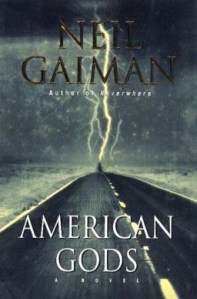
In a society where universities seldom offer programs to study the Ancient Near East, people are starved to know about it. I realize that the field of study will never bring in the money that the sciences or finance do, but obviously there is something deeply satisfying about it. And students are hungry for it. Not only appreciated by those who start revivals of ancient religions, many of those who read more recent popular treatments are intrigued. Neil Gaiman’s American Gods was a New York Times bestseller. Although much belatedly, H. P. Lovecraft’s Cthulhu Mythos has become a paradigm for many undergraduates I’ve met. I was reminded of this as I watched Stuart Gordon’s 2001 movie entitled Dagon. A relentlessly tense and macabre film, the Lovecraftian base assures a constant draw for those who hear the call of the ancient deities.

We love technology. I’m posting this entry on an internet where ideas are simply electrons forced into recognizable patterns. We can’t imagine what life was like before being able to communicate with people just about anywhere in the world instantaneously, and where we can live our entire lives without ever actually touching physical money. Over all the noise of technological progress, however, can be heard the distinct call of Balu — a call to a simpler era, pre-Christian, pre-Judaism, pre-Iron Age. It was an era when human destiny fell into the hands of ancient gods.


Death of the Gods

Americangods

Ancient gods surround me these days. Surely part of it is due to having recently finished Neil Gaiman’s American Gods (I know I’m a few years late on this, but novel-reading time is at a premium even when teaching only part-time). Gaiman’s not the first to have taken on the theme of “what if ancient deities still survived?”. As a child I read Lester del Rey’s Day of the Giants with its science-fictionalized version of Ragnarok, and even earlier H. P. Lovecraft had resurrected Dagon and Cthulhu. Gaiman’s treatment, however, is contemporary and is a barometer of how the old gods are faring these days.

Dark and witty, Gaiman’s treatment is a fun-house ride through the fanciful concept that old-time gods and folk-heroes emigrated to American with their believers. The resulting adventure brings a multi-cultural mix of supernatural powers that end up mostly focusing on the Norse mythological cast. Same was true of del Rey — the Norse mythology reflects a stark world of raw power, betrayal, death and resurrection, that resonates with northern European experience. Anansi and Chernobog also take starring roles in American Gods, although the only ancient Near Eastern deities with any prominence in the story are the Egyptian Thoth and Anubis in supporting roles.

Casting an eye over the American landscape, this assessment is perhaps true to life. Ancient Near Eastern deities seem so distant and unfamiliar. Gods long dead. Despite recent movements to revive the worship of Mesopotamian or Canaanite deities, their powers seem to have dissipated at the middle of the first millennium B.C.E. as Yahweh gained a prominence he has never relinquished, and the Greeks and Romans paved over the graves of Ninhursag and Yarikh with European versions of the more prominent West Asian gods. Universities reflect this lack of knowledge with slowly dying departments of Ancient Near Eastern studies. Like Gaiman suggests, America seems to have gone after the more modern gods suited to our present-day lifestyle.


Picturing Genesis

genesiscr

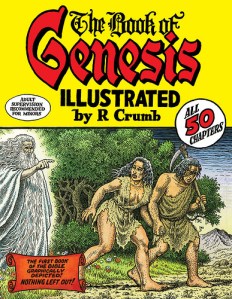
The book of Genesis is elusive and evasive, telling stories that have been read as both science and fiction, but never revealing its own deepest secrets. For over two decades I have been researching the book, never publishing my work since there is so much more yet to read on it. Many truly bizarre interpretations on the introductory section of the Bible have appeared with the proliferation of publication — Robert Capon’s Genesis the Movie and Harold Bloom’s Book of J come to mind — even by otherwise careful scholars. Nobody seems able to get to the essence of the book while everybody thinks he or she already understands it. As a piece of literature it is perhaps the most influential ever penned since it is the basis for so much of the world we’ve constructed around it. Maybe the reason we can’t understand it is that we don’t have it in pictures. Now that’s all changed: R. Crumb’s (serious) comic book version, The Book of Genesis Illustrated, is finally available.

R. Crumb is well regarded in the comic book world, but less recognized in the biblical academy. He is not the first to storyboard sacred writ, nor will he be the last, but he is grappling with the same material that defies definition. Creationists can’t live without the assertions of Yahweh’s creatio ex nihilo, that they read into Genesis (for those who are willing to read what’s there, chaotic water is pre-existent, not created), and many biologists wish that J and P had shown a bit more discretion and humility before setting the framework that dogs their each and every evolutionary observation. Those who take Genesis too seriously will likely be offended by a comic-book version, but the text is based on the revered King James Version and Crumb said in an interview that he had “no intention to ridicule or make visual jokes.” The problem is, the text is full of its own riddles and jokes, along with serious assertions of the superiority of Yahweh over Marduk and Baal and Teshub.

Unlike many Bible readers, Crumb does not stop his Genesis with the Flood or the Tower of Babel. Instead he takes his readers through the entire book where “iron-willed Old Testament matriarchs” are presented in his characteristic muscular style, perhaps recalling She-Hulk more than Sarah. The images may be unfamiliar and a little frightening, but I applaud Crumb for taking on the patriarchal chokehold over shy, hand-wringing wives wondering why they can’t seem to take the biological package their virile husbands send their way. The Bible was written in a man’s world, but it is now ensconced in a more enlightened age and it is ready to benefit from a new, and unfamiliar reading.