Lemony Reptiles

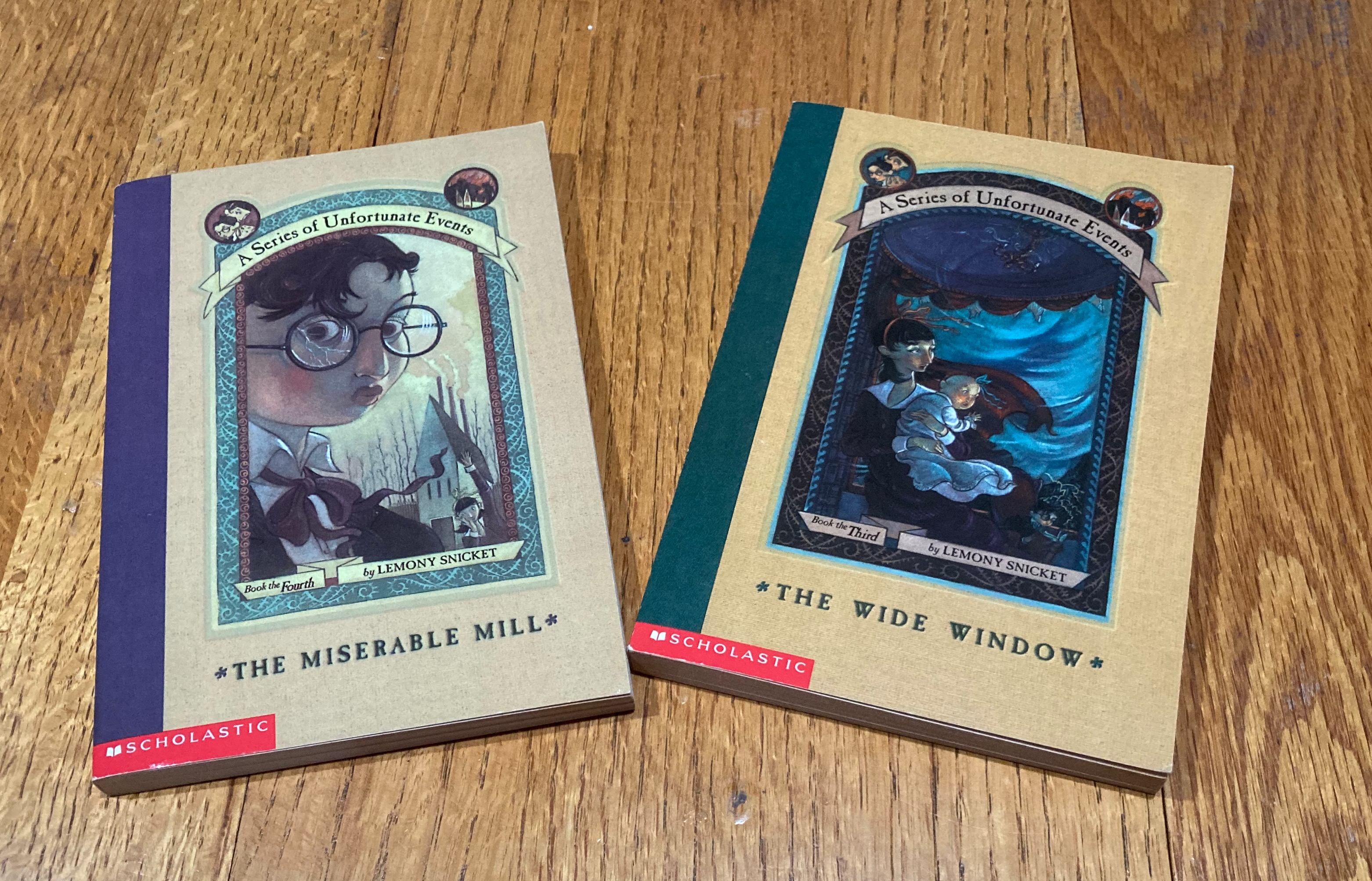
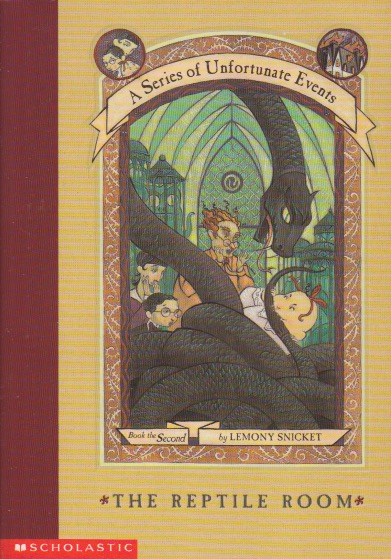
Having embarked on A Series of Unfortunate Events again, and having just finished The Reptile Room again, I might reflect on Lemony Snicket’s contribution to dark academia.  I mentioned to a friend recently that some dark academia aficionados consider the series to fall into that genre.  Having had the books read to her at a young age, she asked “Why?”  That got me thinking again about this wide, wonderful, amorphous category of books.  In my personal calculus, dark academia involves education—and this may be book learning undertaken independently—something going seriously wrong, and, in the best of it, a gothic atmosphere.  While A Series of Unfortunate Events is generally quite funny and fun to read, it clearly has the main elements I seek in classifying dark academia.  The Baudelaire orphans are pursued relentlessly by Count Olaf in a setting which, although difficult to place time wise, has Victorian aesthetics.

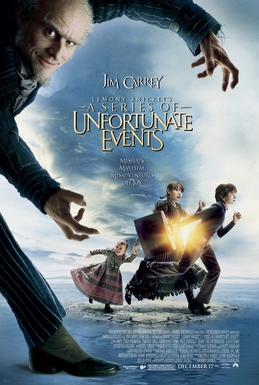
Of course, The Reptile Room is the second book utilized by the movie A Series of Unfortunate Events to get it up to feature length.  Reading it again revealed just how distorted my memory of the story had become by the movie.  The resolution of the scam by Stephano in the film is merely a distraction by the children to come to the real reveal in the book.  I’m not one to diss the movie.  It is quite gothic and it has many quotable moments, but it isn’t the same as the books.  I still remember when we first learned about these books from a niece, very young at the time, who enthused about them.  We were just a little cautious about reading scary stories to our daughter because one Roald Dahl book we read really was too gruesome for a child of tender years.  We immediately loved this series, however.

A quarter century or so is plenty of time to forget details.  Rereading these books also reminds me how influential they were on some of my own writing, although I read them as what passes for an adult at the time.  (I was old enough to be, and indeed was, a father.)  It occurs to me, as it likely did back then, just how clueless adults are.  Some of the descriptions of Count Olaf in this book could easily be substituted for a particular denizen of the Oval Office these days.  And, I suspect, children are able to see through those who constantly make up excuses to cover their own incompetence.  I’m looking forward to The Wide Window.


Life Underground

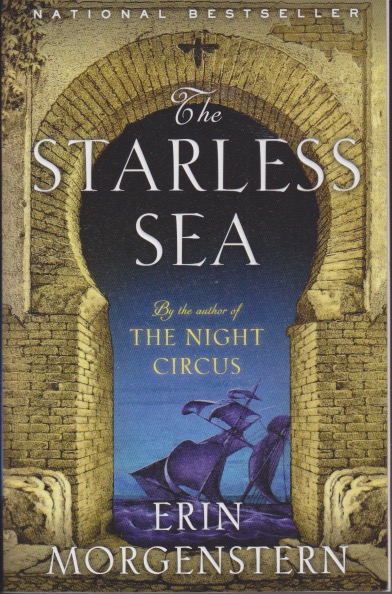
Having really enjoyed Erin Morgenstern’s The Night Circus, I was looking forward to The Starless Sea, despite its nearly 600 pages.  I don’t mind getting lost in a book; in fact it’s one of life’s true and simple joys.  The Starless Sea came to my attention as a dark academia book.  The story is a good one, but in my uninformed opinion, a bit too long.  The fault is my own, I’m sure.  My sensitivity to high fantasy has reached a point where swords tend to put me off.  And some bits, particularly in book V were a bit confusing.  Still, Morgenstern’s writing is beautiful, and at some points sublime.  If it’d been a bit shorter I’d probably be gushing.  Instead I’m reflectively admiring.  As a sometime writer myself, I know that you write what you write and others may not get it.  That’s life.

The story generally follows grad student Zachary Ezra Rawlins as he finds a book from a library of a world that’s beneath the ground.  A world that includes a harbor on the Starless Sea.  That world is inhabited by the surviving members of a decaying society made up of stories.  Most members of this world (and it’s difficult not to see this as an allegory) have left for the world above (this world).  Access between the two worlds is through doors.  Sometimes real doors, other times doors painted on a wall.  Zachary finally goes through one, having not tried one outside his house when he was just a boy.  He’s not sure if he wants to stay in the Starless Sea world or not, but he gets roped into the story.

Many other characters, at varying levels of the story within a story get involved, of course.  He meets his true love, and one of the undergrads he taught gets interested in his fate, and the denizens of the world below are intriguing characters in their own right.  Despite the length of the book, there are still plenty of gaps left for the readers to fill in for themselves.  Again, my own limitations prefer to have not too many gaps because I get confused.  The story tips a hat to several of its influences explicitly, and in many ways reminded me of Susanna Clarke’s Piranesi.  With its grad school protagonist, lots of libraries, and even a secret society, this fantasy is a card-carrying dark academia novel.  The genre encompasses may differing books and styles.  And I’m glad to have read this one as part of my own quest in that genre.  It was a sustained escape from life in the upper world.


Bad Start

I’m not too proud to admit to reading books for young readers.  On a recent family night we watched the 2004 film, A Series of Unfortunate Events (not for the first time), and I realized that my memory of the books by Lemony Snicket was hazy.  Since we bought and read all the books for my daughter, I pulled The Bad Beginning from the shelf and read it in a couple of hours.  Although it was published over a quarter century ago, it is still fresh and it stands as one of those books (and series) that defied convention and presented stories that were potentially disturbing for children.  I have to admit that another of my motivations in re-reading this was the suggestion that perhaps on another family night we might start watching the Netflix adaptation, which, as I understand it, is better than the theatrical movie.

The movie, of course faced a dilemma.  There are thirteen books in the series—too many to comfortably fit into one film.  Each individual book, however, is too slim to fill out a feature-length presentation.  The decision was made to blend the first three books together, beginning and ending the show with the events from The Bad Beginning.  If you’re not familiar with the series, even if you don’t have children, the books are an entertaining read.  Snicket, who was later revealed to be Daniel Handler, is quite a clever author and there were a couple of points that had me, well, snickering out loud.  In any case, I’m given to understand that the Netflix series tackles this conundrum of too much/little material by being, ahem, a series.

A brief summary of The Bad Beginning may help if you’re still undecided about reading it as an adult.  The three Baudelaire children, Violet, Klaus, and Sunny, are orphaned in a fire.  Adopted by their scheming uncle, Count Olaf, they are immediately put in peril as he tries various ways to get at their parents’ fortune.  Since Olaf is a thespian, he devises a plot to hold a wedding between himself and fourteen-year-old Violet in disguise as a play.  The plot is foiled, of course, by the children.  The book ends by letting the reader know that the orphans are still in danger because Olaf has escaped and remains at large.  That would take quite a lot of padding to get a feature-length film out of it.  It works quite well as a brief book for young readers.  I was impressed at both the set-up and execution when I first read this many years ago.  And I liked it again the second time through.


Scary Scripture

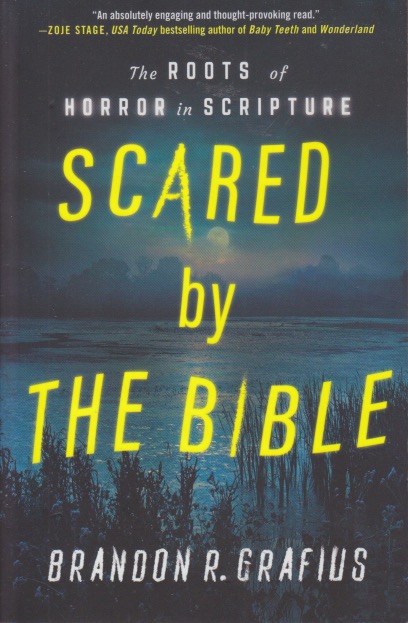
The question’s not as simple as whether chocolate and peanut butter go together.  What is it with horror and the Bible?  A number of us have explored that question in book form, but probably the most prolific is Brandon R. Grafius.  His Scared by the Bible is a mapping through terrain that will feel foreign to some: if you live for the beach in summer, why would you fly to Antarctica to visit the South Pole instead?  Part of the reason is clearly that the Bible isn’t the rainbow-and-unicorn book that it’s often made out to be.  Some parts—not a few—are pretty scary.  That’s Grafius’ entry point into how horror and the Bible are surprisingly compatible.  Interestingly, we had similar starts down this path.  A Bible given to us by a grandmother when we were a child, and the determination to read it.  My world was a bit more hellfire and brimstone than Grafius’ but we’ve ended up near the same place.

Often I thought, as I was reading it, “Are people going to get both these references?” (i.e., both the biblical story and the horror movie being cited).  After all, many Christian denominations still teach that horror is not helpful at best, and satanic at worst.  I just wonder how many of us there are who never found watching horror a spiritual problem.  I grew up thinking about death a lot.  Part of this was because Evangelical children’s literature raised the question of where would you spend eternity if you died today.  Seriously, some of the stories I read, along with Dick and Jane, still scare me today.  Religion often uses fear for its own purposes.  So does the Bible.  Grafius comes down to this at the end, asking if it’s intentional on the Bible’s part.

It seems to me that this is an important question to explore.  Religion has been weaponized through fear since at least the Reagan years.  More recently it has been aimed specifically at us “evil” liberals and our “culture of death” even as conservatives rain bombs on Iran.  We desperately need to understand religion’s now very intentional use of fear to retain power.  People are afraid.  They have reason to be.  Generally it’s not the emotional issues politicians hand-pick to garner votes.  Yes, the Bible is a source of fear.  Horror films are often also a source of scary thoughts.  They do have a lot in common.  We just need someone to come along with an open jar of peanut butter to run into someone eating a chocolate bar.


Fictional Dreams

It’s difficult to be discreet when you feel like shouting.  My first novel has been accepted for publication.  Since my fiction is published under a pseudonym I can’t tell you the title, but I’m very excited.  Chuffed, even.  It’s no secret that I’ve been publishing short fiction for years.  Even this novel was initially finished when I was in my forties.  Publishing is a slow business.  Although I could interest no agents (not for lack of trying), a couple said it was good.  Another publisher had decided, after accepting it, to pass on it anyway.  Mostly I’ve tried small, independent publishers.  Editors, however, are people with personal tastes and aligning your vision with theirs is half the trick.  If not three-quarters.

I’ve avoided self-publishing not because of the stigma—traditional publishing is devilishly hard to break into—but because of the effort involved.  Yes, you can price your books in the affordable range, but you have to arrange for printing and design.  Distribution can be a nightmare.  Also, it’s difficult to do with a nom de guerre.  Pen names are about as early as fiction writing itself, and unless you’re a major name, the title’s more likely to sell your book than your name is.  As more than one editor has told me, “It’s the writing that counts.”  Using a pseudonym comes naturally enough when you have a professional standing in a “serious” business.  Somehow we tend to think fiction writers can’t be serious people.  If they are they may have trouble finding a publisher.

Recently I’ve spoken to a couple of people who’d like to get published as a way of making money.  I try not to discourage such folk, but it’s important to keep in mind that making significant money from publishing is very rare.  You need to keep your day job.  I certainly wouldn’t complain if most royalties checks were actually over thirty dollars (which is very seldom, and since royalties come maybe once or twice a year, don’t base your mortgage on your wordsmithing).  Those of us who persist in writing tend to do so because we have no choice.  I can’t not write.  The forthcoming novel is, I think, fairly well written.  Some of the stories I had published, in retrospect, weren’t.  (Others very much were.)  At the time they seemed pretty good.  Although written over a decade ago, this novel seems to have held up over time.  At least I hope it has.  When it comes out it’ll be mixed in here amid the other books I discuss, I expect.  If I don’t end up shouting too loud, and spilling the beans, first.


Survival Writing

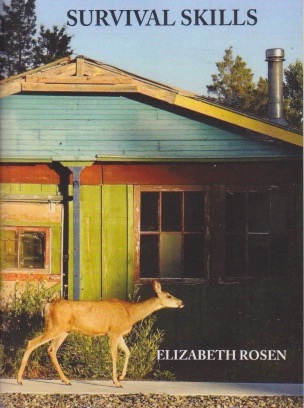
Word of mouth tends to be remote these days.  I suspect local readers of this blog are quite few.  I work remotely and, like many Americans, have trouble getting to know people in the town where I live.  Still, I use this blog instead of my mouth.  Elizabeth Rosen used to write for Nickelodeon, which I find highly impressive.  As someone who has found venues to publish my fiction as common as oases in the Sahara, anyone who’s made a few bucks off their work makes me want to stand up and salute as if a general just walked into the room.  I just read Rosen’s chapbook Survival Skills and thought I’d talk about it.  (As an aside, I always thought “chapbook” referred to chapters, which confused me because most books have chapters.  The term probably derives from “chapman,” a kind of traveling salesperson who used to include these kinds of small books among the wares they sold.)

The seven stories in Survival Skills are short—Rosen tends toward flash fiction.  I’m impressed with how effective she is at it.  I’ve tried to write flash fiction and have found I need more narrative space that it allows.  Chapbooks are easily read in an hour or so, if you’re the kind to rush through things, but these tales left me thoughtful.  You get a sense from these brief accounts that people often do nasty things to one another, or to animals, and that sometimes we really should stop and think about what we’re doing.  At other times we have to realize that we’re animals too.  We forget that at our own peril.

As much as I like reading short stories, books of such are always difficult to summarize.  Going through Survival Skills, the stories do seem organically connected.  This is something that has prevented me from trying too hard to publish collections of my stories.  Like my mind, they’re all over the place.  I’ve attempted, from time to time, to approach my short story writing thematically but it has only resulted in a few tales of each subject.  I’d never considered a chapbook approach.  Even Edgar Allan Poe made his mark in the literary world with short stories.  Washington Irving published his Sketch Book in fascicles.  Publishing exists in many forms for those with stories to tell.  I’m glad to have found Rosen’s little book.  It has spurred me on to reading more short stories, which I should be doing as a matter of course.


Re-Telling Poe

Retelling stories is a very old tradition.  Fiction writers often do it.  Some even argue there are no new stories (I tend to disagree with that).  In any case, T. Kingfisher decided to try retelling my favorite short story, Edgar Allan Poe’s, “The Fall of the House of Usher.”  What Moves the Dead has Roderick and Madeline Usher and their creepy house but the story revolves around the narrator, Easton.  (There’s a helpful author’s note at the end that discusses this.)  As Kingfisher notes, the narrative warps around fully-formed new characters and the question is whether that works or not.  Anyone who’s spent much time on this blog will know that I’m a diehard Poe fan.  It takes a lot to convince me that anyone has done him justice.  What Moves the Dead is a quick read, but perhaps unsurprisingly I had trouble accepting Easton as the interloper to the story.  

One of the most compelling aspects of Poe’s tale is the point of view of his unnamed narrator.  He expresses his horror at what happens but manages to keep himself out of the spotlight.  Easton intrudes a bit too much in the narrative.  And other characters also tend to overshadow the Ushers.  The main thing that is missing, however, is Poe’s unity of effect.  There is a dread running throughout Poe’s “Usher,” and analysts have suggested that every detail of the story is relevant.  There’s a reason it’s my favorite short story—it is just so good!  So good that the few times I’ve ridden on a horse in my life, the first thought that always comes to mind is the opening of Poe’s story.

If you’re looking for a quick horror book to read, which has a bit of humor to it, What Moves the Dead isn’t bad.  Kingfisher is a talented writer and her characters are creative.  It’s just that they muddy the waters, as it were, of Poe’s masterpiece.  Ironically, I think the story would’ve been much more compelling without the Poe tie-in.  The idea of infecting mushrooms (she also discusses this in the author’s note) can be a really compelling tactic.  In fact, it is used quite a lot in horror these days (and I completely understand Kingfisher picking up another book that does what you’re trying to do when you’re in the middle of a project—that has happened to me more than once).  For me, Poe’s story is pretty much perfect and it’s difficult to improve on perfection.


Rumblings

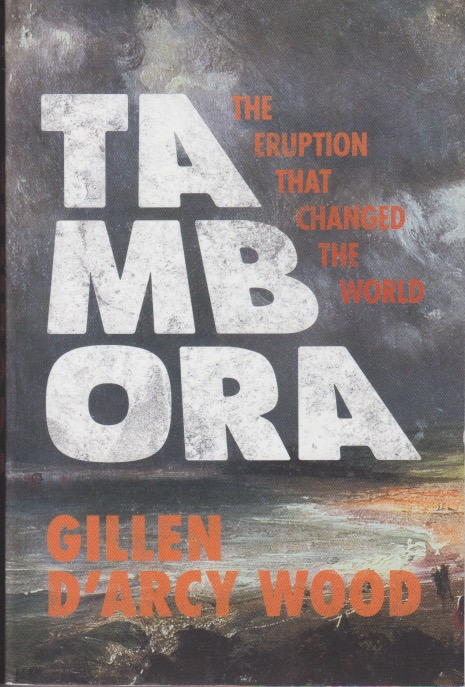
Despite the many books on Tambora, it surprisingly gets little press.  Of the volumes on the volcano I’ve read, Gillen D’Arcy Wood’s Tambora has been the best.  He, like many others, makes a case for the world-changing impact of that eruption that led to “the year without a summer” in 1816.  Knock-on effects remain with us to this day.  Wood also throws in a good bit of concern about our current climate crisis.  As he points out, the volcanic aerosols of Tambora remained in the stratosphere for three years (leading to three chilly summers), but our current carbon emissions, on-going, have no end in sight.  We all already know that weather has become more extreme.  As I write this, family members in Europe are experiencing 100-degree temperatures that used to be unheard of on that continent.  We’ve seen hurricanes increase in intensity, and have had our own erratic weather for a few years now.  The atmosphere’s too large for us to predict just who might receive the God-like wrath of the weather.

Wood uses Mary Shelley’s Frankenstein both as an illustration of the year without a summer and as the atmospheric monster we’ve created.  He also narrates other historical events brought on by the temporary change in climate in the eighteen-teens.  One of them was the breaking up of Arctic ice that led to the ill-fated Franklin expedition many years later.  (I was unintentionally also reading Dan Simmon’s The Terror even as I read Wood’s chapter about the expedition.)  More than that, this book describes the typhoid outbreak and pandemic that followed on from erratic weather in South Asia.  And deadly changes in parts of China.  The disaster of the breaking of the Giétro glacial ice dam, and an earlier famine in Ireland fueled by British hostility toward the Irish, as well as Tambora’s weather.

The developments that grew out of the human response to the changed climate caused by Tambora led to many institutions still with us.  Governments, slowly, of course, realized that disaster preparedness and care for the working class were necessary for any nation to remain strong.  The privileged lose said privilege when there’s nobody else left to compare it with.  (Capitalism has blood all over its hands.)  Overall, this is a provocative book making the case that the world we recognize today evolved this way largely in response to an environmental crisis that occurred before steam engines had been invented, when sails drove shipping and horses drew vehicles.  When a single volcano changed everything.  And although we should learn from such things, being what we are, we tend to overlook that largest volcanic eruption in recorded human history.


Long Winter

I have to confess that I often feel uncharitable towards very long books.  Mainly, I think, that is because one of my main blogging topics is books and when it takes a long time to read one I have to come up with other things to write about.  Still Dan Simmons’ The Terror had been strongly recommended.  I found it in an indy bookshop on independent bookstore day and began reading it sometime back in May.  It started out strong, but about three-hundred pages in began to feel a bit tedious and self-indulgent.  (I’ve done that myself with my fiction, so this criticism is also aimed at the one writing this reflection.)  In case you haven’t read it, the Terror of the title is HMS Terror, the ship captained by Francis Crozier under the command of Sir John Franklin, captain of HMS Erebus.  Both ships, seeking the northwest passage, froze in the Arctic ice in 1846 and their combined crews of 129 died without ever being found.

That’s a strong basis for a horror novel.  Your mind can’t help but wonder what it’d be like to be stuck in the dark, sunless winter, temperatures well below what most of us could survive, and realizing that you were never going to get out.  Simmons traces the story arcs of several of the crew that historically populated the ships.  Since there were no survivors, just about anything is fair game.  Including creating a monster to attack them.  Even as I began to warm to the book in the last hundred or so pages, it seems that some of this could’ve been trimmed and the same sprawling majesty been preserved.  Maybe I’m just jealous because none of my novels have been published and I keep being told you have to keep things short to get any traction.

In any case, by the end of the book I was really drawn in.  This was after the villain got his own, and Crozier starts to recognize the indigenous Arctic people for their truly remarkable survival skills.  (Not vegan friendly, of course, since vegetation doesn’t thrive in ice-bound conditions.)  It comes to a remarkable conclusion and I gradually found myself letting go of my petulance for having to invest so much time in one book.  I’m a slow reader with a very large pile of books yet to read.  In any case, Simmons won me back.  I quite enjoyed his Night of Summer and A Winter Haunting many years ago.  If you’re not afraid of big books, and you’d like to read about what can go wrong with a group of men trapped in the Arctic, then The Terror may be for you.


Novelization

I watched the sci-fi horror film Splice a few years ago.  Long enough that I don’t recall many details.  When Claire Donner, a friend of mine from Miskatonic Institute of Horror Studies, told me she’d written a novelization of Splice, I knew I had to read it.  If you’ve seen the movie then you know the story.  If you haven’t, you can read it in her book.  I don’t often read novelizations—I read the one for Tim Burton’s Sleepy Hollow, and as a young person read the original three Star Wars novelizations.  Such books really only apply to movies not already based on a novel, of course.  They give the reader a path into the inner lives of the characters.  Naturally, now I have to watch Splice again to see it through Donner’s lens.  The basic idea, if you want some encouragement, is that a couple of scientists add some human DNA into a gene-spliced animal being lab grown for enzymes to fight disease.

In the rawest sense, this is the story of Frankenstein for a more technological crowd.  Like Frankenstein, it is a sad story.  And like said sad story, it involves reproduction without two human parents.  The real builder this time, however, is Elsa and Donner gives considerable development to her motivations and thought process.  (I’m very curious to know if I can see that in the movie or not.)  Clive, her partner, isn’t aware of the source of the human DNA.  The spliced creature grows into the passably human Dren, who finds herself asking the questions Frankenstein’s creature asked about his own existence.  Like said creature, Dren has to be hidden away, and controlled.  At the same time, she is evolutionarily superior to her maker.  There’s a lot to see here, folks!

Having written a fair bit of fiction in my time, I do wonder what it might be like to do a novelization.  I suspect most of us, if a movie is well made, decide on the motivations of characters but how often do we delve into their inner lives?  I’m not sure that I do that most of the time.  When I write fiction I do it all the time.  I want to know my characters and why they are the way they are.  Sometimes they remain mysteries to me, but that doesn’t prevent me from trying.  This novelization is deftly done, and approved by the screenwriter/director.  And the deep motivations make the scenario plausible.  If you haven’t seen Splice you might enjoy doing so.  And then read the novel.  Or the other way around.


Bad Boy

I’m still trying to figure out what I think about it.  The introduction by Grady Hendrix got me interested in the novels of Ken Greenhall.  The introduction was in Hell Hound and it described how Greenhall’s books whispered horror rather than shouted it.  That’s also true of the horror stories I write, and it’s clear I still have plenty to learn.  Baxter is a bull terrier whose thoughts are recorded for part of each chapter in this short book.  What we read isn’t terribly welcome.  Baxter is aware and intolerant of human weakness and he has a strong will.  So strong that he uses it to get people he doesn’t care for out of his way.  At the same time, as the story unfolds, you can’t see Baxter as evil.  He obeys his nature but he has morals.  Spoilers follow.

His first owner, an old woman with little joy in life, is his first victim.  He’s adopted by a young couple but they’re about to become parents and when they do his jealousy appears in the worst way.  They couple give him away to a young boy who aspires to be a Nazi.  A fan of Hitler, he appreciates Baxter for his power and his, as he thinks, killer instinct.  But Baxter doesn’t kill for the sake of it.  Misguided as he might be, his kills all have a purpose.  The boy is a bit different.  He demonstrates his callousness by trying to have Baxter kill another boy.  Then the Nazi kills the pups Baxter has sired.  The two face off and the story is written well enough that you find yourself hoping that Baxter will prevail.  But alas, opposable thumbs do give a fatal advantage.

It’s unclear by the final chapter how much, if at all, the boy has changed.  He knows how to manipulate others and his own interest is what guides his actions.  It’s kind of a bleak story in the end.  It is, however, well told and compelling.  Greenhall wasn’t known much during his life, but he did manage what’s rather difficult today—he had a series of novels published.  He died over a decade ago and is now starting to be recovered.  That’s often the sign of quality writing.  Those who make an impact are often overlooked in their own time.  Hell Hound isn’t my favorite horror novel, but it is a strangely affective and effective one.  And it shows that dread need not take place over many hundreds of pages to work.  I’ll likely be coming back to Ken Greenhall for more.


Field Hockey

Friends recommended We Ride Upon Sticks by Quan Barry.  I’m glad they did.  A woman-empowering novel, it ties together so many important things: what it’s like to grow up as a girl, what it means to trust other people, and the importance of believing in yourself.  My experience of reading it as a man at times made me want to apologize for my sex.  So many guys have trouble reining it in and that leads many women to feeling uncomfortable, or even threatened.  The book’s also a great story of awakening to who you really are.  Set in Danvers, Massachusetts in the late 1980s, it’s the tale of the girl’s field hockey team and their “deal with the devil” to win the state championship after being a team having a reputation for losing.  The eleven players on the team are sketched so wonderfully that you get a good idea of that many distinct protagonists.

There is a tie-in with the Salem Witch Trials—much of which actually played out in Danvers.  Although the assumed implication is that the girls begin winning because they’ve made a pact with the darkness, the story doesn’t give it up that easily.  There’s a subtlety at play here and even if you’ve never been on a sports team, the sense of camaraderie is palpable.  The real magic comes in believing in yourself.  Barry is eloquent about such life and how it can change you during the difficult period of adolescence.  I’m always impressed with adult writers who can capture so well what coming-of-age feels like.  For many of us, I expect, there is a trauma associated with it.  Cultural expectations on young women are burdensome in so many ways.  At the same time this story is so well written that you hesitate to put it down.

While I never participated in high school or collegiate sports—I have no particular gifts in that regard—regular readers may find it difficult to believe that I played on the Nashotah House football team for a couple of years.  Lest you get the wrong idea, the seminary played one annual game of flag football against Seabury-Western Seminary in Chicago, styled as conservative vs. liberals.  I was younger, and in better physical shape than many of my students, so I made a team effort for a couple of years.  Still, the team spirit demonstrated in We Ride Upon Sticks is of an altogether different sort.  Fun and thoughtful at the same time.  It’s the kind of book I’m glad to have pointed out to me.


Note to Myself

A note to myself (perhaps the best title for this blog) in a forgotten book.  Well, not exactly forgotten, else the post unwritten would remain.  In a book I’d been gifted at twenty-one.  I was working that summer as an intern in a church in Pittsburgh where my duties included visiting parishioners.  One of them was an elderly scientist that everyone mentioned with awe because he’d written a book.  In the eighties, writing a book still meant something.  He gave me a copy.  I could tell, even at that tender age, that the publisher was a vanity press.  Part of the satisfaction of “traditional” publishing is knowing that you’ve convinced at least a handful of people that your writing is worth publishing.  Vanity presses take your money and produce your words with wanton abandon.  Still, I read the book.

This was during those heady college years when I annotated everything.  So many books later, annotation is rare for me now.  Other people will want these books when I’m gone.  Then, I critiqued as well.  You see, the scientist (with a master’s degree) had undertaken a theological topic, trying to explain God with science.  I’m sure he died long ago and now knows more than I.  Still I had to express myself.  That’s what those of us who write do.  Here’s an image of my summary.  It took me a while to figure out the symbols the younger me made up.  One looks like a capital K with the lower diagonal ending in an arrow.  What did that mean four decades ago?  Context gave me the answer: “off the wall.”  Why not write it out?  Perhaps I was afraid someone would find the note to myself.  This is the danger of writing things down.

Another symbol gave me pause.  A circle with a stretched capital H in it within a cube.  Ah, a capital theta, my usual shorthand for God.  In a box.  I flipped through the pages.  Yes, some of his suggestions definitely put God in a box.  Did I ever discuss this book with anyone?  It occurs to me that since my teaching career tanked, I’ve discussed very few of the books I’ve read with anyone, except readers of this blog.  We who write know there’s always the danger that someone else will read our thoughts.  In my experience, putting them in book form is about the best way to ensure that nobody will.  Still, for anybody who’s written a book, if you google them, their tome will be the first thing that shows up.  That’s true of the scientist who died, I’m pretty sure, before the new millennium.  When, as it turned out, that writing a book would become as common as starting a website with a catchy title.


Story Book

Book people, ironically, often don’t know much about how publishing works.  That’s not a condemnation; I was the same way before I took up a job in editing.  “I’ll write a book and let someone else handle the details,” was pretty much the thought process.  Now I find the whole enterprise fascinating.  The Untold Story of Books by Michael Castleman is an important book.  It is one of the most clear-eyed accounts of publishing that I’ve encountered in my long years at this practice.  There are many myths busted here.  Most—the vast majority of—writers make very little money from books.  Most never become famous.  Publishing is a low margin business.  We see the Stephen Kings and Dan Browns and say, “that could be me!”  Dreams are fine and good and sometimes come true, but writers write because that’s who we are.

As someone historically inclined, I was primarily interested in the storied days of early publishing.  This is what Castleman calls the first book business.  You didn’t expect to make much money from publishing in those days; you usually had to pay for the privilege.  Then publishing became a business.  I found this part of the story utterly fascinating.  Publishers and authors have often been at loggerheads.  Authors tend to come out on the short end of the stick (don’t quit your day job!) and Castleman doesn’t pull any punches here.  This is valuable information.  It also helped me understand why it seems that so few people in the publishing industry are authors.  I know a few besides myself, but not many.  There are reasons for that, and this book helps the curious to explore them.

Publishers began mergers for practical, if capitalistic, reasons.  Among presses that sell primarily fiction (or trade nonfiction) there are two main sources of income: bestsellers and backlist.  The backlist is the unsung bank of many publishers.  Bestsellers may be stocks, but the backlist is bonds.  Balancing these, publishers get by.  And of course, many are bought out by bigger companies.  As I mentioned here before, there are really only five big publishing houses in the English-language market.  They own most of all the publishers that may be household names.  Castleman also goes into the third book business, which covers publishing in the electronic era.  I love his sense of optimism.  Books are durable and people do enjoy reading.  Castleman has had more success with his writing than I’ll ever have, but reading him is like meeting a friend who understands what compels you to write.  Even if the devil is in the details.


Books Left out

I’m still working on my bibliography of this blog.  It’s going to take some time yet to finish it.  One of the things that has surprised me already, though, is the number of books I read but didn’t discuss here.  In the first five-plus years of this blog I tried to tie every post in to religion.  A friend had told me that staying on topic would get me more readers and I think he was right.  I now discuss many subjects and my readership has fallen off.  But my writing in general has moved away from all religion all the time.  The real loss, however, is that many very interesting books didn’t get discussed here.  Were I to want to do so I’d have to go back and re-read them.  And I don’t have time for the reading of the books required for my current book project.

Books have defined my life since I got past that stage of eating candy and running around to burn off the energy.  I began early with the Bible but started reading seriously when I was a tween.  And I haven’t stopped.  My bibliography, and this is just a guess, has about 600 books on it so far.  These are books that I’ve discussed on this blog.  Goodreads shows me I read far more than that since 2013 (this blog began four years earlier than that).  I don’t regret being a bookworm.  The neighbors might be out mowing the grass, but I’m behind a book living in a different world.  Maybe for a future project I’ll take the books from Goodreads that didn’t make it to the blog and give them their own post.  It might cause red cheeks because I remember that some of them I didn’t post on because I was embarrassed for having read them.

You see, to publish fiction you’re often told to read books from the independent publishing houses to which you’re pitching.  That accounts for several of the no shows.  Early in my blogging life I avoided posting on the paranormal (I like weird things—they help with writing), those books didn’t show up here either.  Others simply weren’t religiony enough.  Or I couldn’t think of anything to say about them.  Still, it might be interesting sometime.  Goodreads has my list at over 1,100 books at the moment.  I’ll be curious to see how many have shown up here.  I was in my late forties in 2009, when this blog began.  I’d been reading for some three decades before that.  How many books?  Well, the bibliography won’t be half the story.