Correct Auto

I’ve tried turning it off, but it sometimes doesn’t work.  Every time there’s a system update (about every other hour, now) the new system reloads autocorrect.  True, my weary fingers are glad for the help when they just can’t spell hypocoristic, but it does seem that autocorrect, although the results are often funny, has no sense of humor.  As a writer I often use ironic misspellings.  I sometimes have my irony interpreted as ignorance, but if writers aren’t misunderstood they’re not doing their jobs, I suppose.  The thing that gets to me is that those who program autocorrect—although sometimes they’re right—can’t let us express ourselves as we wish.  The other day I wrote something with  a deliberate misspelling.  When I hit the “post” button I realized I’d been autocorrected to a nonsense word in the context.  I thought I’d turned autocorrect off.

Now don’t get me wrong—I’m not the world’s greatest speller.  Sometimes I use words with the slightly wrong connotation.  My choices, however, are generally deliberate.  Unless my device has selected them, that  is.  I suspect that autocorrect is appreciated by those who type on tiny screens.  The affluent, I notice, wear iWatches.  I wonder if they carry tiny people in their pockets whose thumbs can fly across such minuscule surfaces.  “No,” someone told me, “it has voice recognition technology.”  I was reminded of some embarrassing mispronunciations I’ve made.  In seminary the homiletics professor had an individual session with me.  “Given your educational background,” he told me, “you don’t mispronounce many words.”  Oh, but I do.  I just save them for the most embarrassing situations.

My inner critic’s a pretty active guy for his age.  He doesn’t need autocorrect to make me realize how little I know.  That’s the thing about technocrats, though.  They like to correct us based on the most common combinations of these letters.  Sometimes I glance back at something I wrote and find a word I don’t even know replacing something that was, in fact, correctly typed in the first place.  I write in a program called Scrivener.  My Mac’s too old to run Word, and Pages isn’t bad, but it doesn’t allow for the complex architecture of my thoughts (and I’m no architect; I can’t even spell it).  In other words, I have to turn autocorrect off not only on my device, but also in the individual applications I run.  But then there are days when verisimilitude just won’t flow the way it should without it.

Power of Parables

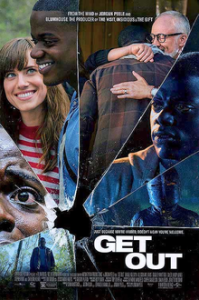
Parables come in all sizes and shapes, horror movie-shaped, some of them.  In my perpetual struggle to catch up, I finally got to see Get Out.  One of the raft of well-made, intelligent horror films that have been released recently, it’s been out long enough that I suspect my spoilers will be well known.  The Armitage family, resident in upstate New York, has been kidnapping and using African-Americans to make up for the perceived weaknesses of their family and friends.  One of their main means of obtaining victims is through their daughter Rose, who brings her boyfriends home for the weekend so they can be hypnotized by her psychiatrist mother and operated on by her neurosurgeon father.  The reveal comes slowly, but the discomfort begins early on.

Released early in the Trump White House tenure, the movie is a study in an intense xenophobia that nestles somewhere between Guess Who’s Coming to Dinner and The Stepford Wives.  It’s inherently uncomfortable watching Chris Washington, the protagonist, being treated as if his very presence requires constant comment in the world of white privilege.  He, of course, had misgivings before ever climbing into Rose’s car, but her convincing display of liberalism was enough to overcome his hesitation.  For me, watching the film made it clear that privilege is something assumed, even when it isn’t had in any explicit way.  The Armitage family and their friends are well-to-do but even if the setting were more mundane the message would still have worked—our culture imposes and reimposes its message of white superiority in subtle ways that the camera captures here.

Quite apart from its nature as a parable, Get Out is a demonstration of the social consciousness of horror.  Its reputation as a debased, low-brow appeal to all that’s unsavory to watch is misplaced at times.  While Get Out is uncomfortable it’s that way for a reason.  Were it not, it would lose its important message.  All privileged people need to be able to see through the eyes of those who are culturally disenfranchised, and although the “us versus them” mentality is problematic it has to be faced honestly and openly.  The very fact that a human construct like race could be used as the basis for a horror film in America raises questions that ought to make all of us squirm.  Setting the story in New York, where prejudice might be supposed not to remain only underscores how deeply its roots have grown.  Horror with a conscience is perhaps as much a vehicle for social change as it is a genre more honest than often supposed.  That’s how parables tend to be.


Better Places

I have to confess that I’d never heard of Ottessa Moshfegh before.  Shame on me, I know.  As a wannabe writer, I feel compelled to know other writers’ names.  Hang in literary circles.  Etc.  The good news is, however, that I found Homesick for Another World in an indie bookstore.  I’d gone in for something else that they didn’t have, but I don’t like walking out with nothing, especially when it’s a small store.  Besides, I trust the taste of most independent store owners. 

I can’t remember the last time I read a book of short stories all the way through.  As with most writers some work appeals to you more than others.  In my mind the first and last stories stick the firmest.  The latter, “A Better Place,” is haunting, almost Shirley Jacksonesque.  Others make you uncomfortable in your own skin.  This is a rare talent.

Finding a writer who, using simple words and expressions, takes you to another place is a rare gift.  The short story (the only kind of fiction I’ve actually published) is a versatile and engaging form of literature.  Books collecting them are often good for picking up when you have a little time and putting down for a while again.  I felt compelled to go through this whole work, being drawn into the weird and somehow familiar worlds of characters who seem to have no purpose, no goals.  It’s almost as refreshing as Kafka or Camus.  To be a writer who requires only one name to evoke a genre must be glorious.  These stories are strange without recourse to the supernatural, and they defy easy genre assignment.  (This makes publishers crazy.)

There’s an earnestness and a longing in this collection.  A kind of nihilistic spiritualism.  A wanting with no particular object in mind.  I read a lot of fiction, some of it very good.  The kind that leaves you a little stunned and questioning what reality is.  This is that kind of book.  Had I not gone into that indie shop that Saturday morning I never would have found it.  I certainly didn’t know to look for Ottessa Moshfegh.  Here again I’m reminded of the value of the bookstore experience.  The ability to browse without clicking or scrolling feels like a luxury to me now.  I may have to pay more than Amazon’s competitive pricing, but then this is like a finder’s fee for being in the real world.  Even if the book makes you question that reality when you’re done.


The Holy

It’s perfectly natural.  Trying to make sense of things, I mean.  It’s been a little difficult in America for the past three years or so, given that nothing seems to add up beyond greed and narcissism supported by a senate majority.  Still, as I retreat into my horror films I realize that there’s a logic to it.  Over the past several months I’ve been attempting to articulate it.  You see, I have a couple of presentations to give on Holy Horror in October and one of the questions likely to arise is why.  Why bring together the sacred and the scary?  Those who’ve studied religion formally—and many who’ve not—are aware of Rudolf Otto’s classic The Idea of the Holy.  It’s outdated and I’ve been waiting for someone to write its replacement, but we’re past the era when one scholar corners the market.  Has nothing new emerged this past century?  Nevertheless, Otto’s main ideas still make sense, before he lapses into a Christocentric view.

Mysterium tremendum et fascinans isn’t an incantation, but with a little imagination the Latin makes sense.  The holy, according to Otto is a mystery that is both terrifying (tremendum) and fascinating.  To the laity in the pews this may be strange, but chances are pretty good that your minister has read this book.  In the monotheistic west, the divine is terrifying.  It’s not splitting hairs to suggest terror and horror differ, nor is it unreasonable to suggest they have much in common.  Horror seems more embodied—a working-class variety of terror.  Still, both have that element of fascinans.  We fear but we can’t look away.  I don’t have the time to sit and ponder that a Gilded Age academic had.  Otto didn’t have to keep up with Facebook and Twitter.

Although academia required far more than eight hour days, the time during those days wasn’t spent “on the clock.”  As one intellectual I admire once quipped, staring out the window is work.  Not as far as HR is concerned, however.  Productivity in an industry under stress is its own kind of mysterium tremendum, I guess.  It doesn’t really allow for unstructured hours to read, take notes, close your eyes, and read some more.  Work measures inspiration in terms of currency, which is one of the problems that stretches past beyond these last three years.  Struggling hard with an idea is like wrestling an angel until dawn.  You can’t win, and you can’t lose.  But when the sun clears the horizon it will be time to be at your desk and ideas will have to wait another day.


Reading Railroad

Rereading books takes time.  When I was a professor my reading time was largely limited to the summer and winter breaks.  Those who haven’t experienced the academic lifestyle firsthand may not realize just how incredibly busy you are during term time.  Class prep, grading, delivering lectures, leading seminars, committee meetings, office hours—it really is much more than a nine-to-five job.  Time to sit down and read through books is limited, and since those books are heady, academic tomes, they take considerable time.  (I’m reading an academic book at the moment and I can only get through a finger-full of pages at a sitting.)  All of this means I’m generally reluctant to reread books.  Not that I’m a traditional academic anymore, but because I have a huge and growing stack of books I haven’t read yet.

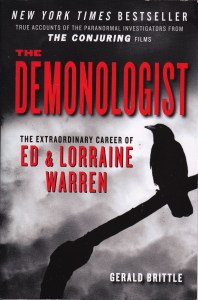
Nevertheless, a project on which I’m working required rereading Gerald Brittle’s The Demonologist.  I read this about two years ago, while commuting.  The thing about reading on a bus is that the quality of reading time is strained.  Recall isn’t the same as when you’re in a comfy, stationary chair, and no stranger’s head is lopping onto your shoulder as they doze.  (Yes, that happens, and frequently for those of us on the first bus of the day.)  In any case, my copy of this book doesn’t have an index and I couldn’t remember if some specific instances were discussed.  The only thing for it, then, was to read it again.  My second reading was done with more skepticism than I could conjure on a bus ride, but still my original sense remains: we willfully cut out much of human experience if we stop our ears completely.  At least in principle.

Ed and Lorraine Warren were self-taught ghost-hunters.  More often than not, their cases turned into what they believed were demonic cases.  Since academics tend not to publish much about such things, the self-taught are pretty much free to declare themselves experts—just switch on reality TV and check me on this.  Experts are those with experience who are willing to share it.  The other day I met someone who, like me, used to live the commuting life.  We both agreed that telecommuting was a more authentic way to exist—your otherwise mandated three or four daily hours traveling can be more sanely used at home.  Still, we had to agree, bus time could be used for activities like reading, and once you stop commuting you have to carve time out for it.  In such a situation rereading a book is at times necessary.  When I was a professor, I reread frequently.  But then, it was mostly articles or books that I wouldn’t take on in their entirety.  In the reading life there’s never enough time.


Meatings

It was almost a little too real.  As I looked at the fake blood—this wasn’t a horror movie—I had a hard time accepting this wasn’t the real thing.  I mean Beyond Meat’s vegetable-based sausage.  My daughter recently sent me a captivating article about artificial meat.  Unlike many paeans to its virtues by fellow vegetarians and vegans, this was written by an omnivore who unabashedly stated that we’ve reached the point where synthetic meat has surpassed the real thing in flavor and the eating experience.  The piece on Outside made me glad.  Feedlots, apart from being the largest industrial polluters in this country, are a horror film based on a true story.  The way we treat “food animals” violates just about every ethical stance in the book, and it’s a big book.  We do it for profit, of course.  Now that artificial meat is turning a substantial profit, those who slaughter are starting to pay attention.

I recently ate at a local restaurant where our waiter recommended the cauliflower burger.  The thought wasn’t appealing.  Don’t get me wrong, I do like cauliflower.  I prefer it raw, however, since cooking brings out its more cruciferous qualities.  In any case, our server said, “It’s new on the menu.  We offered it once before and so many people requested it that we’ve made it a regular item.”  Now we don’t exactly live in a hippie haven here.  Still, enough people are asking for alternatives that we’re discovering it pretty easy to find plant-based protein in some pretty remarkable places.  It put me in mind of my most challenging course in college: biomedical ethics.

A class that asked, and then pressed on very sensitive questions, biomedical ethics required a term paper.  I wrote mine on animal testing.  This was back in the 1980s, and technology has moved on since then.  Even back in those dark ages of Reaganomics, artificial tissue was being lab grown, eliminating the need for animal testing on many products.  Now we’re reaching the point where the same may apply to comestibles.  I’ve long used vegetarian alternatives (now vegan ones) and they’ve increasingly improved.  When I had the most recent alternative, however, I couldn’t believe it wasn’t meat.  It was too real.  I’m not morally opposed to verisimilitude, I assure you.  The closer they get to the real thing, the better it is for the animals who’ll never need to be born to be killed by us.  It’s just I find the fake blood upsetting, and I’m happy to be reminded that this is only a simulacrum after all.


Horror Homeroom

With a happy coincidence I discovered a website called Horror Homeroom.  Featuring articles and podcasts and reviews on horror films, I felt its siren call.  Then I learned it is run by a professor at nearby Lehigh University, making it even closer than I initially supposed.  I wanted to be part of the conversation.  You see, after years and years of being a Bible scholar and having to fight to find any kind of interest whatsoever in what I had to say, I’ve found the horror community extremely welcoming.  Perhaps because we all know at some level that horror is considered transgressive—it isn’t unusual to find critics who still claim it’s debased—we find each other.  There’s an aesthetic to horror, and it isn’t about gore and violence.  Horror, when done well, is an excellent marker of what it means to be human.

Life always ends in death.  Many people spend as much time as possible trying to avoid thinking about it.  There is, however, great creativity in facing squarely what you cannot change.  Well, that’s a good sounding excuse anyway.  All of this is by way of announcing my guest blog post on Horror Homeroom.  A few weeks back I was quite taken with The Curse of La Llorona.  Not that it was a great movie, but it had a way of coming back to haunt me.  Part of it has to do with the poorly understood way that local customs blend with imperialistic religions.  Faith is a local phenomenon.  Once you switch off the televangelist, you’ll begin sharing beliefs of your neighbors.  There’s no such thing as a pure religion.  Pure religion is one of the most dangerous myths there is.

Those of us who study religion professionally have been taught to call the blending of religions “syncretism.”  I’ve stopped using that word for it because it assumes that there are pure forms of religion.  Religion always takes on an individual element.  We make it our own when it gets translated into our personal gray matter.  The idea that there is a pure form of any religion requires an arbiter of greater rank than any here on earth.  You can always say “but I think it means…”  Horror, I suspect, latched onto this truth long ago.  Without some hint of doubt about your own individualized belief system, it’s difficult to be afraid.  Horror need not be about blood and gore.  Often it isn’t.  Often it’s a matter of asking yourself what you believe.  And once you answer it, opening yourself to asking questions.


AKA

“Professor?”  While not technically correct, I was surprised and not unpleased to hear the title yesterday while on the streets of Easton.  One of the greatest compliments a former teacher can receive is word from a former student.  While dressed in Saturday clothes on the way to the country’s oldest continuously operating farmer’s market, I wasn’t sure the voice intended was for me.  I’ve been out of the classroom now since 2011.  Sure enough, one of my students from Rutgers recognized me and called out.  We had an ersatz but wonderful conversation after a completely chance meeting.  Already since graduating he’s had a few different jobs, but he remembered the classes I’d taught and I recalled that he’s the person who started me reading Neil Gaiman.  Teaching is, you see, a two-way street.

I’m doing a guest service at a local church next Sunday.  In preparation I’ve had lots of emails (for me).  One of them was from the music director.  He opened by calling me “Reverend.”  I’ve never been a reverend.  The idea isn’t unappealing but I’ve gone pretty far down the path of independent thinking and any church that would ordain such as me would need to be comfortable with that.  In fact, I heard a sermon recently by an Episcopal priest and was pleasantly surprised at how welcoming and, dare I say, liberal it was.  I was never really welcome in that club, I know.  When I was still fairly fresh out of seminary and working on my doctorate the idea of being “Rev. Dr.” was still appealing.  Now I go by my first name.

Labels.  I tend to eschew them.  Like my young colleague I’ve had to learn that work doesn’t necessarily define you.  (I’ve had many employers, however, who not only beg, but insist to differ on that point.  The ideas of owning individuals die hard, apparently.)  On the weekend, though, off the clock, people are calling me “professor” and “reverend.”  I’m generally sitting in a corner with my laptop on those early mornings calling myself a “writer.”  For none of these things do I receive any pay.  (Well, perhaps some for writing, but very little and very infrequently.)  The move to our new location was a chance, I think, to try to remake myself.  A chance to figure out what labels, if any, really fit.  Better throw “telecommuter” and “remote worker” into the mix.  Those are the ones, come Monday morning, that matter most.


Positive ID

It’s a little bit worrying.  Not just the GOP’s indifference in the face of two mass shootings on the same weekend, but also the fact that the internet knows who I am.  I am the reluctant owner of a smartphone.  I do like that I have the internet in my pocket, but I’m a touch paranoid that I can be traced to anywhere unless I lose my phone.  Even then the government can probably email me and tell me where it is.  Don’t get me wrong—I’m not important enough for the government to pay attention to me, but what is really worrisome is that the web knows me.  Here’s how I came to learn that.  On my home computer I had done a rather obscure Google search.  (If you read this blog that won’t surprise you, and no, it wasn’t anything naughty!)  When I signed into my work computer—different username, different email address, different IP address—and had to do a work related search, Google auto-suggested the search I did on a different computer over the weekend.

I’m savvy enough to know that Google metrics are all about marketing.  The internet wants customer information to predict what they might sell to us.  Advertisers pay for that.  Assuming that I want to buy underwear and summer dresses online (why?), they tailor their ads to sites I visit.  As a sometime fiction writer I go to some sites from which I’m not interested in purchasing anything.  (As an aside, old fashioned book research didn’t leave such a “paper trail.”)  I’ve gotten used to the idea of my laptop knowing me—it sits on my lap everyday, after all—but the work computer?  Does it have to know what I’ve been doing over the weekend?

Artificial intelligence is one thing, but hopping from one login to another feels like being caught in the shower by a stranger.  Like everyone else, I appreciate the convenience of devices.  When I get up in the morning my laptop’s more sure of who I am than my own sleep-addled brain is.  That doesn’t mean my devices really know the essence of who I am.  And it certainly doesn’t mean that my work computer has any right to know what I was doing on another device over the weekend.  Those who believe machine consciousness is now underway assume that this is a step forward, I suppose.  From the perspective of one who’s being stalked by electronic surveillance, however, the view is quite different.  Please leave my personal life at the door, as I do when I go to work.


Infinity

It occurred to me the other day that I will never read all the books on my list.  Only in my fifties, it’s not as if I’m knocking at death’s door, but who hasn’t been aware that that gentle rapping might come at any time?  Macabre?  Maybe.  Realistic?  Definitely.  Perhaps I’m a little old to be thinking about prioritizing, but it’s pretty clear that between work, writing, and the requirements of daily life (taking the car to the shop, scheduling a dentist appointment, trying to find time for a haircut, lawn care), that something’s got to give.  Work’s the non-negotiable since without it avoiding starvation (or perhaps getting medical coverage) becomes a full-time job.  Best to leave that sleeping dog slumber.  Then come the other three Rs: relationships, reading, and writing.  After that the time left to divide is pretty petty indeed.

My reading list grows almost daily.  Reading is a form of relationship.  I’ve recklessly written to writers after finishing their books, convinced that they’d written it to me.  I’ve also read material that, when done, makes me regret the time spent.  Still, I don’t, I can’t give up.  Writing is a form of giving back.  The other day an editor who’d accepted one of my fictional stories wrote that she couldn’t stop reading it.  It doesn’t matter that the magazine doesn’t pay—I’ve received back already what I’d planned for all along.  A kind of relationship with a reader.  If WordPress is to be believed, there are some followers on this blog.  Most think I write too much, and some, perhaps, too little.  Writing, however, like reading, is the formation of relationships.

Like relationships, reading takes time.  I carve out a spot for it daily but that doesn’t really make a dent in the growing reading list.  I can’t claim that it’s because I’m no longer a professor.  Except during the summer I read more now than I did when I was teaching (the professor’s life isn’t what most people think).  It is, I believe, that there are so many interesting ideas out there that one person simply doesn’t have time to think them all.  Reading and writing are a form of very slow conversation.  Of course, with technology the rest of life is speeding up.  Things seem now to happen instantly.  The world of books is slower, and the pace is far more sane.  I may never get through my list of books to read, but at least I have good conversation with those I don’t know, and that’s what really matters.


The Price of Writing

Academic writing strives to remove personality from your work.  It can be soul-crushing.  I remember well when my daughter—a talented writer—came home in sixth grade with a note from her teacher.  An otherwise ideal student, she was writing her science projects with *gasp* her own voice!  Mr. Hydrogen and how he joins Mr. Oxygen—that sort of thing.  Granted, it would never be published in a scientific journal, but it was a personalized expression that demonstrated an understanding of the concepts.  Having been the recipient of an old school education, I also learned that academic writing should lack personality.  Those who’ve bothered to read my academic papers, however, may have noted that I don’t always obey the rules.  Subtle bits (very small, I’ll allow) crept in amid the erudition.  And now I find myself wishing I’d persisted a bit more.

Pure objectivity, anyone living in a post-modern world knows, is a chimera.  It doesn’t really exist.  We all have points of view, whether they eschew adjectives or not.  I still write fiction, but since my publication history has been “academic” I indulge in it while trying to break through where someone’s voice isn’t a detriment.  I’ve been reading non-fiction by younger women writers and one of the things I’m finally catching onto is that your own voice shouldn’t be the enemy.  It may be so for most publishing houses, but I’m wondering at what cost.  So many ideas, just as valid as any staid publication, never see the light of day beyond some editor’s desk.  That’s not to suggest that anyone can write—I’ve read far too many student papers to believe that—but that those who can ought not be shackled by convention.  If only I could get an agent who believes that!

Holy Horror isn’t exactly flying off the press, but it does represent a kind of hybrid.  It’s transitioning to a kind of writing that allows some personality onto the page (yes, I’m old enough to still believe in pages).  A now departed family friend—he’d known my grandfather—was determined to read Weathering the Psalms.  He didn’t make it through.  It was an academic publication.  In the humanities, it seems to me, we need to allow authors to be human.  It’s in our title, after all.  Please don’t take this as professional advice; careers are still broken on the wheel of tradition.  Writing, however, shouldn’t be a caged bird.  But then again, the clock says it’s now time to get to work.


The Zone

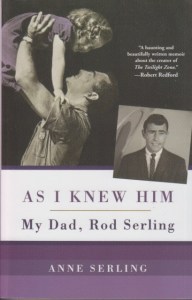
My youth—who am I kidding?—my life has been a search for father figures.  Since I grew up with television, many of them came from the tube.  The professor from Gilligan’s Island, Mr. Rogers, Barnabas Collins, and Rod Serling.  Serling was like the father I couldn’t remember in that he was always smoking.  But unlike my father, Serling had an imagination in sync with mine.  The Twilight Zone was in reruns by the time I caught up, but it gave me an odd kind of happiness.  The sort that you had as a kid after the bath was over and you were wrapped up snuggly and warm in a bathrobe, and you got to watch one of your favorite shows before going to bed.  I discovered Serling as a writer when I was in Junior High School.  He was right up there next to Ray Bradbury, in my book.

I have to admit to feeling anxious as I read Anne Serling’s As I Knew Him: My Dad, Rod Serling.  You see, she actually was his child and I’m afraid of learning too much about those I put on my personal pedestals.  Her book, however, didn’t disappoint.  Serling lived a writer’s life, something I’ve coveted since I was a kid.  If I couldn’t have a father, at least I could write about life as I saw it.  I still write fiction inspired by, among others, Rod Serling.  Spending much of my time in Binghamton and Ithaca for my own family reasons, I was only obliquely aware of how much I was traversing the region Serling considered home.  As I read his daughter’s autobiography—or is it a biography?  Who can tell the difference?—I was inexorably drawn in.  Fathers and daughters can be the best of friends.

Sometimes I wonder if those who know writers the best are their true fans.  I don’t mean groupies or the like, but rather those whose lives have been transformed by their words.  I’m reminded of Evermore, written by a relative of Edgar Allan Poe.  Family, it is true, see a side of a person that the reader does not.  But who are we, really?  Those of us who write may be saying more in our fiction than we care to admit even to those who know us well.  Rod Serling recognized dimensions well, I suspect.  A writer’s life requires sacrifice and keeping things hidden.  Anne Serling’s book is a gift to those who write, even if it is about someone else’s father.


Live Long

Maybe you went through it too.  In your teenage years the fascination began.  Before you knew it, you had a stack of them tucked away, each well-thumbed and ogled over.  Guinness Books of World Records, I mean, of course.  We’re captivated by extremes.  While working on a fictional story the other day, I started wondering about longevity claims.  The Good Book suggests that once upon a time a century was the equivalent of becoming a teenager, and people were acting like teenagers well into their eighth or ninth centuries.  Modern scientific analysis provides an alternative narrative, putting upper limits at 120, with only one verified, and disputed, case putting someone over it.  Curious, I looked at Wikipedia.  Two pages (at least) address the issue, one on human longevity tout court and another on verified claims.  Since the lists include home nations, I began to notice a pattern.

The verified records tend to feature the United States, Japan, Canada, and Europe.  The unverified Russia, Latin America, and Western Asia.  This disparity struck me as perhaps a bias concerning the source of reliable information.  Not only affecting longevity reports, concerns about reliable data impact all our sources of information.  I’ve written about internet resources before, but here I’m mainly worried about the bias of “first world” records as opposed to the records of less developed countries.  Not only that, but in the case of longevity claims, those born in outlying areas—beyond the reach of official government recorders—are suspect when compared to those kept by city dwellers.  We tend to trust our own kind, especially when it comes to extreme claims.

Like John Mellencamp, I was born in a small town.  Official records, comfortably handwritten, indicate when and where that happened, to the nearest day.  (Birth is a process, of course, and doesn’t always obey conventional human time-marking practices.  Organic events are often that way.)  The fact of the existence of other people indicates that they too have been through this in some form.  The event was marked in the way of local custom.  It’s locally true.  I knew a doctor trained in Sweden.  She couldn’t practice medicine in the United States for fear of what boils down to competing forms of belief.  Xenophobia in medical practice extends to other areas of human knowledge as well.  We are taught to trust the information given by our own authorities, but not those of other cultures.  I’m suppose to accept that without question, but I wasn’t born yesterday.


Internet Epistemology

Where do we find reliable information?  I’m asking this question on an internet-based medium, which itself is ironic.  While spending time with some younger people, it’s become clear that the web is their source of truth.  You find purveyors of information that you trust, and you accept their YouTube channels as representing correct data.  This can be a disorienting experience for an old doubter like me.  One of the reasons for studying for a Ph.D., apart from the vain hope of finding a career in higher education, is to hone critical thinking skills.  When I went through the process, that involved reading lots and lots of print material, assessing it, and weighing it against alternative views, also in print format.  You learn who really makes sense and you judge which publishers have good information more frequently.  As you navigate, you do so critically, questioning where they get their information.

Now, I’m not one of those people who think the younger generation is wrong (in fact, there are YouTube educational videos about just that).  The situation does, however, leave me wondering about how to fact-check when you don’t know the publisher.  It may be an older person’s problem, but it’s essentially the same dilemma behind self-publishing—the reason you trust a self-published book depends on the author alone.  Is s/he persuasive?  Did s/he document the sources of her/his information?  Are those sources good ones?  The young people I know seem quite adept at filtering out obviously biased information.  Many YouTube personalities footnote their presentations with links to sources (many of them online), and after an hour of watching I’m left questioning what’s really real at all.

You see, many of these internet personalities have sponsors.  Sponsors bring money, and money biases anyone’s angle toward the truth.  In fact, many of these YouTube sources call out the lobbying groups that influence public opinion for political ends.  Only someone completely naive—no matter their generation—would not acknowledge that government runs on money provided by corporations with interests to be protected.  There have been reliable sources, even from the days of print, that prove beyond any reasonable doubt just how corrupt governments tend to be.  But who has time to fact-check the government when the rest of the information we receive is suspect?  Those of us with training in advanced critical thinking aren’t immune from biased information.  It’s just that there’s so much data on the web that my head’s spinning.  I think I need to go read a book.


Digging Well

Having spent a good bit of the past week in waiting rooms in Ithaca, I fell to reading Tompkins Weekly, the free local community paper.  If you’ve spent any time on this blog you’re no doubt aware that I have an interest in the weird and unusual.  Although I got teased rather mercilessly for this as a kid, thanks to The X-Files such interest has become somewhat mainstream.  In any case, after fumbling with the crossword and finishing the sudoku, I read an article about dowsing.  Now Tompkins County is the home of both Cornell University and Ithaca College, so I was a little surprised in finding such a topic addressed at all.  What’s more, the usual ridicule expected with anything even approaching the paranormal was lacking.

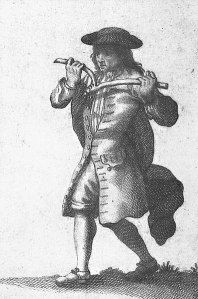
Dowsing is the practice of finding water, or other underground resources, by using a crotched stick or dowsing rods.  A larger version of the quantum “spooky action at a distance,” dowsing is said to produce an effect on the twig or rods that will point to the hidden source.  Like ESP it is decried by mainstream science yet used by some governments when other methods fail.  As an example of “folk wisdom” dowsing occupies a similar, if less conventional, space to religion.  Scientism has taught us not to trust the invisible.  Scientists, however, are well aware that we can’t see everything.  We slide a finger around our collar, however, when something “unscientific” seems to work.  As the dowsers explain, however, there is a kind of science to what they do.  Problem is it doesn’t work for everyone.  Only some people can do it.

Now I’m not a credulous person.  I spent many years and even more dollars learning how to be a critical thinker.  Skepticism, however, leads me to ask how we know that dowsing can’t possibly work.  Have we discovered all there is to know in this infinite but expanding universe?  With finite minds it seems highly unlikely.  Duke and Princeton Universities once studied parapsychology in an academic setting, and the University of Virginia has left some related areas open to investigation.  The real problem is that we’ve been taught to laugh at anything we’re told to.  The US Navy, for instance, has recently revealed that it takes UFO reports seriously (unlike Project Bluebook).  We’ve been laughing so long it’s difficult to take even the military at face value.   Does dowsing work?  It’s difficult to say without all the facts.  Of course, I’ve been sitting in a waiting room, pondering what we don’t understand.