
You think you know a guy. Actually, I never claim to be a Washington Irving expert. Sure, a read three or four biographies, while researching Sleepy Hollow as American Myth, but the idea of that book was to trace the story he wrote forward, not to make stunning claims about Irving himself. Still, doing this kind of research you tend to think you know a bit about the life of a person. Irving was awkward around women but he seemed to fall in love from time to time. He was engaged at least once (in his mind, at least twice). His first love, like that of his younger contemporary Edgar Allan Poe, died young of tuberculosis. Irving had considerable success with his first novel A History of New York, putatively written by Diedrich Knickerbocker. He was sent off to England by his family and it was in Europe that he wrote the book that made him famous, The Sketch Book of Geoffrey Crayon, Gent. It included “The Legend of Sleepy Hollow.”
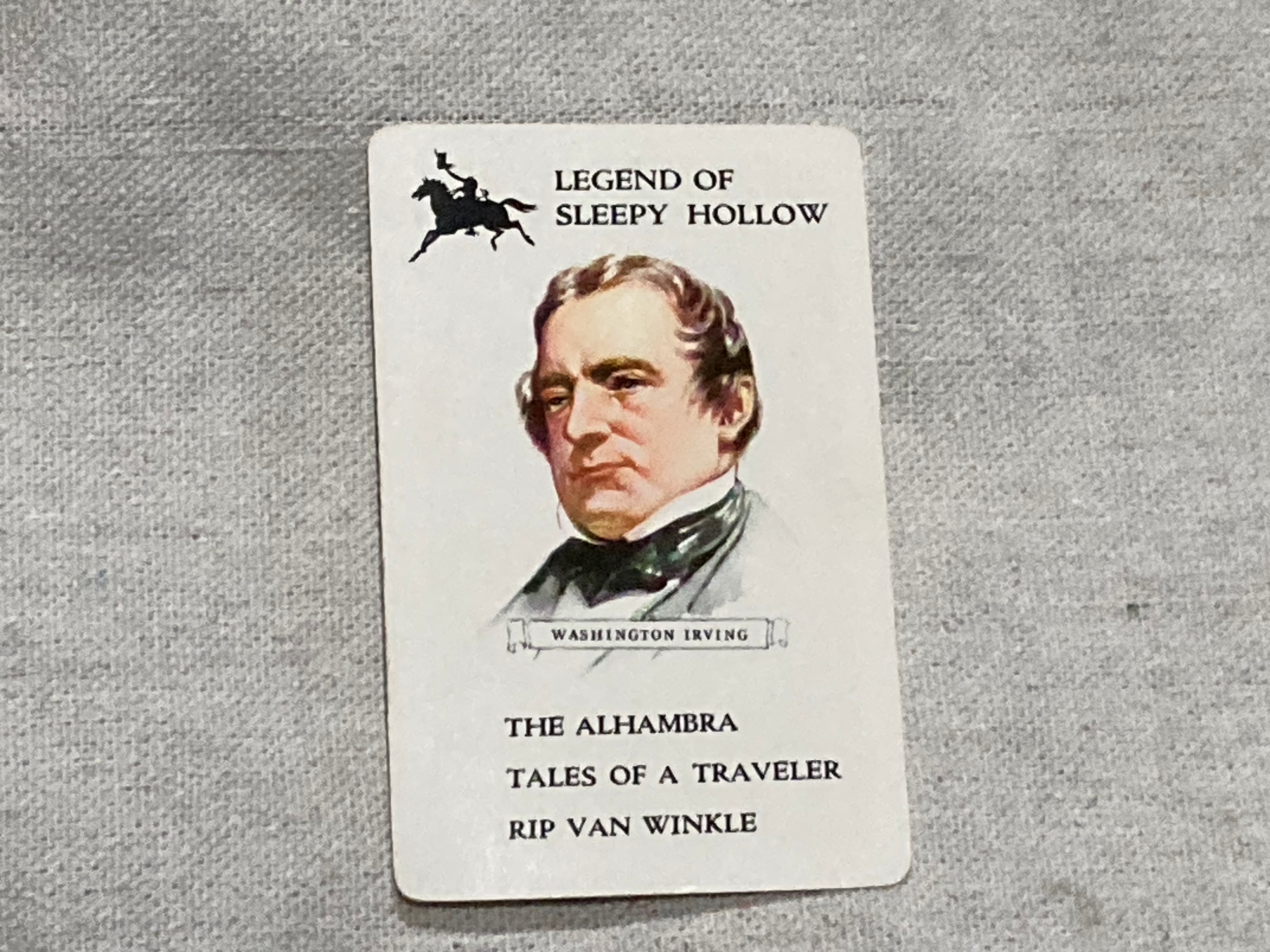
Irving stayed in Europe for 17 years and wrote other books that kept him going. None would match the acclaim of The Sketch Book. (It also included his tale, “Rip Van Winkle.”) Since he remained in Europe, his fame was trans-Atlantic. He was doing what few could—making a living by writing. Most who did so, or tried to, struggled financially. One of those people was Mary Shelley. She’d begun writing Frankenstein when she was 18. Twenty when it published, two years later she was widowed when her husband Percy Bysshe Shelley drowned. Shelley had a rocky relationship with his aristocratic family and Mary made a living by publishing lesser known pieces.
At some point—keep in mind Mary Shelley was a young widow and often lonely—Shelley tried to initiate a romance with Washington Irving. He was older and, perhaps playing into her thoughts, an established writer. That’s what she longed to be. Irving was not interested in this particular relationship. He’d fallen in love with an American girl traveling Europe with her family, and had been burned. As Halloween approaches, this interesting confluence of the creators of Frankenstein’s monster and the Headless Horseman of Sleepy Hollow—two iconic seasonal monsters—has its own kind of wonder. Neither Irving nor Shelley were “horror writers.” That concept wouldn’t emerge until much later. Nevertheless, they had brought to life two characters without which Halloween as we know it would be severely diminished. You never know what might happen when you publish a monster story.

