
David Cronenberg is an auteur. Even before I knew his name I’d watched a couple of his films and I’ve been trying to do some backfilling as I can. Videodrome finally became available at no extra cost, and I wish that I’d been able to see it before writing Holy Horror. Before I get to that, however, maybe a little explanation is in order. Videodrome is a broadcast signal that alters reality when someone views it. Max Renn runs a sleazy television station and he finds Videodrome while looking for new salacious content. After that, reality and hallucination and new reality become confused. With Cronenberg’s characteristic body horror, Max’s abdomen becomes a kind of video player and he’s sent to kill a rival of Videodrome. At least that’s what I think was going on. He then begins working for New Flesh.
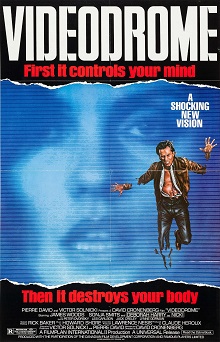
There’s slime and blood and bodies. Parts of it reminded me of Cronenberg’s later eXistenZ, and even The Fly. Guns that become bodies and bodies that become weapons. There’s also a fair amount of philosophizing and social commentary over the role of television. Specifically, the role sex and violence on screen has on viewers. (Televisions turn into bodies too.) The biblical angle comes in after Max has been programmed and reprogrammed, for and then against, Videodrome. He becomes “the video word made flesh.” This modified quote from the opening of John’s gospel is significant in his conversion experience. The plot is a bit confusing, but we see Max transform from a man in control of his own destiny into the pawn for a sinister organization that claims to be trying to do away with those who are inspired by onscreen sex and violence.
Videodrome is a movie that has re-become strangely relevant in the era of scrolling. One of the characters, Brian O’Blivion, believes marathon viewing makes television replace everyday life. Ironically, many people experience this with their phones now. The movie came before cell phones, or at least cell phone popularity. Certainly before they had screens built in. Videodrome was well received in the early eighties, and interestingly, my own viewing of it had to await various streaming deals to align. (And who doesn’t subscribe to a streaming service or two these days?) The main service I use was charging $15 for it the last time I’d looked. Then on a weekend after chores, suddenly you could watch it for free, with commercials. Like a fly, I’m easily drawn into the trap. Perhaps I’ll be scrolling before long.

